Carer Skills Online Program
Learn skills to manage stress, improve communication, and protect your mental health and wellbeing as a carer.

 19 minutes

When someone you care about is living with a mental health condition, it’s natural to feel a mix of emotions like love, hope, worry, exhaustion, grief, and even resentment. Caring for someone can bring deep meaning. It can also bring real challenges.
You might not have planned to become a carer. You might not even call yourself one. But if you’re currently offering regular practical or emotional support to someone, you're in a caring role and what you offer matters.
When caring for someone else, it’s easy to put your own needs aside. You might catch yourself thinking, 'It's not about me' or 'I'll take care of myself later.' But your wellbeing matters just as much. Understanding your own needs and giving yourself permission to meet them is part of caring in a sustainable, compassionate way, for both you and the person you support.
In this guide, you’ll find information on:
Scroll down to learn more.
Being a carer doesn’t always mean providing round-the-clock help. It can look different for everyone, and it often changes over time.
Caring can look like:
However your role looks today, it’s important to recognise that what you’re offering matters.
When caring for others, it's completely natural to feel stressed at times, especially when you’re carrying a lot of responsibility or facing uncertainty about how to best help.
Stress doesn't always look like panic. It might feel like tiredness that won't lift, feeling on edge, snapping more easily, or finding it hard to focus.
Having simple strategies you can turn to when stress builds up can make a real difference. They can help you stay grounded, steady, and better able to care for both the person you support and yourself.
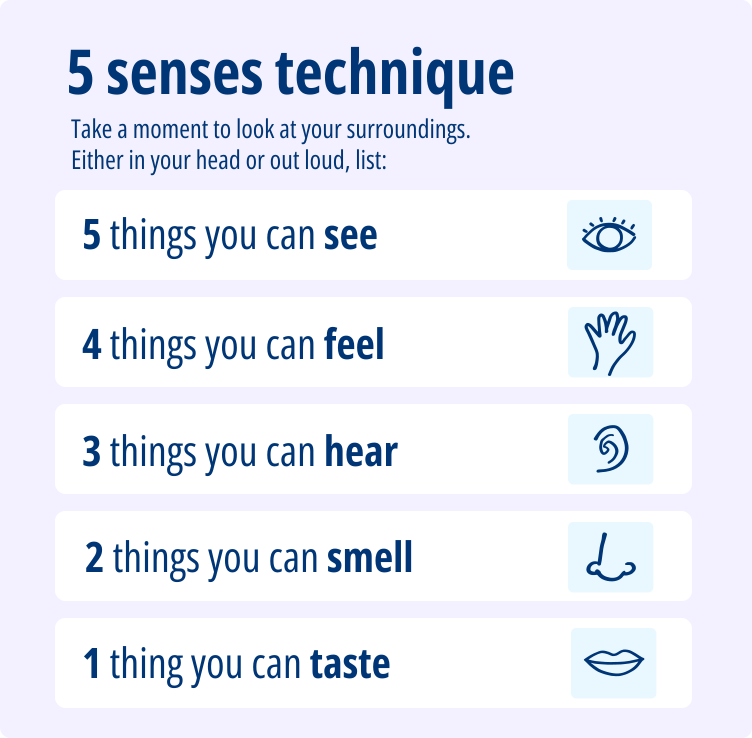
Here are a few techniques you can try:
Having simple ways to manage stress and overwhelm can make a real difference, helping you feel more grounded and in control, even on tough days.
Caring can feel isolating at times, which is why it's important to lean on others for support.
It’s really common to feel unsure about what to say when you reach out for help, whether it’s to a service, a support group, or someone you trust.
Remember:
You just have to take the first step. Just reaching out is a huge and important step and one you can be proud of. Continue reading for more tips you can use to reach out for support.
A support network is simply the people, services, and connections you can lean on when you need encouragement, advice, or a break. It might include trusted family members, friends, neighbours, workmates, carer groups, or professional support services.
You might already have a network around you or you might be building one from scratch, and that’s okay too. Here are some ways you can start building or reaching out to your support network:
It’s common to feel unsure or overwhelmed when someone you care about is living with a mental health condition.
Understanding a little more about what they’re experiencing can help you feel more confident, connected, and better equipped to support them while also protecting your own wellbeing.
Here are some things you can do right now:
The more you understand, the more confident and empowered you’ll feel to walk alongside the person you care about.
When you care deeply about someone, it’s natural to want to be there for them as much as you can. But caring for someone doesn’t mean saying yes to everything, or giving more than you have to give.
Setting healthy boundaries is a way of protecting your own wellbeing, so you can continue to offer care with patience, compassion, and strength over time.
Boundaries aren’t about pulling away from the person you care about. They’re about finding a balance between their needs and your own, so you can both stay connected in a healthy, sustainable way.
Here are a few ways to find balance in how you care:
Finding balance is a journey, not a one-time decision.
Some days you’ll feel more available, and other days you’ll need to protect your space more carefully. Both are part of caring with compassion.
Caring for someone can be physically tiring and emotionally heavy. Without small moments of care for yourself, it's easy to feel exhausted, overwhelmed, or chronically stressed.
Self-care helps you recharge, so you have the energy and strength to keep supporting the person you care about while looking after yourself too.
You don’t need to do anything big or fancy. Here are some simple ways you can care for yourself every day:
Click here to learn more about self-care for mental health and wellbeing.
When you’re caring for someone living with a mental health condition, it’s easy to feel like the responsibility falls heavily on you.
You may find yourself navigating health services, advocating for support, or making decisions without always having access to the information you need. It can be challenging, especially when you're trying to balance respect for the person's privacy with your own need for support and inclusion.
Recognising your rights as a carer is part of protecting your wellbeing and helping you advocate more confidently.
While health professionals must respect patient confidentiality, they can still provide general information about mental health conditions, treatments, and how you can offer support.
In some cases, the person you are caring for may need to give consent for detailed information to be shared with you.
If you feel shut out of important conversations, it's okay to ask:
Remember, you don’t have to navigate these conversations alone. Support services like Carer Gateway and SANE can help.
There are tools, apps, and services designed to support you in your caring role and to help you look after your own wellbeing too.
Here are some resources you might find helpful, whenever you’re ready to explore them.
Use Lifeline's Service Finder to search for more local and national services available to help support you.
Looking after your own wellbeing is what allows you to keep showing up with patience, compassion, and strength, without losing sight of yourself along the way.
When you care for yourself, you’re not stepping away from the person you support; you’re building the resilience you both need for the road ahead.
Your feedback helps us improve our site for people like you.