

Strategy
In 2025-26 we continued to work on the foundations of our current strategic plan while also making significant progress towards key strategic objectives. Together, these are helping us get closer to our vision of an Australia free from suicide.
 6 minute read

Strengthening service design
This year we continued to explore ways to improve our service delivery with particular focus on performance, safety and quality. Looking forward we are exploring how artificial intelligence could be used to strengthen our understanding of caller needs and improve service delivery. We do this while keeping one key principle in mind: human-to-human contact will always remain at the centre of what we do. AI is providing exciting opportunities to enhance our services by empowering us to work smarter and more efficiently.
We also began the process of implementing our Lived Experience Framework across the organisation this year. The first steps were to embed the voice of lived experience in our governance structures and establish an internal measurement and evaluation to measure our progress. From these foundations, we are working towards engaging with people with lived experience in all aspects of service design. We have also successfully piloted a crisis supporter voices program to capture insights and experiences of this important group.
Championing a more connected system
We made meaningful progress towards a more integrated support navigation system this year through Project Beacon. A successful pilot saw the first callers given greater support navigation and warm transfer from 13 11 14 to other services within our ecosystem. It was a vital first step in the creation of a more connected system of care, supported by work to establish a shared ecosystem map and a narrative to guide future investment.
Accelerating the power of our workforce
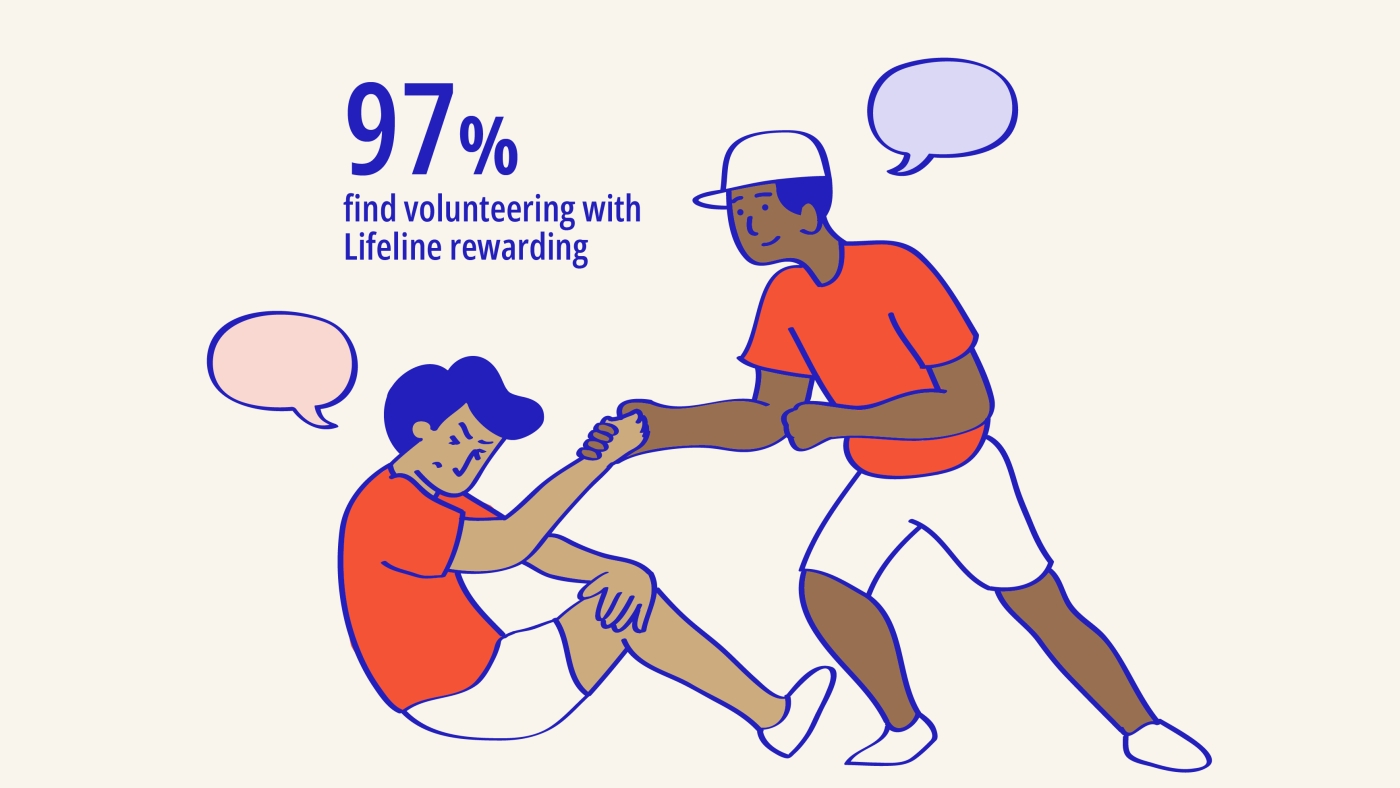
This year we conducted a comprehensive volunteer survey, which found that 97% find their volunteering with Lifeline rewarding. Unfortunately, like many not-for-profit organisations, Lifeline is facing challenges in recruiting and retaining volunteers particularly due to work and life pressures. To address these challenges, we began work on a volunteer strategy. The goal here is to create the best possible experience for our dedicated volunteers by enhancing their connection to Lifeline’s purpose and their understanding of the impact they make. We want people to see how volunteering for Lifeline has a similar public impact as other well-known volunteer organisations. The volunteer survey results are already helping to shape improvements to our sign up and training processes.
Optimising our national network
This year saw strong collaboration between Lifeline Members across the country in the development of new, on-the-ground services. Exemplified by our Bondi Response, these face-to-face initiatives lend Lifeline’s model of care, principles and safety structures to people who are walking past and want to chat, particularly in times of crisis. The success of these services shows the power of what is possible when we work collectively as a national organisation.
Promoting evidence-based responses
Lifeline Australia continued to advocate for positive change to strengthen the suicide prevention system this year, supported by evidence on two key areas of concern: financial distress and loneliness.
Research also remained a top priority, underpinning our evidence-based approach. Major projects this year helped deepen our understanding of suicide prevention for boys and men, strengthen support for Crisis Supporter wellbeing, and explore how emerging technology could help identify signs of distress in public places, while considering community views and legislative issues.