Beyond Now Safety Planning
Beyond Now Safety Planning provides an app and website for you to create a step-by-step plan to stay safe when you are overwhelmed or having thoughts of suicide.

 15 minutes

When you’re concerned for someone’s mental health or wellbeing, it’s natural to feel uncertain about what to say or do.
You might worry about their reaction, feel anxious about bringing up sensitive topics, or find the situation overwhelming. It’s okay to feel unsure. What matters most is your willingness to show up and listen.
Reaching out isn’t about having all the answers or fixing their problems. It’s about letting them know you care and reminding them that support is available.
For many, asking for help can feel daunting. They might fear being judged, struggle to express their feelings, or not even realise they need support. Your kindness and understanding can be the encouragement they need to take that first step.
It’s not always easy to tell when someone might need support, especially if they’re keeping their feelings to themselves.
Even if the person hasn’t shared their struggles openly, subtle changes in behaviour or mood can indicate they’re having a hard time.
If you’re unsure whether it’s time to have a conversation, the common signs listed below can help you decide.
Remember, everyone’s experience is unique. Some people might not show any obvious signs, but your intuition that something feels different or off can still be a reason to check-in.
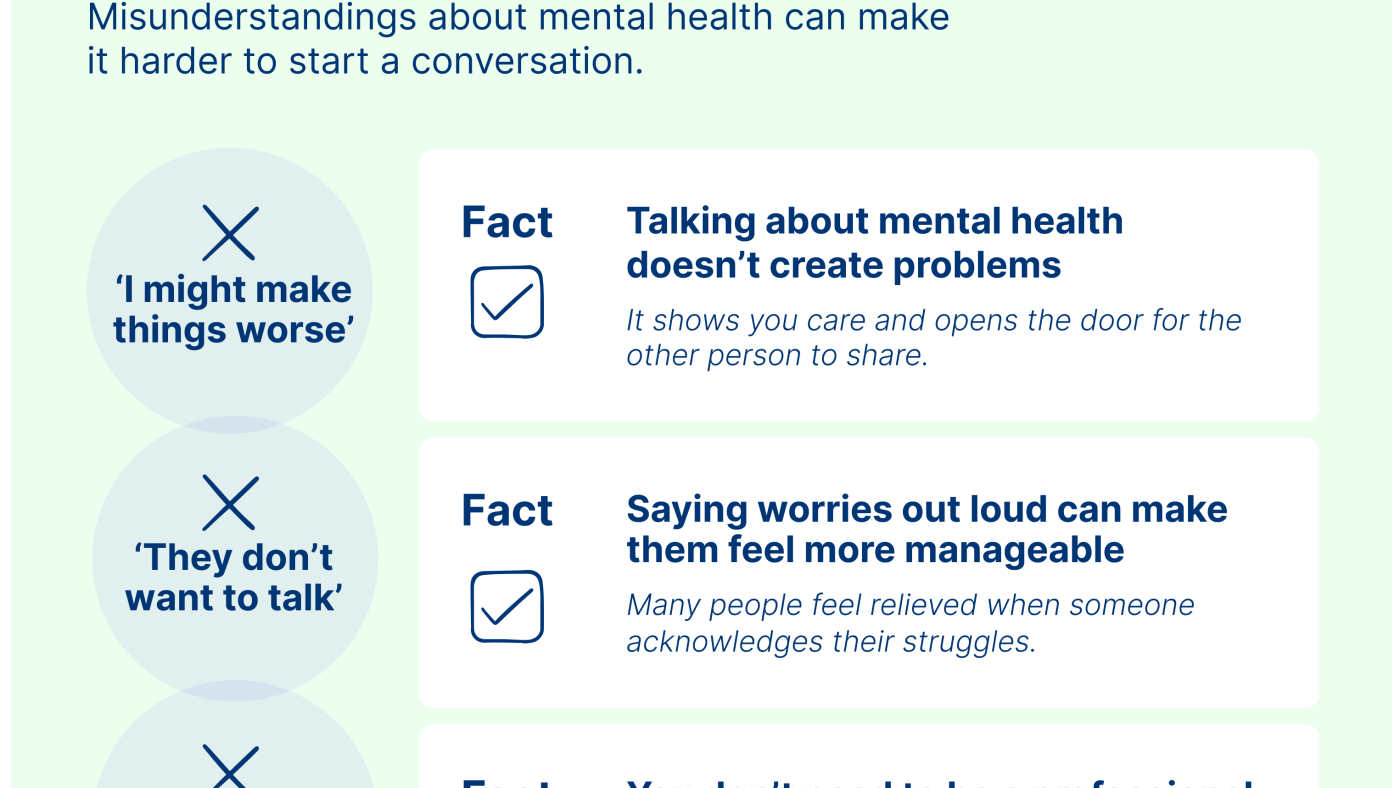
Deciding to reach out to someone you’re worried about is a brave and caring choice, and one that could make a life-changing difference.
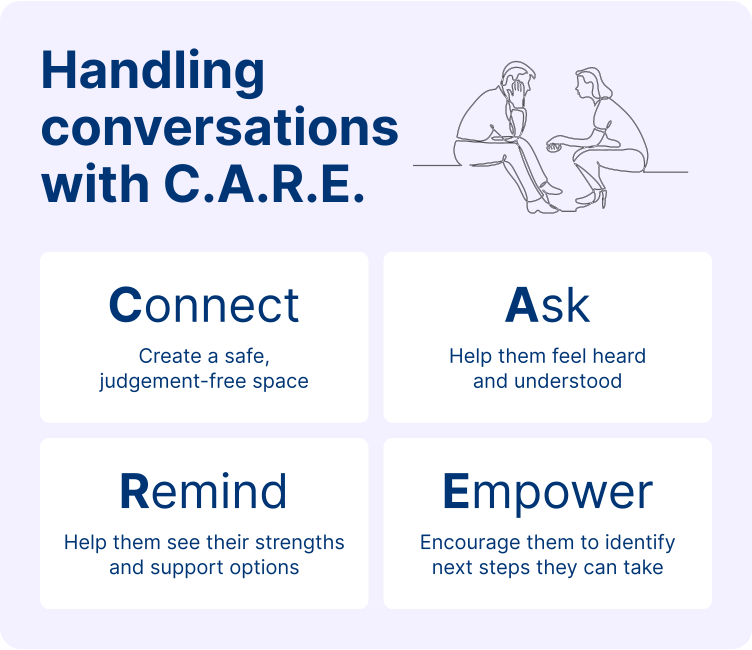
The C.A.R.E. framework (Connect, Ask, Remind, Empower) provides a simple, practical way to approach these conversations with confidence and compassion. It’s designed to help you support the other person while easing the pressure of feeling like you need to have all the answers.
In some situations, using C.A.R.E.'s thoughtful and empathetic approach can be the difference between someone feeling supported or remaining silent in their struggles.
'You don't need to have all the answers. Simply holding space while offering compassion and respect can mean the world to someone who’s having a hard time.'
In any conversation, the small actions listed below can help the other person feel heard, respected, and supported.
You can learn more about the difference between empathy and sympathy by watching the video below.
Everyone’s challenges are unique, which means these conversations might lead to different next steps.
What matters most is letting the other person know you’re ready to listen and support them in a way and at a time that feels right for them.
If the other person has indicated immediate plans to end their life, it’s important to call 000 as soon as possible.
Remember, you can seek help from a Lifeline crisis supporter 24 hours a day, 7 days a week via 13 11 14, online chat, and text for information and advice.
It can be incredibly difficult and emotionally taxing to be worried about someone who might be suicidal. It’s normal to feel overwhelmed or unsure about how to help.
By showing compassion, offering support, and encouraging them to seek help, you can play a crucial role in helping them through this difficult time.
If it feels right, you can offer to help them make a safety plan with the Beyond Now Safety Planning app for when things feel overwhelming.

No person should have to face their darkest moments alone.
If you need someone to talk to, Lifeline crisis supporters are here for you 24 hours a day, 7 days a week via 13 11 14, online chat, and text. If life is in danger, call 000.
You can learn more about what to expect when contacting Lifeline by clicking here.
If the other person isn’t ready to open up, it’s important to respect their boundaries while letting them know you’re there for them. Sometimes, just knowing someone cares can make a big difference, even if they aren’t ready to share yet.
Here are a few things you can do to show your support:
Whether the other person is ready to open up or not, asking if it’s okay to share practical resources can be a simple yet powerful way to support them. If it feels right, you can gently suggest the other person check out the Support Toolkit. You could say, ‘I’ve come across a website with mental health information that might be helpful. It’s there whenever you feel ready to check it out.’
When talking about the Support Toolkit, you can:
Below, you can find some of our most popular articles and support guides. If the other person is interested in finding local support services, you can also suggest using the Lifeline Service Finder.
Starting a conversation about mental health with kids or teens can feel daunting, especially if you’re unsure how they’ll respond. Whether it’s a child struggling to find the words or a teenager who seems distant, your care can make a real difference. Remember, you don’t need to have all the answers. Being there to listen is the most powerful thing you can do.
Kids and teens often respond to stress and other mental health challenges like anxiety, depression, and trauma differently from adults. For kids, emotions might come out through changes in behaviour or physical symptoms, while teens might withdraw or act out. Recognising these differences can help you notice when something’s not quite right.
Younger children might not have the words to explain how they’re feeling, so keeping things simple and offering plenty of patience can help them feel safe.
Young people often respond best when conversations are approached with empathy and respect for their independence.
It’s not always easy to talk to kids or teens about mental health, but your support can make a lasting difference. Don’t hesitate to explore resources like Kids Helpline and ReachOut together. They can spark helpful conversations and provide tools that resonate with them.
Above all, remember you’re not alone, and help is always available for you and the young person you care about.
Your care and willingness to be there for someone really can be a lifeline. At the same time, supporting someone you’re worried about can feel really challenging, which is why it’s so important to take care of your own mental health.
Here are a few ideas for looking after yourself while supporting others:
You can learn more about the importance of self-care by clicking here.
And remember - Lifeline crisis supporters are always here whenever you want to talk.
Your feedback helps us improve our site for people like you.