Lifeline Crisis Support
Lifeline is a free and confidential one-to-one support service for anyone feeling overwhelmed, distressed or having difficulty staying safe.

 5 minutes

If you’re feeling distressed and overwhelmed by the 2024 Bondi Junction attack that took place on the 13th of April, you are not alone.
This traumatic event impacted Australians far and wide, leaving us with a range of different emotions and reactions to process.
In the wake of an attack that happens in such a public space, victims and their family members, bystanders, first responders, emergency services, and those living or working in the vicinity, commonly and understandably experience shock, fear, panic, sadness, anger, and grief.
But for those who were not directly impacted yet are also experiencing responses like these, it can feel unexpected, uncomfortable, and confusing. We want you to know that it is completely normal to have a strong emotional response to an event like this, even if you weren’t there.
Regardless of how you experienced this tragic event, it’s okay to be upset by what’s happened and to reach out to someone for support.
Remember, we at Lifeline are here for everyone 24 hours a day, 7 days a week to ensure that no Australian has to face their darkest moments alone.
While an event like this impacts us all differently, there are common feelings that a lot of Australians are experiencing right now.
For example, you might be feeling:
Sometimes it will make sense why you’re feeling the way you are. Other times, these feelings might catch you off guard.
You may also notice that these feelings come and go, creep up on you unexpectedly, or vary in levels of intensity. This is normal.

Helping kids cope
We know a lot of Australians are struggling to know the best way to talk to their kids about the Bondi Junction stabbings.
If this is you, here is a helpful guide on how to have conversations with your children about what has occurred.
When we have big emotional reactions or feel overwhelmed following traumatic events, especially if it didn’t directly impact us, it can be common to:
It doesn't matter how close or far you were from Bondi when this attack occurred, Australians are collectively experiencing trauma.
Even though these reactions are normal, they can still feel isolating and overwhelming.
Thoughts like ‘But I wasn’t even there!’ can make you feel like you don’t deserve to be feeling the way you do.
Remember, what has occurred is incredibly traumatic and you do deserve to feel upset by what has happened. You also deserve to feel supported.
It’s important to remember that feeling on edge, short-fused, sad, unable to concentrate, having trouble sleeping, being all-consumed by the news, and/or just generally feeling overwhelmed, are completely normal after such a traumatic event.
When awful things like this happen, it’s important that we’re turning to techniques and strategies that help us pull through and feel better.
Keep in mind:
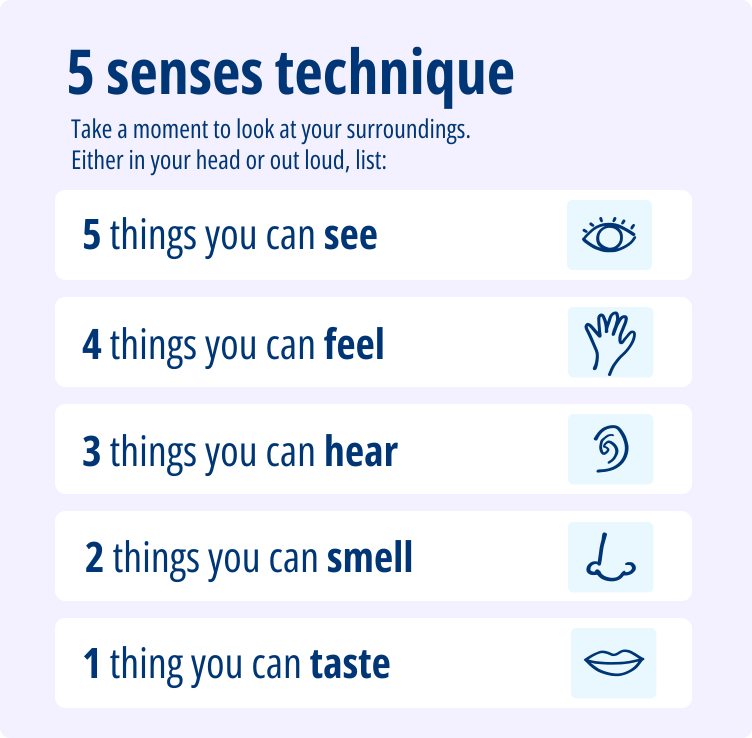
What occurred at Bondi Junction is a tragedy that has impacted many Australians in many ways.
No matter who you are, what your experience is, or how this has and/or continues to impact you, remember that every single person deserves support.
Lifeline is here and you don’t have to face this alone.
Editor's note
Shortly after the publication of this support guide, another suburb in Sydney, NSW faced a traumatic attack at a church.
If you're feeling upset and overwhelmed by this event and would like to speak with someone, Lifeline is always here - 24 hours a day, 7 days a week.
You may also find the following support services helpful.
Along with Lifeline, there are a number of organisations who can offer support. You can contact the NSW Mental Health Line on 1800 011 511 or scroll down to learn more about:
Your feedback helps us improve our site for people like you.