Grief & loss
What is grief?
Grief is our body’s natural and emotional response to the loss of someone or something significant to us. Whether it's the death of a loved one, the end of a relationship, or a big life change, grief is a really important way we cope, make sense of the world, and find hope for the future.
Grief and loss are deeply personal experiences. What may be a devastating loss for you may not be for someone else, and that’s okay. It doesn’t mean your grief is any less valid. Ultimately, how you feel after a loss will be directly related to the meaning or value it holds for you.
It’s common to experience grief after:
- The death of a loved one
- Suicide bereavement
- The loss or death of a pet
- Experiencing pregnancy loss
- Relationship breakdowns, estrangements, and divorce
- Job loss or career change
- Moving to a new location
- Natural disasters
- Changes in mental and physical health.
Losing our son was an extremely painful part of our lives. At the time, we wondered how we would ever move through the fog of grief and start to see the sun shining again.
Losing someone or something important to us can result in secondary losses, too.
For example, the main income earner of a household passing away can result in the loss of financial security; the loss of a job can result in the loss of identity; and the loss of caring for a loved one can result in a loss of purpose and connection. This is why you might feel like you’re grieving multiple things at once.
- Relationships with others
- Community and social connection
- Financial stability
- Identity and purpose
- Independence
- Sense of safety and security
- A dream or future plan
- Routine and/or other significant life changes.
What does grieving feel like?
While grieving is a natural and helpful process, it is also a really painful experience that can impact us mentally, emotionally, and physically.
As a society, we don’t often acknowledge just how hard it can be to process the wide range of emotions and physical impacts that can come with grief. This can make you feel alone and like you’re the only one who’s ever felt this way.
Grieving is an experience that nearly all of us will go through at some point in life, and there isn’t a right or wrong way to do it. Wherever you are in your grief journey, it’s important that you’re giving yourself time and permission to fully process your loss.
It’s also important to reach out for support if you feel like your grief is making it hard to go about day-to-day life.
In this topic, you’ll find information and resources that can help you understand:
- How different types of grief can impact your mental and physical health
- Practical things you can do to feel better right now and in the long term
- What to expect when grieving after losing someone to suicide
- Ways you can support someone who’s experiencing grief and loss.
Help is available.
Grieving isn’t something you have to do alone. You can learn tips for speaking with someone you trust, book an appointment with your GP, or contact Griefline.
If those don’t feel like options for you at the moment, you can contact Lifeline. We're here for you 24 hours a day, 7 days a week via 13 11 14, text, and chat.
Understanding the feelings and effects of grief
Grief can bring up a wide range of unexpected and uncomfortable feelings and emotions. They might start right before or right after a loss, or they might come up months or years later.
For example, if you lost a parent when you were young, you might feel grief again during big life events like graduating from school, getting married, or having a baby.
Remember, grieving is a personal journey that happens on your own timeline. There’s no right or wrong way to do it. Your feelings are influenced by how the loss has affected you, your past experiences with grief, and the support you have available to you.
If you’re feeling stressed or overwhelmed, it’s important to acknowledge that you are going through something really hard. Know that things will get better and you will find a way to move forward.
Understanding how you’re experiencing grief can help you find the right short-term coping strategies and long-term support options that are right for you.
On this page, you’ll find information on:
- How you might be feeling when grieving
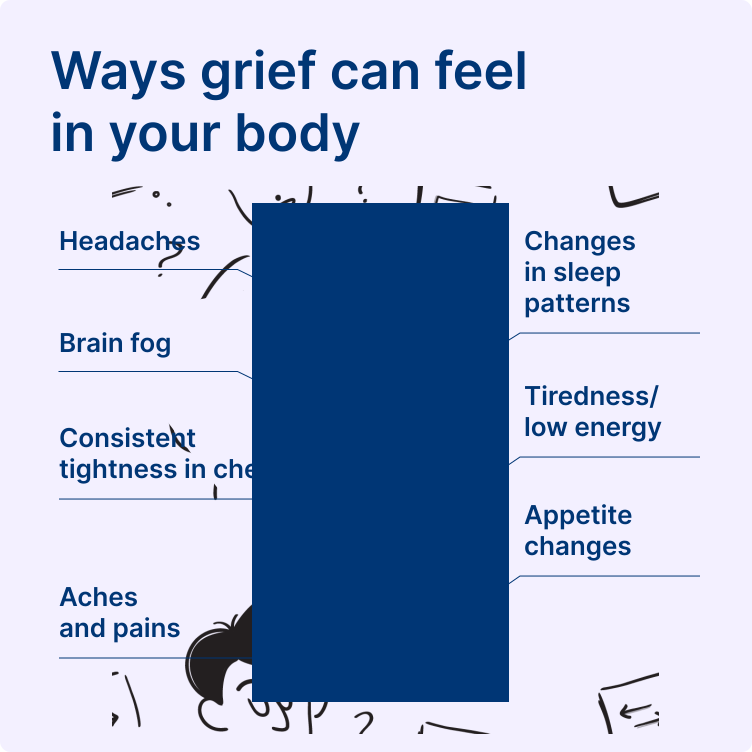
- Impacts of grief on your mind and body
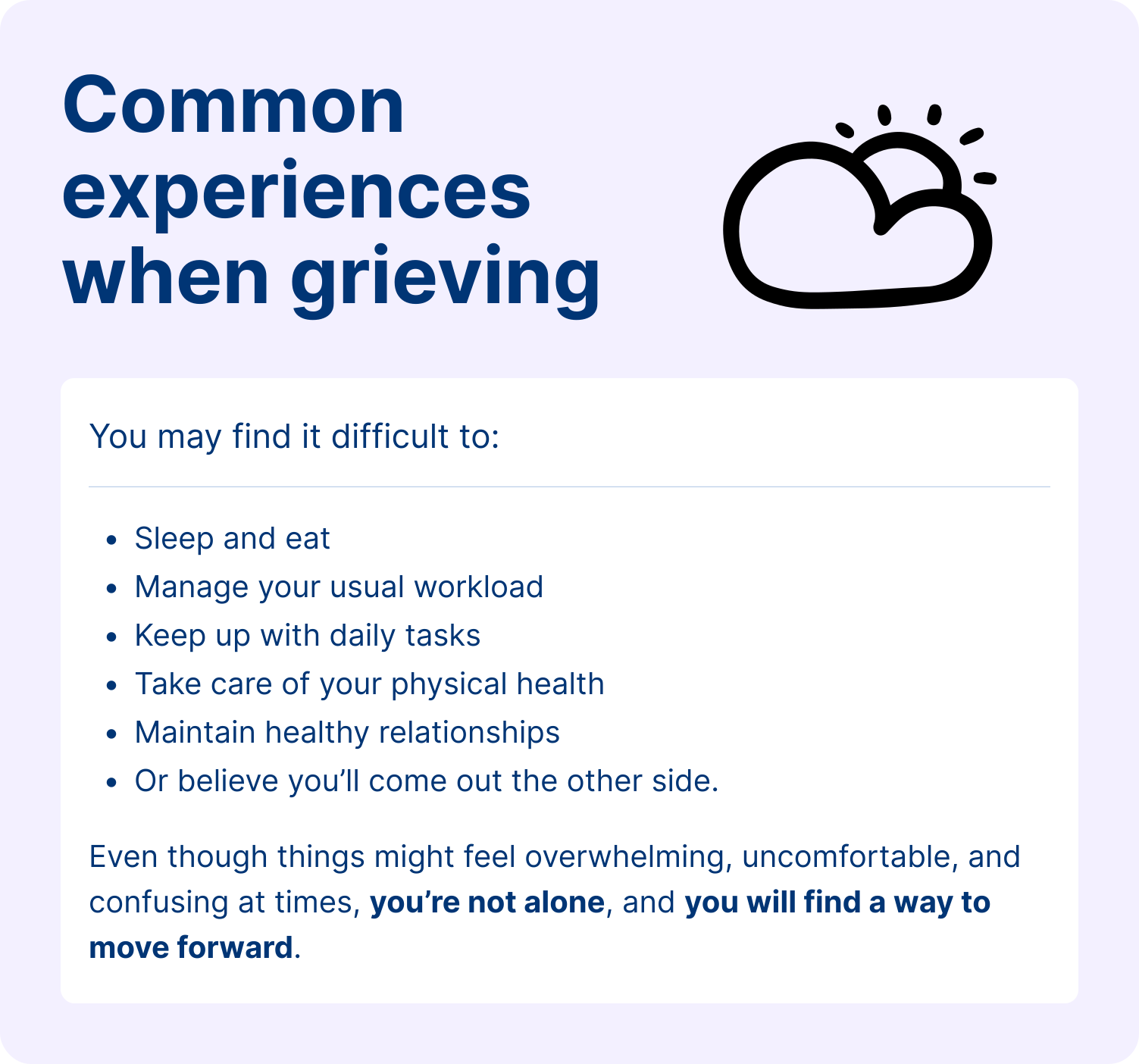
- Changes you might notice in your daily life
- Navigating grief and your sense of self.
Scroll down to learn more.
How you might be feeling when grieving
At any point in the grieving process, you might experience:
- Anger and irritability
- Confusion and shock
- Despair
- Frustration
- Guilt
- Happiness
- Loneliness
- Regret
- Sadness
- Yearning
- Relief (If the person was struggling with an injury or illness, it’s common to feel relieved that they’re no longer in pain.)
It’s normal to feel some, none, or all of these feelings at different times and levels. It’s also normal to find yourself processing your grief for weeks, months, or even years.
Impacts of grief on your mind and body
Grief can affect more than just the way you feel. It can also impact the way your mind and body works.
For example, you may notice that you are experiencing:
- Trouble focusing
- Memory issues
- Difficulty organising your thoughts or solving problems
- Feeling overwhelmed by decisions, even small ones
- Repetitive or intrusive thoughts
- Anxiety and panic
- Physical symptoms.
How grief can influence your daily life
Depending on where you are in the grieving process, you might notice changes in how you act. You may not feel like socialising or you may be keeping yourself busy to avoid difficult emotions. Both of these responses are completely normal and, to some extent, can be helpful ways to cope with grief.
However, avoiding emotions or withdrawing from the world for too long can lead to loneliness, isolation, stress, burnout, or the use of unhealthy coping mechanisms like alcohol and other substance misuse.
Below, you can read about a few more ways grief can influence your actions and impact your relationships and social connections.
- Avoidance of things that remind you of the person or thing you lost
- Constant searching for reminders or signs of the person or thing you lost
- Relationship problems, especially if you don’t understand each other’s grief
- Using work, school, and social plans as a distraction
- Disruption of daily habits and routine
- Comparing other people to the one you lost
- Jealousy and resentment of those who haven’t experienced loss
- Frequent crying
- Restlessness and sleep problems
- Withdrawal, loneliness, and isolation
- Difficulty communicating
- Dependence on others
- Self-harm
- Substance misuse.
If you feel like you’ve tried coping strategies and still aren’t able to manage day-to-day life or complete regular tasks, you might be experiencing complicated grief.
If not addressed, this can lead to longer-term mental health struggles like anxiety, depression, and suicidal thoughts.
Navigating grief and your sense of self
When grieving, it’s common to suddenly feel disconnected from the world as you once knew it.
By nature, humans are social creatures who depend on connection for our survival. While we need connection to others, we also need connection to ourselves.
Our sense of self often comes from how we feel seen and acknowledged by others. When we lose people, job roles, or specific abilities that helped us feel whole, we can also lose part of our identity.
As a result, you might find yourself questioning your life choices, purpose, abilities, and future plans. As confusing and overwhelming as this period can be, it’s often a time of deep self-reflection that can lead to a meaningful transformation. It might be hard to see right now, but you are a whole person no matter who, what, or where was lost.
Maintaining healthy self-esteem while grieving is an important part of taking care of your mental health and wellbeing. It’s also a key way you’ll be able to work through the grieving process and ultimately find ways to move forward. You can learn more about self-esteem and how to improve yours in the article below.
It’s important not to let anyone, including your own inner voice, make you feel guilty for having both good and bad days or doing what you need to cope.
This might involve focusing on self-care, reaching out to a support service like Griefline, taking some time off your usual responsibilities, or finding coping strategies that allow you to express and process your grief.
When they say time heals all wounds, it doesn’t - but eventually, it changes and it walks next to you ... It’s always there, and you acknowledge your grief, but it’s a companion rather than an all-consuming feeling.
On the next page, you can learn about tips and strategies for coping with grief and loss.
Types of grief
We can experience grief before, during, and after any type of loss and in many different ways. Sometimes, your thoughts and feelings will be expected and make sense. Other times, you might be surprised by how intense your response is or how unexpected your feelings are. In some cases, you might even feel like you don’t really have the right to grieve.
No matter what type of loss you’ve experienced or how intense your emotions might feel, your grief is valid and you’re allowed to process your loss however feels right for you.
Try not to compare yourself to the way others grieve or what society might tell you about grieving. Remember, there is no right or wrong way to process your loss.
Below, you can read more about different types of grief.
Disenfranchised grief
Disenfranchised grief happens when your loss isn’t openly recognised or supported by others.
For example, you might feel this way when grieving something that happened during childhood, a miscarriage, a short-term relationship, a pet, or the loss of purpose after retiring.
It can be difficult when you feel like your grief isn’t acknowledged or validated by society.
Anticipatory grief
Anticipatory grief is the grief you feel before a loss actually happens.
For example, if you or someone you care about gets a serious injury or illness, you might start grieving future health challenges or changes to daily life even before the loss occurs.
Similarly, you might experience anticipatory grief when facing major life changes like an impending divorce or separation. It’s a way of preparing for and dealing with the emotional impact of the anticipated loss.
Collective grief
Collective grief is the shared sadness experienced by many people affected by the same event.
For example, many people felt collective grief during and after the COVID-19 pandemic because of the loss of lives, loss of financial security, and loss of social connections.
Collective grief is commonly experienced after natural disasters or distressing public events.
Complicated grief
Complicated grief (sometimes called prolonged or complex grief) is when your feelings of grief are very intense and last for a long time.
If you are experiencing complicated grief, you might feel hopeless about the future, lonely, depressed, or experience thoughts of suicide. This type of grief can make it hard to handle everyday activities and responsibilities.

Complicated grief is intense sadness that lasts a long time after a loss, making it hard to cope and move forward.
Depression is a broader mental health challenge that affects your mood, energy, and daily life and isn’t always connected to a specific loss or event.
While complicated grief is focused on a specific loss, depression affects various aspects of your life and can occur without a clear reason.
You can learn more about the feelings and effects of depression in our depression topic.
Traumatic grief
While trauma is the emotional and psychological impact of a deeply distressing event, traumatic grief is a response to a sudden or unexpected loss. This might be the result of losing a child, experiencing the suicide death of a loved one, or even losing a vital support system due to something like a natural disaster.
Unlike the grief that may come from an expected loss, such as after a long illness, traumatic grief can feel more intense, overwhelming, and disorienting. That doesn’t mean other forms of grief are any less painful - grief is always hard.
For some, traumatic grief can lead to complicated grief, making it especially important to seek support when needed.
Ecological grief
Ecological grief is the deep sadness and emotional pain people feel when they witness or anticipate the loss of ecosystems, species, or landscapes due to environmental changes like deforestation, habitat destruction, climate change, extreme weather, and natural disasters.
It can bring up feelings of helplessness, anger, anxiety, and despair and is often associated with anticipatory or disenfranchised grief.
If you or someone you care about has experienced a natural disaster, you can find mental health support and preparedness tips in our natural disasters topic.
No matter what type of grief, Lifeline is here for you.
No matter what you’re going through, there are people who want to help.
You can contact Lifeline 24 hours a day, 7 days a week via 13 11 14, text, and chat.
Understanding and coping with suicide grief
Losing someone to suicide (also called suicide bereavement) can be a traumatic experience that feels different to other sudden losses.
In addition to pain and shock, it’s normal to feel like you’re in constant need of answers, regretful of things said or left unsaid, upset that you weren’t able to do anything to prevent the death, and worried about how others will treat you. It's also quite common to experience secondary losses for the dreams, plans, and special moments you won’t get to share with the person you care about.
The circumstances surrounding losing a loved one to suicide are complex and often confusing. The most important thing to know is that you’re not responsible for what happened and have no reason to blame yourself. It's okay not to have answers, even though it may not feel that way right now.
Even though many people have experienced the loss of a loved one to suicide, everyone’s journey is going to be different. Your thoughts and feelings will be deeply personal and there isn’t a right or wrong way to grieve. Remember - grief is a natural response to loss and an important way to make sense of what life looks like without your loved one while finding hope for the future.
On this page, you’ll find information on:
- How you might be feeling after losing someone to suicide
- Understanding suicide stigma and grief
- Tips for coping with suicide grief.
Scroll down to learn more.
Suicide bereavement support is available.
If you’d like to talk to about losing someone you care about to suicide, you can contact StandBy (1300 727 247) between 6am and 10pm (AEST), 7 days a week.
Alternatively, you can speak with a Lifeline crisis supporter 24 hours a day, 7 days a week via 13 11 14, text, and chat.
How you might be feeling after losing someone to suicide grief
Grief after any type of loss can bring up a range of different thoughts and feelings and impact your mental and physical health.
While everyone is going to grieve in their own way, we’ve listed common experiences people have reported following a suicide loss. It’s okay if you’re experiencing none, some, or all of these. No matter what you’re feeling right now, it’s valid.
Grieving a loss by suicide can bring up feelings of:
- Shock and disbelief
- Guilt and self-blame
- Numbness
- Anger and irritability
- Anxiety
- Loneliness and isolation
- A need for answers
- Shame
- Betrayal, rejection, or abandonment
- Deep sadness
- Relief.
Relief can be a tricky emotion that sometimes comes with grief, often followed by feelings of guilt. If you supported the person you lost through years of mental health challenges, it’s natural if you feel some relief that they’re no longer suffering.
It’s important not to judge your feelings or emotions and to accept them as part of your healing journey.
Click here to learn more about the feelings and effects of grief.
Suicide grief and mental health
Losing someone you care about to suicide is a distressing life event and can potentially lead to various mental health challenges, including substance misuse, self-harm, anxiety, depression, post-traumatic stress disorder (PTSD), and potentially your own suicidal thoughts.
It’s okay if you’re struggling to cope, but it’s important to reach out for help and support. As isolating as grief can feel, you’re not alone in your pain, and there are people who want to help. You can contact Lifeline 24 hours a day, 7 days a week.
Understanding suicide grief and stigma
While much of the world has come to understand that there is nothing shameful about suicide, there is still work to be done to reduce suicide stigma and correct the myths and misconceptions in many communities.
If you’ve been bereaved by suicide, stigma can be particularly challenging, as it may leave you feeling:
- Ashamed and afraid to reach out for support
- As if your grief isn’t valid (also known as disenfranchised grief)
- Pressured to ‘get over it’ and move on
- Spiritually and/or religiously conflicted
- Abandoned and isolated by those closest to you.
No matter what grieving looks like for you, your responses and emotions are valid. There is no need to feel shame about how your loved one died. Everybody deserves support, including you.
If it feels like people in your life are pulling away, it might not necessarily be caused by stigma. After any type of loss, it can be difficult for others to know what to say or how to offer support. It’s normal to experience relationship problems and to feel disconnected from friends and family members.
If you feel like you’re struggling to connect and communicate with others, you can find information and resources from organisations like Relationships Australia and StandBy.
Healing through knowledge
When you’re ready, learning about suicide can be an empowering step toward healing. This knowledge may also help you feel more prepared for conversations with others and encourage you to speak with someone you trust about what you’re experiencing.
By educating yourself, you can gain a deeper understanding of the factors that contribute to suicide, clear up misconceptions, reduce self-blame and guilt, and learn respectful ways to talk about suicide.
Using sensitive language when referring to suicide is important because it helps to honour the person who has died while avoiding further stigma or distress for the person you’re supporting.
Below, you can learn ways to speak respectfully about suicide.
- Died by suicide
- Suicided
- Ended their life
- Took their own life
- Non-fatal suicide attempt.
For more information, you can download StandBy's fact sheet on managing social stigma after suicide by clicking here.
- Committed suicide
- Successful suicide
- Completed suicide
- Failed suicide attempt.
Click here to learn more about suicide stigmas, myths, and misconceptions.
While seeking answers and education is valuable, it’s important to be mindful of how it impacts your mental health.
For example, if constantly researching suicide-related topics brings up intense emotions that make it difficult to cope, consider taking a step back and prioritising your wellbeing.
If you’d like to talk to a counsellor about losing someone you care about to suicide or be connected with local support services, you can contact StandBy (1300 727 247) between 6am and 10pm (AEST), 7 days a week.
And remember - you can speak with a Lifeline crisis supporter 24 hours a day, 7 days a week via 13 11 14, text, and chat.
Tips for coping with grief after losing someone to suicide
Coping with grief involves acknowledging all of your emotions and expressing how you feel without judging yourself. As unexpected and uncomfortable as the grieving process can be after losing someone to suicide, it’s an essential part of healing and finding a way to move forward with your life. It's also important to set realistic expectations for your grief journey.
Healing from the loss of a loved one to suicide doesn't follow a specific timeline. Some people may start feeling better after a few months, while for others, it may take years.
Try not to compare your healing to others; grief is not linear and no two grief experiences are the same.
Below, we’ve listed strategies and resources that can help you throughout your grieving process. What works for someone else might not work for you and that’s okay. The most important thing is that you’re going at your own pace and reaching out for support when needed.
When experiencing suicide grief, it's common to blame and criticise yourself. It’s important to remember that you are not at fault and you are not to blame. Try to be kind to yourself as you would be to a close friend in your situation.
For example, if you catch yourself thinking, ‘I should’ve done more,’ gently challenge that thought and replace it with something kinder like, ‘I did the best I could with what I knew at the time.’
Click here to learn more about the importance of self-esteem and mental health.
Taking care of your mental and physical health is really important while you’re grieving.
It’s important to focus on:
- Eating well
- Getting the right amount of quality sleep
- Socialising and connecting with others
- Taking time to do activities you enjoy
- Reaching out for support when needed.
When grieving, it’s important to have ways to express and process your thoughts and feelings. It’s also important to be able to manage physical symptoms of things like stress, anxiety, or panic.
On our short-term help for grief page, you can learn about and try strategies like:
- CBT-based thought challenging exercises
- Journaling
- Grounding techniques
- Mindfulness
- Meditation
- Creating a self-care box.
Social connection is an important way to take care of your mental health and wellbeing when grieving the loss of someone you cared about to suicide. When you’re ready, try to be around people who allow you to reminisce about and celebrate the life of the person you lost. You can share stories, memories, and moments that honour their life and the positive impact they had.
You might find this connection with friends and family. However, you can also try participating in Griefline's support groups or online forums that are specifically for people who’ve been bereaved by suicide.
Peer CARE Companion Warmline
Seeking bereavement counselling or therapy can be really helpful in navigating complex emotions, trauma, and grief.
To find grief-specific services, you can:
- Reach out to local mental health clinics or counselling centres and inquire about their services for suicide loss and bereavement
- Ask your GP about creating a Mental Health Treatment Plan
- Find support in your region via the Standby - Support After Suicide website.
Click here to learn more about finding a therapist that's right for you.
Consider joining a support group in your community for those who have lost a loved one to suicide. These groups offer a safe and non-judgemental space where you can share your experiences, connect with others, and receive support from people who have had similar experiences.
To find a suicide-loss support group, you can:
- Contact local mental health organisations or community centres and ask if they host or can recommend suicide-loss support groups
- Find support groups in your region via the Standby - Support After Suicide website
- Use our service finder to locate services in your area.
Experiencing the loss of someone to suicide can lead to a journey of self-reflection and personal growth. It can be helpful to think about what matters most to you and how you can align your life with those values. This could involve spending more time with loved ones or focusing on activities or causes that are important to you.
Supporting children and young people after suicide loss
When children and young people experience a traumatic event, such as the loss of someone close to them to suicide, they often express their grief in indirect ways.
For example, while adults might cry about their loss, talk openly about their feelings, or seek support from others, a toddler, child, or young person might:
- Act clingy and become easily upset
- Experience changes in sleep and appetite
- Revert to baby-like behaviours, such as thumb sucking, and bedwetting
- Show signs of separation anxiety or school refusal
- Have frequent mood swings
- Constantly ask about the future
- Display anger and aggression
- Begin using alcohol or other substances
- Withdraw from family, friends, and activities they once enjoyed.
Most children understand the concept of suicide from an early age, so it’s important to be honest with them about what happened and acknowledge their feelings. This is particularly important if the person a young person lost was a parent, sibling, partner, or someone else close to them.
- Do: Explain that it was a suicide death
- Don’t: Go into graphic details
- Do: Use age-appropriate language
- ‘They were sad and in pain and their body wasn’t able to keep working.'
- ’They won’t be here anymore and it’s okay to feel sad.’
- ‘We can talk about it whenever you want.’
- Don’t: Use figurative language (e.g. ‘They went to sleep.’ or ‘They left us’.)
For more resources to help children and young people cope with suicide grief, you can download the free books created by StandBy below.
- A book just for me – a grief journal (for children under 12) and accompanying notes*
- Includes activities and prompts to help children identify and express their feelings.
- My grief journal - for grieving teens (for 13 +) and accompanying notes*
- Provides activities and exercises that help teens seek help, cope with their grief, and find healthy ways to talk about their emotions.
*The notes provide additional guidance and support for both teenagers and their adult support network.
You can learn more about speaking with kids and teens about suicide by visiting StandBy's website.
It’s also important to be open about your grief. Children often take emotional cues from the adults around them, and expressing your feelings can help them understand and process their own grief.
To support children and young people through their suicide grief, you can:
- Create and stick to routines
- Talk about happy memories of the person you lost
- Put together a photo album or box of keepsakes
- Build a support network. (If there are other adults in the child or young person’s life (like a teacher), let them know what happened so they can offer additional support.)
Grieving after suicide can be a long and challenging experience.
As you process your grief, it’s important that you’re kind and patient with yourself. It’s okay if you need extra time to process and accept the loss due to the nature of the death.
Have you been impacted by suicide in another capacity?
Our Touched by Suicide: Wellbeing support guide is for anyone impacted by the suicide death, suicide attempt, or suicidal behaviour of someone they are not closely related to or directly connected with.
Coping with grief and loss
You’ve probably heard grieving referred to as a process. This is because it takes time and work to understand the different thoughts and feelings that can come up at any time after you’ve experienced loss.
It’s natural to want to avoid the painful parts or to push your feelings aside, but it’s important to face your emotions and treat yourself with kindness as you adapt to a new reality.
Grief doesn’t follow a straight path. Some days, you might feel like you’re managing, while on other days, it could seem really overwhelming. Everyone grieves in their own ways and it’s okay to take it one day at a time.
Even if it seems hard to imagine right now, with time and support, you can start to feel more like yourself again - which you deserve.
On this page, you’ll find information on:
- Tips for processing grief and accepting loss
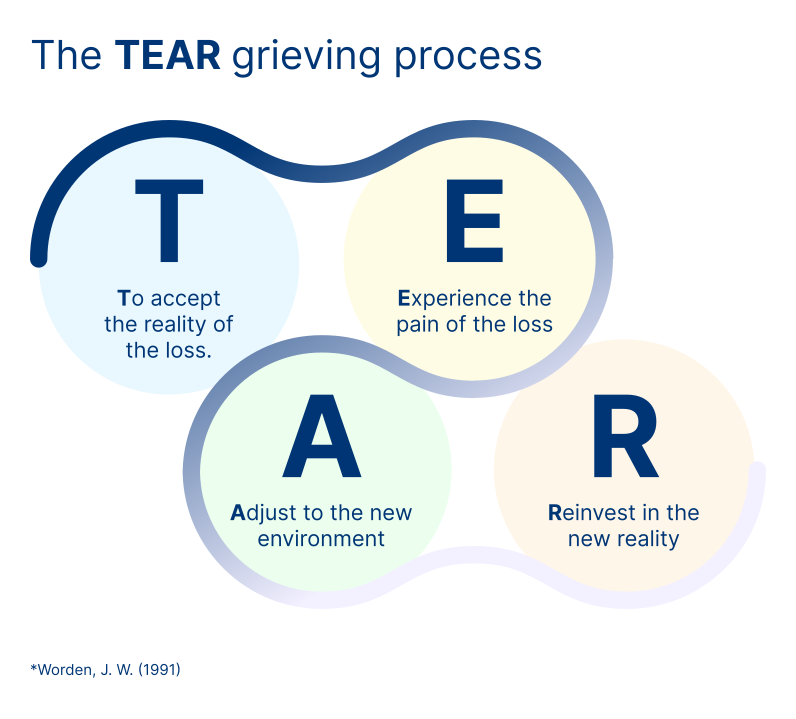
- Using the TEAR grieving process to work through grief
- Practical strategies for managing emotions
- The importance of prioritising and practising self-care.
Scroll down to learn more.
Tips for processing grief and accepting loss
Regardless of when, where, or how it happens, there is no right or wrong way to grieve. There are, though, more helpful and less helpful ways to process and cope with your loss.
Below, we’ve listed some things you can do to make the grieving process a bit more manageable.
Grieving often brings up a mix of difficult feelings and emotions. While it might seem challenging, try to acknowledge all of the feelings that come up for you and accept them without judging yourself.
For example, if you feel sad and need to cry, let yourself cry. If you’re feeling angry, find healthy ways to release that anger, such as going for a walk or run, journaling your thoughts and feelings, or even screaming into a pillow.
Talking to someone you trust or joining a support group can also be helpful because they provide a safe space to share your feelings.
If you’re finding it hard to cope with negative or intrusive thoughts, you might consider exploring acceptance and commitment therapy (ACT) strategies.
Grief can affect every area of life and it’s normal to struggle with tasks you’d usually manage easily. Try to treat yourself with the same kindness you’d offer a friend in a similar situation - you’d likely be understanding, patient and gentle.
Experiencing the loss of someone or something significant can also affect your self-esteem, making it harder to be kind to yourself.
If you’re struggling with feelings of unworthiness, doubt, or like you’re unsupported, you might find it helpful to read our article on self-esteem and mental health.
Sleep and mental health are closely connected, which is why it's common to struggle with your sleep when you’re experiencing some of the physical and emotional impacts that can come with grief.
Click here to learn about the importance of sleep and tips for how you can improve yours.
When you’re in pain, it’s common to want to numb or distract yourself. While coping mechanisms like alcohol and other substances might provide temporary relief, they can lead to more harm in the long run.
If possible, try to avoid unhealthy coping mechanisms like:
- Alcohol and other substances
- Gambling
- Self-harm
- Restricting food or binge eating.
Click here to read our support guide on understanding and managing addiction.
As you continue to navigate life, certain places and interactions may intensify your feelings of grief. This can often be the case in the first few years following the loss of someone or something important to you.
No matter where you are in your grief journey, it can be helpful to identify situations that might be challenging, anticipate how you might react, and prepare a plan to help you feel supported, comfortable, and in control.
For example, if you anticipate feeling stressed at an annual community event you used to always attend with the person you lost, you could prepare by inviting a friend for emotional support and making some extra time for self-care. Holiday periods can be especially difficult. For tips on coping during the holidays, you can read our support guide here.
Processing grief
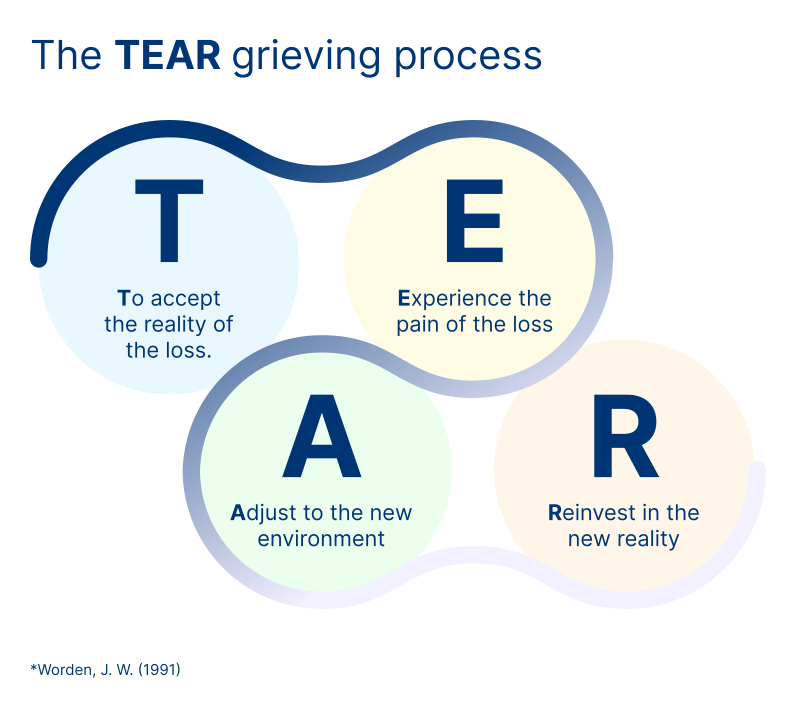
While grieving is a deeply personal and non-linear process that looks really different for everyone, the TEAR grieving process has been effective for many people and can provide valuable support in navigating through grief and finding a path forward.
Below, you can learn more about how to use prompts from TEAR to process your grief and accept your loss.
To accept the reality of the loss
The first step is accepting the loss is real, which can be one of the hardest parts.
- Allow yourself to revisit it: It’s normal to forget, deny, or feel like what’s happened is not real. You may need to remind yourself, again and again, that the person or thing is really gone.
- Be patient with your feelings: You don’t need to accept it all at once. You might understand the loss has happened, but it can take time for your emotions to catch up.
Experience the pain of the loss
Grieving is painful, but avoiding the pain can prolong it. Let yourself feel it fully, in whatever way it comes.
- Express your emotions: Whether it’s through talking, crying, writing, or just sitting in silence, let your feelings out.
- Do it in your own way: Remember, everyone experiences grief differently. Take your time, and be gentle with yourself as you work through the pain in your own way.
Adjust to a new environment
Life can feel really different after a loss. As you adapt with changes, you might have to adjust to new roles, cope with feeling emotionally empty, or navigate social changes.
- Accept that it’s a gradual process: Adjusting isn’t quick or easy and there will be ups and downs. You may have moments of progress followed by setbacks. Be kind to yourself and remember, this is normal. You don’t need to rush.
- Find your rhythm: The adjustment is deeply personal. Don’t expect to have everything figured out right away - just move at your own pace.
Reinvest in a new reality
Moving forward doesn’t mean forgetting. You can still carry the memories while adapting to a new reality.
- Create a new normal while honouring the past: Find ways to keep the person or thing you lost as part of your life, whether it’s through rituals, keepsakes, or memories. For example, you might light a candle in their honour on special days or continue traditions they loved. This allows you to maintain a connection while moving forward.
Practical strategies for managing emotions
Throughout your grief journey, it’s normal to experience a wide range of emotions. Some may be easier to manage, while others might feel unexpected, overwhelming, or uncomfortable.
In some cases, grief can lead to feelings of depression, anxiety, or panic attacks. When difficult emotions arise, or when you’re feeling deeply sad, stressed, anxious, or panicked, it can be helpful to have coping strategies like the ones listed below to rely on.
Keep in mind that what works for someone else might not work for you, and that’s okay. The key is to keep experimenting until you find what feels right.
Stress and unease often arise when we focus on past events or worry about the future.
Mindfulness and meditation can help you bring yourself back to the present moment and feel like you’re calmer and more in control.
Although mindfulness and meditation may not be for everyone, studies have shown that even a short amount each day - just 10 minutes, can lead to noticeable benefits for your mental wellbeing.
Click here to learn more about mindfulness and how to get started.
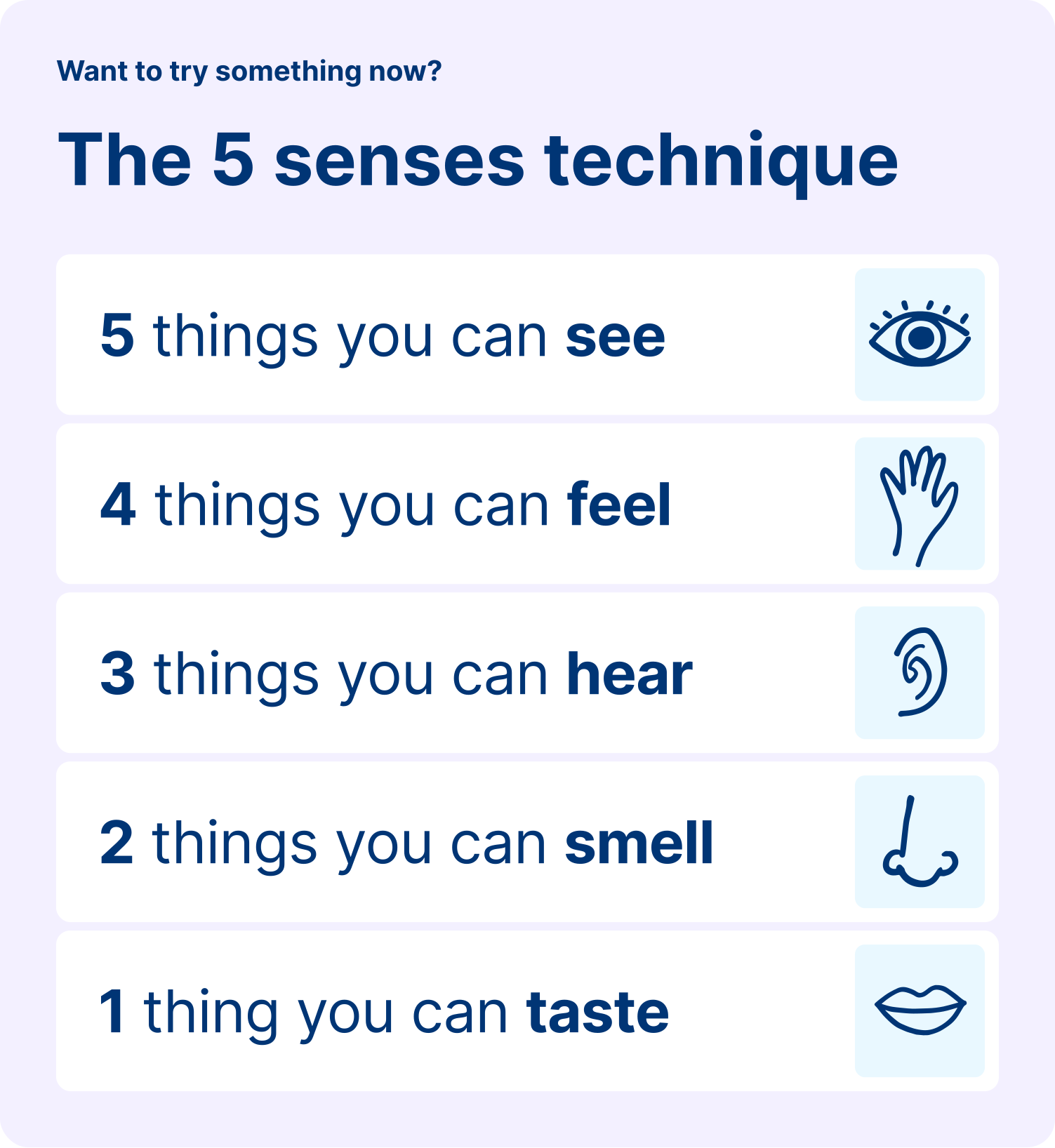
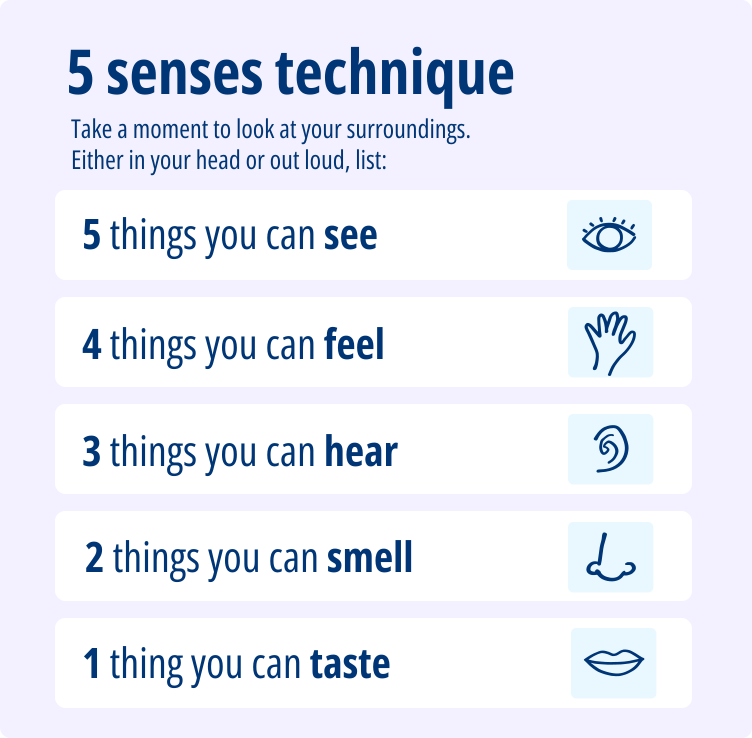
Like mindfulness, grounding techniques can help you shift your attention away from distressing feelings and redirect it to what is happening right now. Grounding can be particularly helpful if you’re feeling overwhelmed, experiencing anxiety or panic attacks, or having flashbacks related to the trauma of your loss.
There are many grounding techniques to explore, but a great starting point is the five senses check-in, which can help in the moment to make your feelings less overwhelming.
Journaling is a helpful way to process your thoughts and feelings, capture memories, and express frustrations and regrets.
Here are a few prompts you can use:
- Today, I am really missing …
- The hardest time of day is …
- I could use some more …
- I could use some less …
- I am ready to feel …
- I find it helpful when …
Click here to learn more journal prompts to take care of your mental health and wellbeing.
One of the hardest parts about loss, especially when it’s the loss of a person, is the feeling of having left words unspoken.
If it feels right, you can try writing a letter to the person or thing you lost. You can write about shared memories, express gratitude, or detail things you wish had been different.
If the relationship was challenging, you might also use the letter to articulate how their actions impacted you and why certain things were difficult.
Grief can be a heavy and isolating experience. If you feel ready, reaching out to family, friends, or a grief support service can help lighten the emotional burden you’re feeling right now.
Keep in mind that people may not always know what to say or how best to offer support. If you’re comfortable, guide them by letting them know what type of support you need.
For example, you could say things like:
- ‘I really need someone to listen to what I’m going through right now.’
- ‘I’m not sure what to do right now and would appreciate your advice.’
- ‘I’m not up for talking about my feelings today but it would be great to get outside for a walk.’
If you’re connecting with someone who shares your loss, try not to judge or compare your grief experience to theirs. Reactions to loss are deeply personal and influenced by factors that aren’t always visible. There is no right or wrong way to grieve.
Click here to learn more tips for talking to someone you trust.
After a loss, you might face a long list of tasks, from planning a funeral to handling finances or even rebuilding your life. It’s perfectly okay to need and ask for help during this time.
If you’re unsure of how to ask for help, you can try things like:
- ‘I’m having trouble figuring out where to start. Can you help me make a plan?’
- ‘I’m worried I’m not coping. Can you help me book an appointment with a health professional?’
It’s common to feel overwhelmed doing your normal day-to-day tasks for a while.
Financial stress isn’t something you have to deal with on your own.
If you’re experiencing problems with money following the loss of a partner, family member, or job, there are people who can help.
Click here to learn about the financial support services available in Australia.
The importance of prioritising and practising self-care
Self-care involves treating yourself with the same kindness and attention you would offer a loved one. This might mean taking time to enjoy a cup of tea and read a book, or it might mean saying no to an event so you can get good sleep.
When you’re feeling overwhelmed, it can be challenging to know how to care for yourself in the moment. Having a pre-prepared self-care box can help. If it feels right for you, you might include items that bring you comfort or help you feel connected to who or what you’ve lost. For example, you could have a favourite photo, a letter, or a meaningful piece of writing.
Self-care for mental health and wellbeing
Self-care also involves setting boundaries with people or situations that may intensify your grief. This could involve distancing yourself from people who are dismissive of your feelings or avoiding environments that bring painful memories to the surface.
It’s okay to prioritise your emotional wellbeing by saying no to social gatherings, conversations, or activities that feel too overwhelming. It's also okay to reach out for support.
You can call Griefline between 8am and 8pm (AEST) to talk about what you’re going through. You can also find and offer peer support in Griefline's Online Forums.
Remember, everyone’s grief journey is different, and finding coping strategies that work for you on the different steps of your journey is an important part of your healing process. While you might feel alone in your pain, there are people who want to listen and help.
Coping with grief and loss in the long term
While grief is a natural and necessary response to loss, it can be a long, heart-wrenching journey that can impact every area of your life. Even when you feel like you’ve worked through the most intense emotions, it’s completely normal for difficult thoughts and feelings to come up from time to time.
Having realistic expectations around your healing process can help you navigate the ups, downs, and unexpected twists and turns with a bit more ease.
When grieving, it’s important to:
- Be kind and patient with yourself
- Remind yourself that things will feel better with time
- Allow yourself to feel both happiness and sadness without guilt
- Acknowledge the challenges of your journey and celebrate your strengths.
Wherever you are on your journey, keep in mind that ‘healing’ doesn’t mean forgetting or letting go. It’s about finding ways to accept the loss, cherishing memories, and allowing yourself to continue living your life. For example, using the TEAR process to work through your grief.
Remember - you’re allowed to experience genuine happiness while grieving. Experiencing joy in your day-to-day life doesn’t diminish your loss or love; you deserve to feel joy at any point in your journey.
On this page, you’ll find information on coping with grief in the long term and tips for finding support.
Scroll down to learn more.
Tips for coping with grief
As you continue on with life, it’s natural for your grief to come up in certain situations, with specific people, milestones, or during holidays. For example, leading up to a significant anniversary, you might find yourself feeling a deep sadness, experiencing anxiety, or struggling to sleep.
Reminders of loss can appear unexpectedly. While many grief triggers are tied to places, events, or objects connected to your loss - like a visit to a cemetery, a birthday, a certain song, or the smell of perfume - it’s also normal for feelings of grief to arise without a clear reason. If your loss involves trauma, grief triggers may lead to flashbacks, nightmares, or panic attacks.
On top of learning and leaning on strategies for managing emotions, it can be helpful to explore coping strategies like the ones suggested below.
Remember, grieving is a process and it doesn’t have a fixed timeline. It’s normal to need to revisit the TEAR grieving process.
The most important thing is that you’re being patient and compassionate with yourself as you navigate your grief journey.
Having a strong support system can offer comfort, validation, and understanding when your grief journey becomes overwhelming or challenging. Social connections are incredibly important for your mental health and overall wellbeing.
If possible:
- Find people who will offer a non-judgemental ear and support you in difficult moments
- Clearly express your needs and boundaries to those around you. Let others know exactly how they can support you. It’s okay to be specific with how you’d like to be supported.
- If you’re unsure who to turn to, you can read our guide on building strong social connections here.
If you find yourself struggling to cope, feeling overwhelmed by your thoughts, or feeling guilty about how you’re grieving, exploring therapy options might be helpful.
You could consider therapies like:
CBT and ACT are evidence-based approaches that can help you process painful emotions and develop strategies for managing day-to-day challenges. While there are ACT and CBT-based activities you can do on your own, it can be beneficial and more effective to work with a professional therapist.
For a trauma-informed alternative to traditional talk therapies like CBT, you can consider EMDR therapy. A lot of people prefer EMDR for dealing with trauma because you don’t have to go into detail of what happened if you don’t want to.
Grief often needs acknowledgement to be processed. As feelings come up - whether it’s been months or years - it can be helpful to have ways to express yourself.
This might include journaling, creating art, making music, or moving your body. It can also be through listening to songs, watching movies, and reading books that can help you process and communicate what you’re experiencing. Outlets are rarely one-size-fits-all, so keep experimenting until you find what feels right for you.
Click here to learn about the benefits of journaling and prompts you can use to get started.
Even though a person or thing is no longer physically present, you can still acknowledge their impact by creating special rituals, carrying a memento, or celebrating milestones and anniversaries.
Here are a few ideas to honour the person you lost:
- Reflect on them during a sunrise or sunset
- Create a dedicated playlist of songs that reminds you of them
- Light a candle in their memory
- Place flowers at their grave or memorial site
- Engage in activities that celebrate their life
- Keep a photo of them in your wallet or as your phone’s background
- Wear a special piece of jewellery that reminds you of them
- Revisit old notes, letters, or emails they sent you
- Plant a tree in their name
- Support causes they cared about
- Celebrate their birthdays and anniversaries.
Honouring the memory of someone important to you can bring up a lot of mixed emotions. It’s important not to force yourself until you’re ready and able to experience the positive feelings of these rituals.
Grief can feel incredibly isolating, but it’s an experience that nearly everyone will face at some point in their lives.
If you’re struggling to feel hopeful about the future, connecting with others who have been through similar experiences can be comforting, reassuring, and help you feel less alone.
Click here to listen to, read, or watch stories from others.
Wes's Story
When to reach out for professional support
If you feel like your grief is impacting your daily life, relationships, or mental and physical health, it’s important to reach out for help.
You can:
- Book an appointment with a GP and ask about getting a Mental Health Treatment Plan to access subsidised professional mental health therapies
- Speak with a counsellor from support services like Griefline, Beyond Blue, or Relationships Australia.
- Contact Lifeline 24 hours a day, 7 days a week via 13 11 14, text, and chat to speak with a crisis supporter
- If life is in danger, call 000.
In the article below, you can learn tips for finding the therapist that's right for you.
Seeking help is a brave and positive step.
Click here to learn more about support services that can help with grief and loss.
Tools and apps for coping with grief and loss
Below, you’ll find tools like online learning programs, forums, wellbeing apps, and podcast episodes that can help you cope with grief and loss.
Wes's Story
Katherine and Jenifer's Stories
Support services for grief and loss
Below, you’ll find support services that offer information, counselling, and referrals to local services in your area.
Peer CARE Companion Warmline
Carer Gateway
Search for more services
Use the Lifeline Service Finder to search for more local and national services available to help support you.
Helping others cope with grief and loss
Grief touches everyone at some point, whether due to the loss of a loved one, the end of a relationship, or a change in life circumstances like a lost job or home.
Even though grieving is a natural and helpful response to loss, it can be incredibly painful to watch someone you care about go through the difficult feelings associated with grief. You might find that they’re overwhelmed with sadness and tears. Alternatively, they might be irritable, distant, or struggling with feelings of regret and anger. You can read more about the feelings and effects of grief here.
It’s common to feel unsure or disconnected from how someone else is grieving, and it’s okay not to have the right words or know exactly how to help. Talking about death and loss can be challenging, but avoiding a difficult conversation may leave the person experiencing grief feeling even more isolated.
Even though reaching out might feel scary, your support can be incredibly valuable and might ease the journey through grief.
On this page, you’ll find information on:
- Tips for helping someone experiencing grief
- How to help someone after suicide loss
- Ways you can offer support
- The importance of taking care of your own mental health.
Scroll down to learn more.
Tips for helping someone experiencing grief
Supporting someone who’s grieving isn’t about solving their problems or taking away their pain. It’s about being there to listen without judgement, empathising with what they’re going through, and encouraging self-care.
The first step is to reach out and let them know you’re there to listen and talk whenever they’re feeling ready. This can happen in person, over the phone, or through texts, but it’s important to ask how they prefer to stay in touch moving forward rather than assuming their communication preference. Sometimes, the person might focus on details or retell the story of their loss as a way of processing these feelings.
In the early days of grief, it’s particularly important to practise patience. Allow the person you care about to share their thoughts and feelings at their own pace. The grieving process doesn’t have a set timeline, and it’s important not to pressure them to ‘move on’ or compare their grief experience to others. Supporting them through this journey means accepting their unique process without imposing your own expectations.
If possible, try to avoid saying things like:
- ‘At least they lived a long life.’
- ‘Everything happens for a reason.’
- ‘They’re in a better place.’
- ‘You didn’t like that job anyway.’
While well-intentioned, these types of statements can minimise the person’s grief.
Continue reading for more tips.
Empathy involves deeply understanding and sharing another person’s feelings, which can be more comforting and feel more authentic than sympathy. To show empathy, you might say things like, ‘I understand why you’re hurting so much right now’ or share your own experiences in a way that supports the way the other person is feeling rather than shifts the focus away.
Avoid telling them you feel sorry for them and making the conversation about your own experiences or trying to overshadow their feelings. Below, you can watch a helpful video that explains the difference between empathy and sympathy.
When the person you care about is ready to talk, focus on being a supportive listener without asking for more details than they’re comfortable sharing. Remember, grieving can be a long and complex process, and they might not be ready to fully articulate their feelings or experiences right away.
Click here to learn about working through grief with the TEAR grieving process.
It can be uncomfortable to mention the person who they lost, but keeping their memory alive can be an important part of their grieving process. If it feels right, ask their permission, and then talk about the person who passed away.
Share and invite memories about the person they lost, use their name, send pictures, and acknowledge their life and its significance.
As the person you care about moves through their grief journey, you may witness their growth and healing over time. Acknowledging their resilience and healing can be a great way to provide positive reinforcement and empower them to continue healing.
Remind them that experiencing moments of joy or hope does not diminish their grief. It’s perfectly okay to balance memories of the past with optimism for the future.
Certain situations or conversations can cause a strong emotional response, sometimes unexpectedly.
For example, a person might break down in tears and experience heightened feelings of sadness or distress during a memorial service, an anniversary of the loss, or when encountering places linked to the person or thing they lost. If possible, try to be aware of and sensitive to situations that could potentially result in strong emotional responses.
This could mean:
- Helping the person you care about emotionally prepare for a difficult interaction
- Supporting them and allowing them a safe space to feel and show their emotions
- Teaching the person coping strategies like grounding techniques when feeling overwhelmed.
It’s painful to know someone you care about is hurting and it’s normal to feel sad and helpless as you try to support them through their grief journey. It can also be frustrating if the person you care about is grieving in a way you don’t understand or in a way that feels unsafe.
Because grief affects everyone differently, it can be hard to predict how someone is going to react to loss. They might become extremely dependent, express anger, or withdraw. These responses can lead to difficulty in communicating and potentially affect your relationship.
While offering consistent support is important, aim to be reliable and present without overwhelming them.
Remember, it’s important to maintain boundaries and protect your own wellbeing, too. It’s okay to set limits if their behaviour becomes hurtful. Balancing support with self-care will help sustain both your relationship and your own mental health and wellbeing.
You can learn more about looking after your mental health through self-care by clicking here.
Start a conversation by sharing Lifeline's Support Toolkit Grief Topic.
If you're worried about someone who's grieving the loss of someone or something significant, reaching out to chat about what they're experiencing can be incredibly comforting and helpful.
One way you can start the conversation is by sending a link to our grief topic: ll.org.au/grief
You can say something like, 'Grieving can be a long and challenging process. I thought you might find this grief and loss information helpful. I also want to let you know that I'm here if you'd like to chat about what you're going through.'
Tips for helping someone after suicide loss
Losing someone to suicide (also called suicide bereavement) can present unique challenges compared to other types of loss. The unexpected and tragic nature of the death can often make the grieving process feel harder and take longer. During this time, support from others becomes especially important.
Even though there is nothing shameful about suicide, stigma and misconceptions still exist in many communities. If you feel uncomfortable talking about suicide, you may find it helpful to read our page about suicide grief or visit our suicide topic.
If you’re open to learning more about approaching the subject with sensitivity, we’ve provided some tips below.
Using sensitive language when referring to suicide is important because it helps to honour the person who has died while avoiding further stigma or distress for the person you’re supporting.
Respectful terminology:
- Died by suicide
- Suicided
- Ended their life
- Took their own life
- Non-fatal suicide attempt.
Stigmatising terminology:
- Committed suicide
- Successful suicide
- Completed suicide
- Failed suicide attempt.
For more information, you can download StandBy's fact sheet on managing social stigma after suicide by clicking here.
Losing someone to suicide can be a deeply traumatic experience that might not be easy for the person to speak about. It’s important to avoid speculating about the details of the death or directly asking what happened unless the person you’re supporting chooses to share this information.
Respect their space and focus on supporting them through their grief.
The circumstances surrounding a suicide can be complex and are often beyond anyone’s control. Instead of focusing on the manner of death, try to focus on the person’s life and positive qualities.
Use their name, share happy memories, and emphasise their legacy. This approach helps to create a supportive environment free from shame or blame.
For more information on suicide bereavement, you can visit our grief after suicide page here.
Ways you can offer support
Grief is a journey with many emotional ups and downs, and the needs and feelings of the person you’re supporting may shift over time.
Being adaptable, flexible, and responsive to these changes is important and can allow you to provide meaningful support. Pay attention to their cues and adjust your approach as needed.
As mentioned earlier, your presence alone can often be enough.
This could mean simply:
- Sitting in silence
- Sending regular check-in texts
- Suggesting activities like watching a movie or going for a walk.
Remember, grief support doesn’t have to mean talking about the loss itself or the feelings of grief.
When grieving, it can be hard to remember (or find the energy) to take care of your physical and mental health. You can encourage self-care by suggesting activities that help the person you care about rest, recharge, and stay socially connected.
You can also remind them that self-care isn’t selfish. In fact, it’s a crucial way we take care of our mental health and wellbeing.
Here are a few ideas you can suggest:
- Looking after their kids so they can catch up on sleep (Click here to learn about the importance of sleep for mental health.)
- Watching a movie or TV show
- Listening to a podcast
- Journaling thoughts and feeling
- Meditating and practising mindfulness
- Making a self-care box.
Self-care for mental health and wellbeing
Encourage the person you care about to stay connected with their friends, family, and communities. Social connection, even in small doses, can provide a sense of normality, help build resilience, and restore hope for the future.
You can:
- Take them out for a coffee
- Go for a walk
- Invite them for dinner.
Click here to learn tips for building strong social connections.
Grief can leave the person you're supporting feeling exhausted and overwhelmed, making everyday tasks feel unmanageable. Offering practical help can be one of the most meaningful ways you can provide support and show you care.
This could look like:
- Cooking meals
- Running errands
- Helping with kids
- Helping with household chores.
While this type of support is especially valuable in the immediate days and weeks after a loss, keep in mind that it can be needed well beyond the funeral.
Your ongoing assistance and support can make a significant difference in their daily life.
If the person you care about is struggling to cope with the feelings and effects of grief or is experiencing prolonged grief, you can encourage them to seek professional support.
This could look like:
- Exploring the different grief support services available in Australia
- Helping them book an appointment with a GP to discuss getting a Mental Health Treatment Plan
- Accompanying them to appointments.
Click here to learn more about long-term help options for grief.
What is a Mental Health Treatment Plan?
Grief is a journey with many emotional ups and downs, and the needs and feelings of the person you’re supporting may shift over time.
Being flexible and responsive to these changes is important and can allow you to provide meaningful support. Pay attention to their cues and adjust your approach as needed.
Looking after your own mental health
Supporting someone through grief can be emotionally demanding and might also impact your own wellbeing, especially if you’re grieving the same loss. While it's important to look out for others, it can't come at the expense of your own mental and physical health.
To ensure you’re maintaining your own wellbeing:
- Define your limits on when and how you can assist, and be clear about what you’re comfortable discussing
- Prioritise and practise self-care, engaging in activities that help you recharge and maintain your mental and physical health and wellbeing
- Be mindful of when the situation is becoming too overwhelming and reach out for support if necessary.
If you’re struggling to cope or would like further advice on how to support someone who’s grieving, you can contact Griefline (1300 845 745) between 8am and 8pm AEST/AEDT to talk about what you’re going through.
Remember, it’s really common to experience relationship problems when people around you are grieving. You can read tips for having healthy relationships in the Support Toolkit here or you can explore resources from Relationships Australia.
Carer Gateway
If you feel like you’re overwhelmed and would like someone to talk to right now, you can contact Lifeline 24 hours a day, 7 days a week via 13 11 14, text, and chat.