
Finding relief through grounding techniques
When feeling overwhelmed, grounding techniques can be a practical yet powerful way to feel calm and regain control. Learn how they can help you.
 11 minutes
read
11 minutes
read

Self-harm is when you hurt yourself on purpose, usually because you're going through a tough time emotionally and it helps you feel better.
Self-harm is a challenging and difficult experience that can be very frightening and isolating. It's common to feel alone, ashamed, and overwhelmed when struggling with self-harm.
Some people have described self-harm as a way to:
'I was self-harming for years because I couldn't let go all the pain I felt inside of me.'
If you are self-harming, it doesn't always mean you are suicidal, or that you are making a direct attempt to end your life.
Self-harm can, however, increase the risk of suicidal thoughts or behaviour, and all self-harm is serious. While self-harm and suicidal behaviour are different, they can be related.
Some people who self-harm may also experience suicidal thoughts or feelings, and self-harm can be a coping mechanism to manage these emotions.
Listen to a group of people talking about their experience of self-harm, what causes it, how it feels and how they think people can help.
Self-harm can take many forms. It’s important to recognise that there are a variety of ways that people might try to cope with their emotional pain.
Below, you can find examples of some of the ways people might self-harm.

It can be upsetting and potentially triggering to read about different methods of self-harm. It might be best to not read the information below if you’re feeling vulnerable at the moment.
If you or someone you know self-harms, it's important to seek professional help and support.
A psychologist can help address the underlying emotional and psychological issues that may be driving this behaviour, and to prevent further harm. With the right treatment and support, recovery is possible.
Click here to discover support services that can help people manage and resist the urge to self-harm.
Self-destructive behaviours aren't self-harm, but they're still harmful and come from the same source as self-harm: struggling to handle difficult emotions.
Self-destructive behaviours can include:
Click here to download, save, or print our self-harm fact sheet.
The feelings and effects of self-harm can vary from person to person, and your experiences may be quite different from others. Getting to know what triggers your urge to self-harm, and how it helps you, can be really valuable in discovering healthier coping strategies. It's important to remember that everyone's journey is unique, so take it one step at a time.
If you're considering self-harm, or are already engaging in it, there are certain feelings that you may be experiencing, such as:
Other feelings you might experience are:
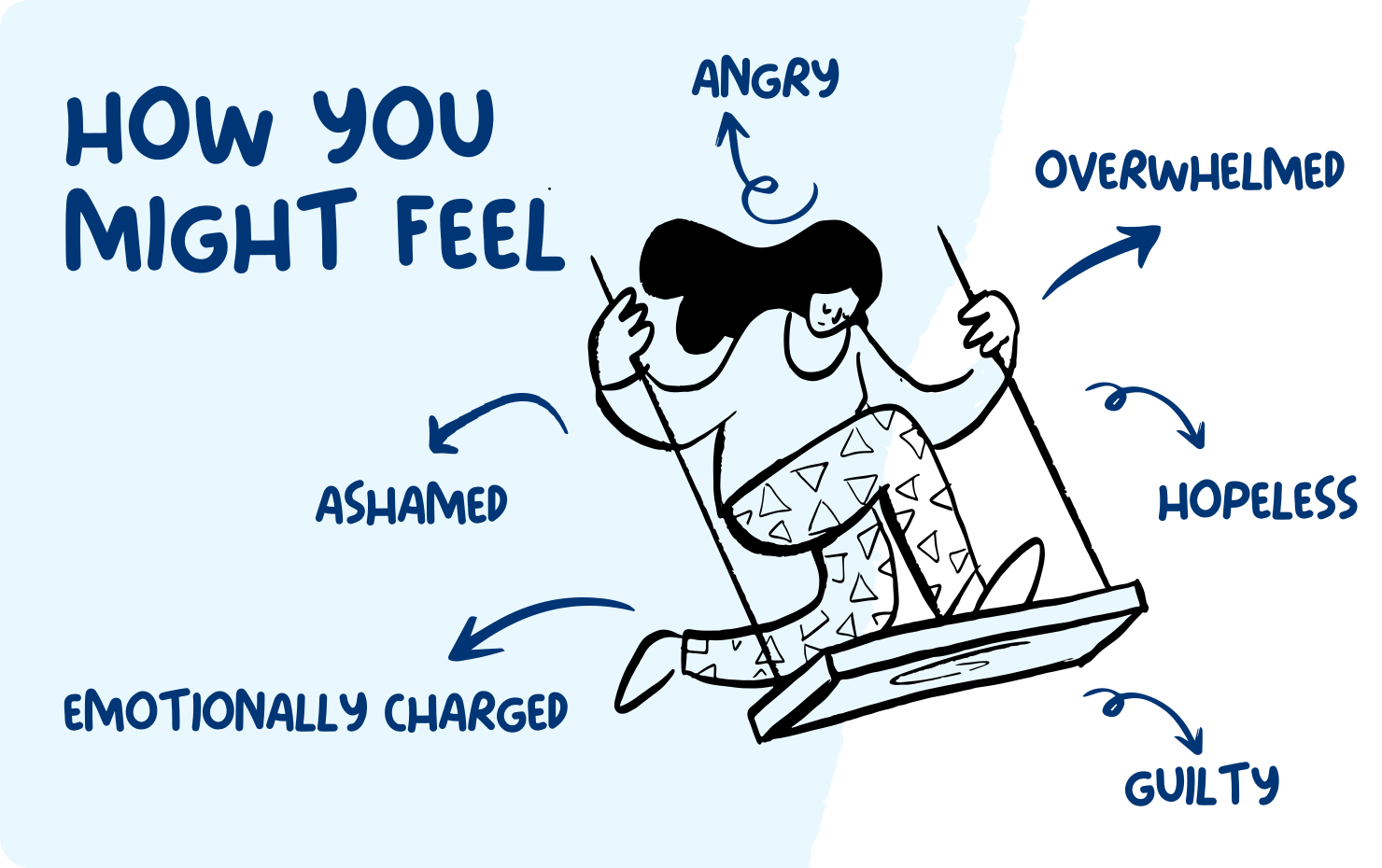
Not everyone who self-harms wants to end their life. Self-harm is usually a way to cope with or escape intense, negative emotions. However, people who self-harm are at a greater risk of dying by suicide, especially if they start to believe they can no longer control their pain. Self-harm can also be fatal, even if death wasn’t the main driver or intent.
When you self-harm, it can impact various aspects of your life, including your physical health, emotional wellbeing, and relationships with others. This can make you feel worse overall, and make it harder to cope with difficult emotions. Here are some things that might happen if you self-harm:
You may also notice yourself:
It’s normal to want to hide your injuries from other people to avoid being judged. But avoiding others can make you feel disconnected from society and even more alone, which can negatively impact your mental health. When you learn healthy coping strategies, you won’t be burdened by the desire to hide away anymore.
If you have scars from past injuries and they bother you, you may want to consider working with a psychologist. A psychologist can work with you to overcome your discomfort and can help you find ways to handle questions from others about your injuries.
Self-harm is a complex issue that affects different people in different ways. While your reasons for harming yourself may differ from someone else’s, the most common reason for self-harm is to cope with emotional pain.
If you’re struggling to manage overwhelming emotions such as sadness, anger, anxiety, or self-loathing, you may turn to self-harm as a way to cope or manage your distress. Some other signs you are self-harming to cope with your emotional pain are:
When you hurt yourself, the brain releases chemicals that can make you feel good for a short time. This might be because the physical pain takes your mind off the emotional pain you’re feeling. This, however, is not a healthy or effective long-term solution to cope with your emotional pain.
Some other possible reasons you might self-harm are:
'I started self-harming when I was 12 as a way to deal with the way I felt.'
When you hurt yourself, the brain releases chemicals which can make you feel good for a short time. This might be because the physical pain takes your mind off the emotional pain you’re feeling. This, however, is not a healthy or effective long-term solution to cope with your emotional pain.
Some other possible reasons you might self-harm are:
It's important to know that hurting yourself is not a good way to deal with emotional pain, and can seriously harm your body and mind. Instead, seeking help from a professional can help you understand why you're feeling that way and learn better ways to cope. When you feel like hurting yourself, there are other things you can do to take care of yourself.
Self-harm is commonly associated with seeking attention, but this may not always be the primary motivation. It communicates that there's something wrong. This is an opportunity for us to offer compassionate support rather than making assumptions ‘they’re just looking for attention’.
If you have recently self-harmed, please access appropriate medical care as soon as possible. Some injuries can become infected and cause more damage than you might think if they are left untreated. If you’re unable to access a doctor or hospital, you can contact HealthDirect’s 24/7 Health Advice Line to speak to a registered nurse on 1800 022 222. You can also contact Kids Helpline here, or Lifeline at any time.
If you struggle with self-harm, it can be challenging to find effective and immediate ways to manage the urge to hurt yourself.
Here are some practical strategies and techniques that you can use to help you feel more in control, and to manage your emotions in the moment.
Grounding techniques can help you reduce the intensity of overwhelming feelings by helping you get out of your head by returning your attention to the world around you. The grounding activities below are meant to give you relief by taking your focus off the pain you’re experiencing:
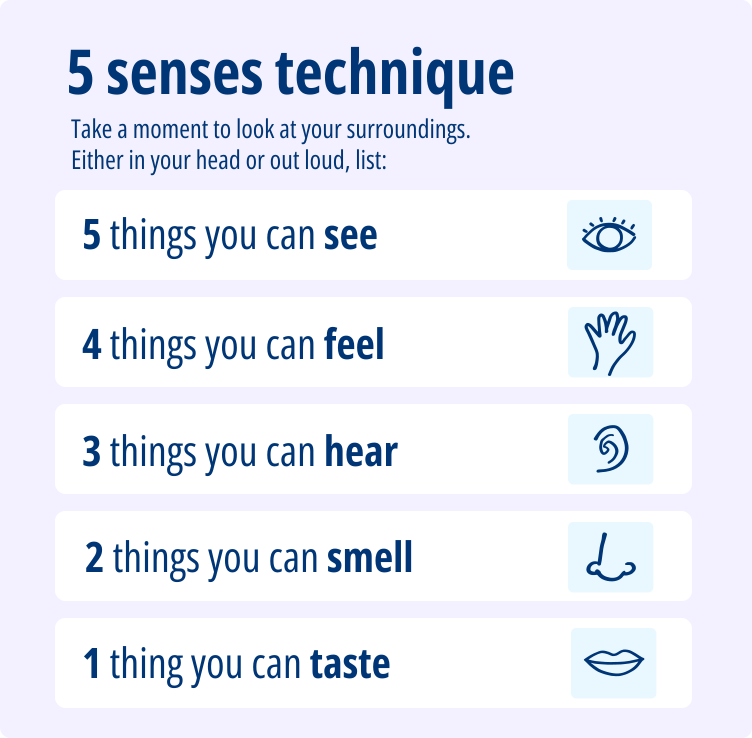
It may sound silly that by ‘distracting yourself’ you can avoid self-harming, but we know that the urge to self-harm is often a temporary feeling. If you can get through the initial impulse to self-harm, the desire may fade relatively quickly.
Try to distract yourself with a healthy activity, such as:
Tell yourself you’ll wait 10 minutes to see if the urge passes. If, after 10 minutes, you still feel the urge to harm yourself, try to wait for another 10 minutes, and so on. You may even find another way to cope while you wait for the time to pass.
If you feel the urge to self-harm, you can try using a safer alternative, which can still help divert strong emotional feelings into physical sensations. Some examples include:
A safety plan is a document you can prepare in advance and refer to when you’re experiencing urges to self-harm. The purpose of a safety plan is to do just that — to keep you safe. It includes information about:
It’s a good idea to ask a trusted friend, relative, or psychologist to help you come up with a self-harm safety plan. They should also keep a copy of your safety plan so that you have someone you trust to look out for you.
You can create a personal safety plan using the BeyondNow tool online or through their Android or iPhone apps.
Talk about your feelings and urges to self-harm with someone you trust, such as a friend, family member, or mental health professional. Choose someone you feel comfortable talking to, and try to be as honest and direct as possible. It’s ok to ask for specific help or support.
Try to maintain open communication with the person you’re confiding in, even if you feel uncomfortable or embarrassed. Remember that they want to help you and support you. If opening up to a loved one seems too difficult, you can call Lifeline and speak to one of our crisis supporters anonymously. They can provide you with judgement-free support and understanding and can also help with referrals if you decide you want professional support.
Relaxation techniques such as deep breathing, meditation, mindfulness or yoga can help reduce stress, anxiety, and negative thinking.
Guided imagery might help get you out of your head and away from thoughts of self-harm. Close your eyes and imagine yourself in a calm and peaceful environment, such as a beach or a rainforest. Visualise the sights, sounds, and smells of this environment, and focus on relaxing your body.
Writing about your feelings in a journal or on a piece of paper can help you process your emotions and release some of the tension you may be feeling.
Find a quiet and comfortable space where you can write without distractions and write without self-judgement. Try your hardest to write honestly and openly. Don’t worry about spelling, grammar, or punctuation and try not to censor your thoughts or feelings.
Research has shown that ‘if you can name it, you can tame it’ - by simply putting words to how we’re feeling, it can take some of the power out of those feelings, and reduce that ‘overwhelm’ feeling that sits on top of everything else.
Challenge negative thoughts with positive affirmations or self-talk. For example, you can tell yourself, "I am strong, and I can get through this," or "I am worthy of love and care."
Surround yourself with calming sights, sounds, and smells, such as a scented candle, a cosy blanket, or calming music.
Substances like alcohol and drugs can lower your inhibitions and make you more likely to self-harm. So don’t keep alcohol or drugs in the house. Managing substance use can be a difficult and ongoing process, but we have tips for managing in the short term, and suggested long-term solutions.
Take care of yourself by eating healthy meals, getting enough sleep, exercising and moving your body, spending time in nature, connecting with others, and engaging in activities that you enjoy.
If you're struggling with self-harm, it's important to talk to a mental health professional. They can work with you to develop a plan that will help you deal with your feelings and take control of your self-harming. Here are some mental health professionals you can talk to:
While these short-term strategies can be helpful for some people, they may not work for everyone. It's okay if you haven't found the right approach for you yet. Recovery is a process, and it can take time to find the tools and resources that work best for you.
If you're struggling, it's important to reach out for support and not try to face this alone. Reaching out to someone about self-harm can be scary, but it can also be a step towards getting the support you need. If you don't feel comfortable talking to someone you know, consider reaching out to a mental health professional, or Lifeline.
Remember that you are not alone in your struggle. Surround yourself with people who care about you and who can help you when you're struggling. Focus on taking small steps forward, celebrating your progress, and being patient with yourself along the way. With patience, perseverance, and the right support, you can overcome self-harm and learn to live a happy, healthy life.
Click here to download, save, or print our self-harm fact sheet.
If you have relied on self-harm as your go-to coping tool for a long time, it can be hard to imagine ever stopping it. But many people who have used self-harm in the past have learned better ways to cope, and you can too.
Besides learning new coping tools, it’s also important to address any deeper emotional problems you may be struggling with. Treating the root cause of self-harm will help you heal fully and prevent you from self-harming again in the future.
Here are some strategies that may be helpful.
The first step to stopping self-harm is to become more aware of it, including what triggers it. The next time you feel the urge to harm yourself, try this:
Try this activity for at least a week and see if any patterns come up. Maybe staying home alone for long periods of time is a trigger for you, or maybe it’s scrolling through social media. Triggers are personal, so what might give you the urge to self-harm won’t be the same for someone else.
When you know your triggers, you can choose to respond or prepare for them better. For example, if you know that staying home alone for long periods of time is a trigger, you can plan more activities with friends. If you know that scrolling through social media is a trigger, you can limit your social media time or take a complete social media detox. If a relationship with a friend is encouraging you to self-harm, then perhaps consider stepping back from the relationship, or set boundaries that healthier for your wellbeing.
It can be hard to figure out your triggers on your own, so don’t be discouraged if you battle with this activity. If you need more help, it’s worth looking into therapy. A psychologist will work closely with you to help you become more self-aware.
Engaging in self-care practices such as exercise, meditation, or creative expression can help to manage stress and promote emotional wellbeing. Developing a routine that incorporates self-care practices can be an important part of maintaining long-term healing.
Self-care practices are important for anyone, but especially for those who struggle with self-harm. Here are some self-care practices that may help:
It's important to remember that self-care is not selfish, but it’s necessary for your mental health and wellbeing. Incorporating self-care practices into your daily routine can help you manage difficult emotions and reduce the risk of self-harm.
Having healthy relationships with friends, family, or a romantic partner can be a long-term way to overcome self-harm. It's because these relationships give you stability, support, and a feeling of belonging. When you feel isolated or lonely, it's easy to turn to self-harm to cope with your emotional pain or get attention.
But with healthy relationships, you can safely express your feelings and get the help you need. Over time, as you build stronger relationships, you might be less likely to self-harm. Also, healthy relationships can give you purpose and joy in life.
Remember, healthy relationships take time and effort to build and maintain. It's important to prioritise relationships that are supportive and positive for your mental health and wellbeing.
Substance use can be a risk factor for self-harm, so addressing any substance use issues can be an important part of long-term management. Managing substance use can be a difficult and ongoing process, but we have tips for managing in the short term, and suggested long-term solutions.
Remember, managing substance use is a process that requires time and patience. It's important to prioritise your mental and physical health and seek support as needed.
Accessing support groups can be an effective way to find support and connect with others who have experience with self-harm. Here are some ways to access support groups for self-harm:
Accessing support groups can be a helpful way to find support and connect with others who have similar experiences. It's important to find a group that is a good fit for you and that meets your specific needs. Don't be afraid to try out different groups until you find one that feels right.
You can use the Lifeline Service Finder to search for local support groups near you.
'I thought that I would never be able to get better, but I gradually did. And it got brighter for me.'
Working with a psychologist who has experience in treating self-harm can be a helpful way to explore the underlying emotional issues that may be contributing to your behaviour. Here is what you should expect from your therapy:
Remember, working with a psychologist for self-harm requires patience and a willingness to be open and honest about your feelings. It's important to find a psychologist you feel comfortable with and who has experience in treating self-harm. With time and support, it's possible to manage self-harm and develop healthier ways of coping with difficult emotions.
Reaching out to a trusted friend or relative about self-harm can be a difficult step, but it can also be an important one. Here are some things to keep in mind when talking to someone about self-harm:
It's important to acknowledge that everyone's experience with self-harm is unique, and what works for one person may not work for another. That's why researchers and mental health professionals are continually exploring new strategies and approaches to help individuals overcome self-harm.
If you feel discouraged by the long-term strategies you've tried, or these don’t resonate with you right now, remember that there are always new strategies and techniques being developed that could be helpful for you. And know that there are people around you who care about you and want to support you.
By reaching out for support, and continuing to explore different approaches, you can find the tools that work best for you. Focus on taking small steps forward, celebrating your progress, and being patient with yourself along the way. Remember that you are strong, and with the right support and tools, you can overcome self-harm and live a happy and healthy life.
Click here to download, save, or print our self-harm fact sheet.
If you have self-harmed and have physical injuries that require immediate medical attention, please call 000 or go to the nearest hospital emergency room right away. If you’re unable to access a doctor or hospital, you can contact HealthDirect’s 24/7 Health Advice Line to speak to a registered nurse on 1800 022 222.
It's important to prioritise your physical health and safety, and seeking immediate medical attention can help prevent further harm or complications. Don't hesitate to call for help or ask someone else to call for you if you need it.
Use the Lifeline Service Finder to search for more local and national services available to help support you.
It can be hard to recognise self-harm in a loved one because they will often try to hide their injuries. They might hurt themselves in hard-to-see places, like their inner thighs, or they might try to cover up their injuries with clothing.
Although it can be hard to spot self-harm, here are some warning signs to watch out for in your loved ones:
If you think that an adult loved one is self-harming, you may feel confused and worried. You may not understand why they’ve intentionally hurt themselves, making it hard to know what to say. However, what you say is not as important as how you say it. What your loved one really needs is to feel supported, understood, and cared for.
It is important to:
If you’ve noticed that your child may be self-harming, it’s important to ask them about their injuries in a calm and curious way.
It’s best to let them know you’re concerned without yelling, getting overly upset, or threatening them, as this can make things worse and will likely intensify any guilt or shame they may be feeling.
Becoming upset when you find out your child is self-harming is a normal reaction. If you’ve already yelled or scolded your child, it might be helpful to explain that you did so because you care about them, don’t want to see them hurt, and were shocked when you learned they’d been hurting themselves. It’s never too late to show compassion, care and understanding.
Be curious. If you remember to be curious when speaking to a loved one, you will avoid coming across as judgemental. Focus on asking about their feelings instead of the self-harm itself. They will feel more understood if you connect with and acknowledge their emotions.
It’s also a good idea to gently encourage your child to let you take them to the doctor if they are self-harming. Although it may be difficult to broach the subject with your child, it's important to do so with compassion and care. Let your child know that you love and care about them and that seeking medical attention is an important step towards their healing and wellbeing, and you want to be by their side to support them.
If you plan on speaking to a doctor about your child’s self-harm without them being present, it's important that you communicate your intentions to your child beforehand. This shows respect for your child's privacy, builds trust, and allows them to have a say in their own treatment plan.
Below are some examples for how you can open up a conversation with your child about self-harm:
There are some practical ways you can help your child cope with self-harm, for example:
Help them think of a list of healthy coping strategies they can use when they feel overwhelmed, like listening to music, painting, or having a warm bath or shower. We have more suggestions on short-term and long-term strategies too.
If a loved one opens up to you about self-harm, it's important to listen to them with empathy and without judgement. Here are some simple steps you can take:
The majority of people who self-harm are not suicidal but use self-harm as a coping tool for managing intense emotions. There are some people who may be using self-harm as a way of expressing suicidal thoughts and may turn to suicide to cope if they feel they can't manage pain using self-harm anymore. If you’re concerned the person you’re caring for could be at risk of suicide, we have tips on how to have this conversation here, or if life is in danger, call 000.
It can be really hard to support someone struggling with self-harm. They may require extra attention or specific support, and this can significantly impact the people around them.
If you’re feeling distressed and overwhelmed, you are not alone. There are support services available for yourself and others who care for and/or support someone experiencing self-harm.
Remember, ‘you can’t pour from an empty cup’. The best way you can care for someone else is to make sure you are okay first.
This might include:
It can be easier to support others if you’re not doing it alone. If there are other people that can support your friend or family member as well, it’s ok to ask for help. Just remember to get their permission first.
Having someone you can talk to about your experience as a carer can help you feel more supported and lighten the load you’re carrying. It can also help to feel more connected to others, and you might even pick up some skills or tips from other people in similar situations.
You might want to think about what is appropriate to share about the person you’re supporting or to just stick to how it’s impacting you.
It’s important to know what your limits are and to be able to communicate these to your friend or family member. This is especially true if you’re feeling worn out, are doing things you don’t feel comfortable doing, or have changed your mind about how you can help.
Healthy boundaries might include setting limits on:
Being kind to yourself and prioritising self-care while caring for others is really important. You might feel frustrated, stretched, or even powerless, but adding shame or guilt to those emotions by criticising yourself will only make you feel worse.
It’s ok to reduce the expectations you’ve set for yourself and to take a break when you need it.
Research shows our diet can have a big effect on how we feel. Eating well doesn’t just make us physically healthier, but it can also help with our sleep, energy levels, and mood.
Our brains and bodies are linked, and exercise releases chemicals that boost our mood, including endorphins and dopamine.
To feel its benefits, you don’t have to engage in vigorous movement. Gentle exercise, like walking or yoga, creates the same mental health benefits, like running or high-intensity workout.
You might also like to combine the benefits of exercising with social connection by playing a team sport or simply going for a walk with friends.
It can be easy to reach for substances when you’re feeling low to make you feel better or escape those feelings in the short term. But drugs and alcohol can be harmful, especially when we’re already in a challenging mental state. Substances that alter our thought patterns can amplify any feelings of distress.
Research shows that being in nature can improve our mood. Connecting with the outside world is also a great way to reduce stress and worries by reconnecting with the world around you.
Creating a regular routine can work wonders. Sticking to a routine can:
Sleeping well is important for good mental health, but taking on too much as a carer can have a negative effect on healthy sleep patterns.
Developing good sleep habits can help find the right balance.
These can include:
You may find that engaging in regular exercise, eating a balanced diet and regular use of self-care tools like meditation can make sleeping easier.
Click here to learn why sleep is so important for our mental health.
Your feedback helps us improve our site for people like you.