Suicide
Understanding suicide
Have you been touched by suicide?
Our Touched by Suicide: Wellbeing support guide is for anyone impacted by the suicide death, suicide attempt, or suicidal behaviour of someone they are not closely related to or directly connected with.
For suicide bereavement support, you can visit our suicide grief page by clicking here.
Suicide is a tragic death which occurs when a person voluntarily and intentionally ends their own life. There are different reasons why someone might think about ending their life, but it usually happens when:
- the emotional pain they are experiencing feels unbearable
- they feel like they don't belong in this world
- they feel like they're a burden on the people around them
- they don't see another way to solve their problems.
It's a common misconception that suicidal thoughts only affect a small minority of people. They can affect anyone at any point in their life.
If you have ever experienced thoughts of suicide, you are not alone. In fact, 1 in every 6 Australians has thought seriously about taking their own life on at least one occasion.
I lost my identity to my illness, and when that occurred, it felt like I had lost everything, so suicide seemed like a viable option.
No matter how hopeless you feel, we are here for you. At Lifeline, we have supported many Australians who have experienced suicidal thoughts and/or behaviours. If you’re experiencing any of these right now, remember Lifeline is here for you or if life is in danger, call 000.
What are suicidal thoughts and behaviours?
Suicidal thoughts and behaviours include any thoughts, ideas, plans or actual attempts to end one’s own life, and if you are experiencing them, it can be incredibly scary, lonely, and overwhelming.
Suicidal thoughts and behaviours can show up differently in different people.
You may think about suicide everyday, someone else might think about it every couple of months, and someone else may only ever think about it once or twice.
You may have openly talked about your suicidality with loved ones, or you may have never expressed it to anybody.
While the themes of suicide-related thoughts and behaviours may have similarities, no two people will have the exact same experience.
Who do suicidal thoughts and behaviours affect?
Anyone can be affected by suicidal thoughts and behaviours at any time.
It's a common misconception that only people experiencing mental illness think about suicide. In fact, roughly half of the people who die by suicide were not being treated for mental health issues when they died.
Equally, many people who experience mental health issues are not affected by suicidal thoughts.
The truth is we are still learning more about suicidal thoughts, who they affect, and why. What we do know is that certain 'risk factors' make it more likely for someone to have these thoughts. Risk factors can include things like financial stress, trauma, relationship problems, and many others.
You can read about some of the other causes and risk factors for suicide here, and about warning signs here.
How common are suicidal thoughts and behaviours?
Feeling suicidal can be an isolating experience, and you may feel like you’re the only one who struggles with thoughts about ending your life. The truth is, many people have similar thoughts, even if they don't talk about it. Here are some facts about how common suicidal thoughts and behaviours are in Australia:
- On average, 9 Australians die by suicide every day
- Over 3,300 Australians die by suicide each year
- Suicide is the leading cause of death for Australians aged 15 - 44
- It's estimated that approximately 644,600 Australians experienced suicidal thoughts in the last 12 months
- It's estimated that approximately 54,800 Australians attempted suicide in the last 12 months.

‘Suicidality’ is a term that is used to refer to thoughts, feelings and behaviours related to suicide. It includes a range of experiences, from occasionally thinking about wanting to die, to concrete plans for ending your life. All suicidal thoughts, feelings and behaviours should be taken seriously. If you’re feeling suicidal, Lifeline is here for you, or if life is in danger, call 000.
Download our fact sheets:
- Understanding suicidal thoughts and feelings fact sheet
- 13YARN's fact sheet for mob worried about someone
- Losing someone to suicide fact sheet
- I tried to end my life fact sheet
- Helping someone at risk of suicide fact sheet
- Suicide prevention for Aboriginal and TSI People fact sheet
What suicidality feels like and how it can affect me?
When it comes to suicidal thoughts, no two people’s experience will be exactly the same, because what you feel and how it affects you is influenced by your personal circumstances and past experiences.
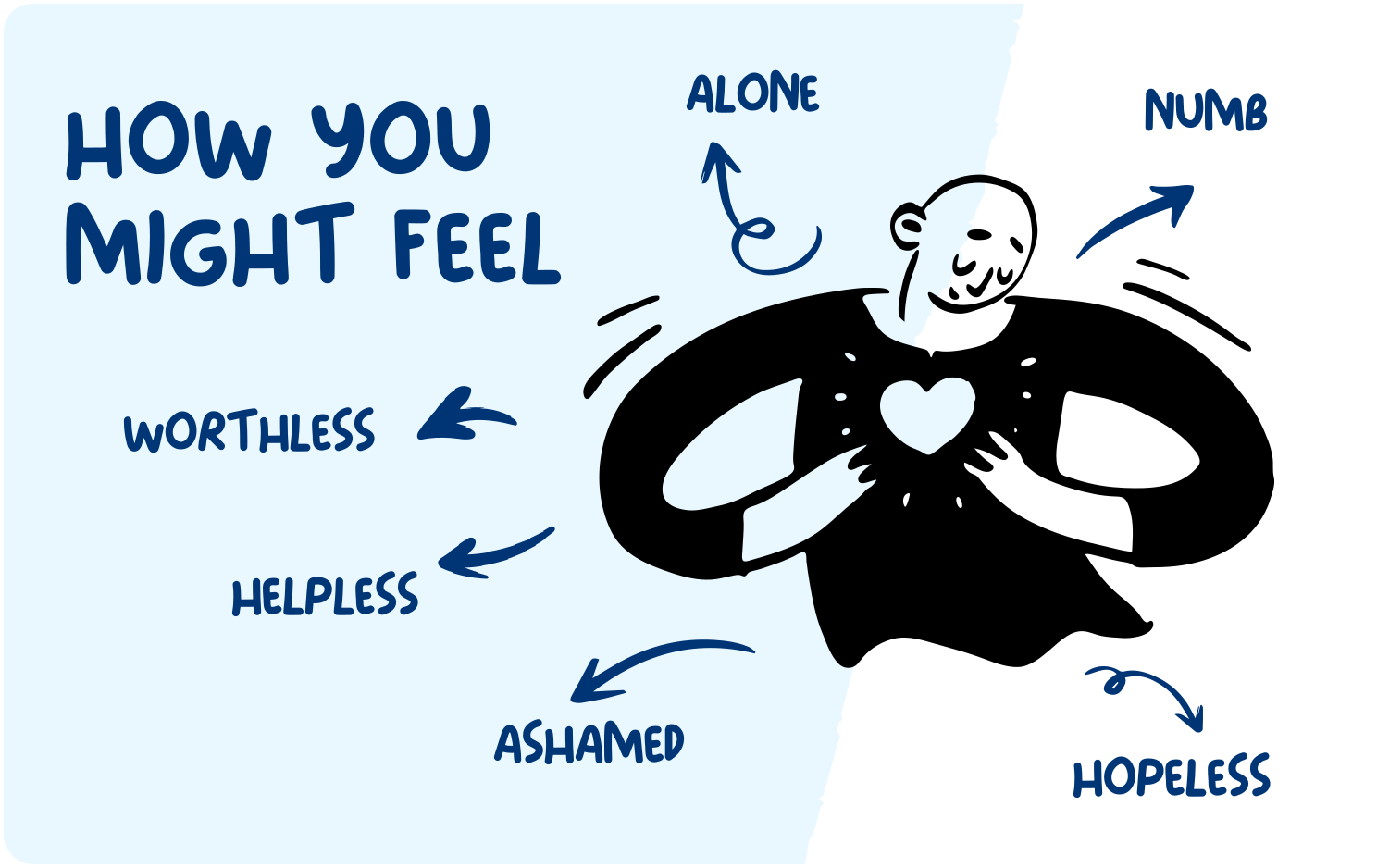
Some people might have thoughts of suicide that stick around, while others feel the urge to act on it suddenly. You might feel like there's no hope, or really sad and scared, while others might have different feelings, like anger, and feeling trapped.
Feelings
It's common to feel overwhelmed and distressed when experiencing thoughts of suicide. These feelings can be intense and may seem impossible to overcome. However, it's important to remember that you are not alone in this struggle. Many people experience thoughts of suicide at some point in their lives, and there is help and support available.
- Despair: You may feel like your problems are impossible to solve, and that there is no way out of your current situation.
- Emotional pain: You may be experiencing intense emotional pain. This pain can take many forms, such as sadness, anger, or anxiety, and you may feel your emotions are too much to handle and you cannot cope.
- Isolation and loneliness: You may feel like you're the only one going through your struggles, that nobody understands or cares about what you're going through. It may feel like you have nobody to talk to.
- Burdensomeness: The weight of your problems may cause you to feel like a burden on those closest to you, or on society as a whole. You may worry that your struggles are too much for others to handle, and that you’re causing more harm than good.
- Helplessness: You may feel that you are powerless or have no clear way to change your circumstances and that nothing and no one can help.
- Worthlessness: You may believe you have no value as a person, that you are inadequate, or that your life has no meaning. You may struggle to see your positive qualities and strengths.
- Shame and guilt: You may feel ashamed or guilty about your thoughts and feelings. You may feel like you’re weak or have failed in some way and may experience feelings of self-hatred as a result. You may blame yourself for your problems and believe that you don't deserve to live.
- Hopelessness: You may feel that there is no hope for your situation to improve. You may feel stuck or trapped in a situation that feels too big to overcome.
- Inability to find meaning or purpose: You may feel like you have lost your sense of purpose or meaning in life, and that you have no reason to continue living.
- Anger: You may feel angry about your situation or about the people or circumstances you believe are causing your distress. You might feel like you have been wronged or betrayed in some way.
- Numbness: You may experience emotional numbness and feel like you have no emotional energy left, and that nothing matters anymore.
- Fear: You may feel afraid about what might happen if you continue living, or if you attempt suicide. You may also feel afraid about seeking help, particularly if you fear being judged or misunderstood
I was living in the state of perpetual darkness, both inside my soul and in life itself.
Feeling suicidal is a sign of significant distress, and it’s important to seek help if you or someone you know is experiencing these emotions. With the right support and treatment, it’s possible to overcome these feelings and achieve a better quality of life.
Remember, seeking help and support is a brave and important step towards healing and recovery. There are many resources available to help you, such as therapy, support groups, and the Lifeline crisis support line.
It's important to reach out and talk to someone you trust about what you're going through, and to know that there is hope for the future. Remember, your life has value and there are people who care about you and want to help you through this difficult time.
Thoughts
When you're feeling suicidal, you might have all sorts of thoughts that can be really tough to handle. These thoughts can make you feel helpless and hopeless, like there's no way out.
- “I wish I’d never been born.”
- “I just want to die.”
- “Nobody cares about me.”
- “I’m better off dead.”
- “I can’t take it anymore.”
- “I’m a failure and I don’t deserve to live.”
- “I just want the pain to end.”
- “I’m the worst person alive.”
- “I hate myself.”
- “Things will never get better.”
- “I don’t want to be here anymore.”
- “There’s no point in living.”
- “I don’t deserve to live.”
- “I’ll always feel like this.”
- “I don’t want to be a burden to anyone.”
It’s important to remember that while many other people have reported having these same thoughts when they’re suicidal, they are not accurate. These kinds of thoughts are unhelpful and are your brain's way of trying to make sense of how you’re feeling, and what you’re experiencing. Speaking to a Lifeline Crisis Supporter or to a psychologist can help you process suicidal thoughts and consider other, more helpful perspectives.
I had intrusive thoughts that were telling me that everyone was just so much better off without me.
Effects
Suicidal thoughts can significantly impact your life. They can be really painful, and affect how you feel emotionally, physically, and socially. You might feel like there's no hope and that things will never get better. This can make it hard to reach out for help, which can make you feel worse.
- Emotional distress: You may feel intense emotional distress, including feelings of sadness, hopelessness, and despair. You may also experience anxiety, anger, and irritability.
- Difficulty with daily functioning: You may have difficulty concentrating, sleeping, or eating, and may feel less motivated to engage in activities you once enjoyed.
- Negative self-image: You may feel like you’re not valuable, or like everything is your fault, and this might cause you to talk down to yourself and think about yourself in a negative way.
- Isolation: You may withdraw from social interactions and feel disconnected from others. You may feel that you have nobody to turn to for help or support.
- Physical symptoms: You may experience physical symptoms such as headaches, stomachaches, and fatigue. You may also experience poor sleep, changes in appetite, and changes in energy levels.
- Risk of self-harm: Suicidal thoughts and feelings can lead to self-harming behaviours and suicide attempts. Causing physical harm to yourself can have serious physical and emotional consequences, and can potentially result in permanent physical injury or disability and/or ongoing emotional trauma.
- Substance misuse: You may turn to drugs or alcohol as a way of coping with their emotional pain. Misusing substances can make mental health issues worse and increase the risk of suicidal thoughts and behaviours.
- Interference with work or school: You may miss days of work or school, or your performance may suffer as a result of your emotional distress.
- Impact on relationships: You may notice that your relationships with family members, friends, and romantic partners become troubled. This could be because you feel like you are a burden to others, or that you’re not worthy of love and support.
- Increased risk of future suicidal behaviour: If you have experienced suicidal thoughts or behaviours in the past, it’s more likely you will experience them again in the future. It’s important to seek help and support to reduce this risk and improve overall well-being.
- Impact on personal goals and aspirations: Suicidal thoughts and feelings can interfere with your ability to pursue personal goals and aspirations. You may feel like you have lost your sense of purpose or direction in life.
- Difficulty with decision-making: You may find it especially difficult to make decisions as you may feel overwhelmed by your thoughts of suicide, and unable to focus.
- Stigma and discrimination: There is still a significant amount of stigma and discrimination surrounding mental health and suicide. You may feel like you are being judged or misunderstood by others, which can increase your sense of isolation and hopelessness.
- Trauma: Persistent, intrusive suicidal thoughts and feelings can be traumatic experiences and can have lasting effects on your mental health.
Effects on behaviour
If you're having suicidal thoughts, you may begin to behave in ways that are unusual for you. You might avoid being around others, stop doing things you used to like, or do things that are risky and dangerous.
- Behaving in ways that suggest you have no hope for the future, like not taking the next steps when it comes to applying for jobs or getting health problems checked out.
- Behaving in ways that suggest you’re preparing to say goodbye, such as writing a will or giving away precious possessions.
- Not taking care of yourself or your appearance. For example, skipping showers and forgetting to brush your teeth, or eating badly, and avoiding exercise - especially if you were active before.
- Having a hard time keeping up with responsibilities and maintaining relationships. For example, not showing up for work and distancing yourself or having more arguments with your partner.
- Looking for ways and means to end your life.
- Withdrawing from people and activities.
- Engaging in impulsive or reckless behaviours, such as dangerous driving, drinking excessively, or taking drugs.
- Talking about death, suicide, or wanting to end your life, even if in a “light”, “joking” way.
- Experiencing dramatic mood swings.
- Experiencing a loss of interest in things you once enjoyed, such as sports or hobbies.
One of the signs that someone could have made a decision to take their own life is an extreme mood change. If someone you know is usually depressed or anxious and they seem unusually calm all of a sudden, this can be a major warning sign.
If you have read this list, and you have experienced some of these feelings and thoughts, it can be incredibly challenging and overwhelming. Remember, you are not alone and there are people who want to help you. It's okay to ask for help and support when you need it. Seeking help is a courageous step towards overcoming these difficult emotions and finding a path towards healing. You don't have to suffer in silence or face this alone.
There are many effective treatments available that can help you manage and overcome suicidal thoughts and feelings. With the right support and treatment, it is possible to regain a sense of hope and purpose in life. You deserve to feel safe, loved, and valued, and there are people who can help you achieve that.
Recovery is possible, and it's important to remember there is always hope, even in the darkest moments. You have the strength and resilience to overcome these difficult emotions, and with the right support, you can build a brighter future for yourself.
Download our fact sheets:
What are the causes of suicide?
The causes of suicide are complex and vary from person to person. While progress has been made, there is still much to be learned about what leads to suicide, and more research is needed to understand this issue better.
What we do know, is that suicide can affect anybody, at any time, regardless of gender, age, background, or history of mental ill-health. Some people who die by suicide may have struggled with mental health issues for a long period of time, while others may make a ‘spur of the moment’ decision.
And while suicide can have a direct cause in some instances, in most cases, there are usually many different contributing factors to a person wanting to end their own life.
Therefore, rather than talk about ‘causes’, we usually consider the ‘risk factors’ that might contribute to a person’s decision to end their own life. In general, the more risk factors present, the higher your overall risk of suicide will be.
Below are some of the main risk factors for suicide. If you notice any of these in yourself or others, try not to panic. Not everyone who displays these risk factors is suicidal. However, if you are experiencing suicidal thoughts or feelings, we encourage you to seek support as soon as possible, such as contacting Lifeline, or if life is in danger, call 000.
- Having a diagnosed mental health condition, especially borderline personality disorder, schizophrenia, depression, anxiety, bipolar disorder, or substance use problems
- Having a history of self-harm or currently self-harming
- Feeling disconnected, isolated, and lonely
- Feeling inadequate or like a failure
- Difficulties with problem-solving. You may find it difficult to come up with solutions to your problems and have a hard time seeing a way out.
- Negative, rigid thinking which can lead to problem-solving difficulties and increased hopelessness. For example:
- Having a negative worldview which makes it hard to have hope and see anything good in your future.
- Thinking in black-and-white terms and seeing things as either “all good” or “all bad.” For example, if you feel down one day, you may start to think that you’ll always feel that way.
- Looking for evidence to confirm how you feel. For example, you start declining invitations to spend time with your friends because you are feeling depressed. Then, once they stop inviting you out, you interpret this as evidence that nobody cares about you and end up feeling unwanted and worthless.
- Being a victim of bullying
- Relationship difficulties, such as the breakdown of a marriage or the loss of a loved one
- Being socially isolated or experiencing a lack of social connection. This can be particularly challenging if you live in rural or remote areas, or have experienced discrimination or exclusion. Lack of access to support and resources, such as mental health services, can also contribute to feelings of hopelessness and despair.
- Cultural and societal attitudes toward mental health and suicide. In some cultures, mental illness and suicidal ideation are stigmatised, which can prevent individuals from seeking help and support. In other cases, suicide may be seen as an acceptable way to escape difficult life circumstances, such as poverty or social exclusion.
- Media coverage of suicide. Sensationalised or detailed media coverage of suicide can increase the risk of suicide, particularly among young people.
Negative life experiences
There are many negative life experiences that can put you at higher risk for suicide. Some of these include:
- Financial stress
- Discrimination
- Trauma and abuse
- Legal issues
- Conflict with others
- Having a physical illness, disability, or experiencing chronic pain that negatively impacts your quality of life.
Major life events
Going through a major change in life can also bring on suicidal thoughts, feelings and behaviours. Some examples are:
- Pregnancy and becoming a first-time parent
- Moving abroad
- Losing a close friend, relative, or pet
- A relationship breakdown
- Losing your job
- Being evicted
- A recent death or suicide of someone close to you, or in your community
- Sudden, serious illness or injury which significantly impacts your day-to-day functioning.
- Any previous suicide attempts
- Access to the means to end your life
- Starting, taking, or withdrawing from some types of medications
- Ongoing relationship problems and/or conflict
- Misuse of alcohol and other drugs.
When my ex-wife moved away with our child, I lost the last bit of identity, fell into a hole and attempted suicide.
Groups at greater risk of suicide
While anyone can experience suicidal thoughts and feelings, some groups are at greater risk of suicide than others. However, it’s important to note that belonging to one of these groups does not mean you’ll have suicidal thoughts and feelings. Similarly, those who have suicidal thoughts and feelings might not belong to any of these groups.
These groups are:
Men are three times more likely to die by suicide than women in Australia, even though women attempt suicide at a much higher rate. This disparity could be explained by a number of things, including the use of more violent and lethal means, gender roles, higher substance misuse in men and lower rates of help-seeking in men.
People who have different sexual preferences or gender orientation have a higher risk for suicide. This could be attributed to an increased likelihood of experiencing bullying and unfair discrimination. This group may also be at increased risk due to difficulties associated with their identity. They may experience confusion, fear, and shame surrounding their sexual orientation or gender identity, and the pressure to conform to societal expectations and norms.
Suicide rates are higher in Aborginal and Torres Strait Islander peoples, particularly in young Australians, where the Indigenous rate of suicide is over 50% higher. This could be due to higher rates of poverty, homelessness, unemployment, mental health problems, incarceration, domestic abuse, and alcohol and drug misuse. It's important to consider the effects discrimination, colonialism, community disruption and the loss of culture have on First Nations peoples.
This group is at a higher risk for suicide because they are more isolated, have limited access to support for mental health, and are more prone to experiencing natural disasters. There also may be a culture of silence around mental health issues in some rural and remote communities, which can contribute to stigma and shame around seeking help and support.
In Australia, suicide rates of people living in the lowest socioeconomic areas are twice as high compared to those living in the highest socioeconomic areas. A higher suicide risk for people of low socio-economic status could be linked to the constant insecurity and uncertainty that comes with living in financial struggle.
In Australia, the risk of suicide is higher in people with fewer years of education. Males with no education or only secondary school education have a 2.6 times higher risk of suicide than males with a university degree. For females, the risk is 1.6 times higher.
Australians from culturally and linguistically diverse backgrounds may have experienced trauma in their home countries, such as war or separation from relatives. This, together with difficulties integrating, having no solid support network, and engrained stigma around seeking help, may make these groups more vulnerable to suicide.
Veterans are 1.5 times more at risk for suicide than non-veterans. This could be due to trauma, stress, isolation, and loneliness, as well as familiarity and access to guns, and difficulties getting back into everyday life.
For support tailored for veterans and the people who care about them, you can check out Open Arms.
People who have experienced the loss of a loved one, job, or loss as a result of a significant life event are at an increased risk for suicide.
People who struggle with substance misuse and addiction can experience intensified feelings of hopelessness, despair and isolation, which can increase their risk of suicide. Additionally, the effects of substance misuse on the brain can contribute to impulsivity, poor judgement, and impaired decision-making.
Feeling suicidal can be a deeply distressing and isolating experience. Suicidal thoughts can often feel overwhelming and unbearable. It is important to remember that suicidal thoughts are a sign that you are in emotional pain, and you deserve to move through that emotional pain and experience a happy, fulfilled life. There are some things you can do to help you manage suicidal thoughts and feelings from day to day, as well as other important things you can consider to help tackle the root causes for long-term healing. If you need to speak with someone, Lifeline is always here for you. If your life is in danger, call 000.
Download our fact sheets:
Correcting our understanding of suicide and how to prevent it
Suicide is a topic we don’t talk about much as a society, and comes with a history that has left us with a number of myths, stigmas and misconceptions that are still common, but simply aren’t true.
We believe it’s important to address these myths, stigmas and misconceptions because they can prevent people from getting the help they need.
When people believe myths like "suicide is a selfish act" or "only weak people attempt suicide," they may feel ashamed or judged for their thoughts or behaviours, which can stop them from reaching out for help. This can be especially dangerous because suicide is a serious issue and people who are struggling need to be able to access support without fear of judgement or stigma.
Addressing these myths and stigmas can also help to increase empathy, understanding and awareness of suicide, and those struggling with suicidal thoughts. We all have a role to play in creating a society where people feel comfortable seeking help and support during their darkest moments. This will ultimately help to save lives.
In my home, there was such a stigma against suicide and mental health, particularly because my parents came from different countries. They didn't even have a word for suicide or mental health, and they couldn't understand what it was.
Below are some of the most common stigmas, myths, and misconceptions about suicide.
Myths about the nature of suicide
Research has consistently shown that restricting access to methods used in suicide can lead to a significant decrease in suicide rates - that people won’t ‘just find another way’.
In the 1960s, the United Kingdom experienced a rise in the number of suicides by domestic gas poisoning, as the type of gas used in homes contained high levels of carbon monoxide at the time. Over the course of a few years, the country changed the type of gas used in homes to a less-toxic gas, which reduced the number of suicide deaths by gas poisoning by 70%. The use of other methods of suicide did not increase as a result.
This is because people’s desire to end their lives is often a momentary urge, and simply removing the ability for someone to take action on that urge in the moment, can give them the time and space for that urge to subside, and for them to access the help they need.
While preventing suicide can be challenging, it is possible with ongoing efforts and support. Effective prevention strategies, such as early identification and treatment of mental health issues, social support, reducing access to lethal means, and education and awareness campaigns, can help prevent suicide.
Most people who die by suicide exhibit warning signs and/or communicate their intent to others in some way. Research has shown that up to 75% of individuals who die by suicide have communicated their intent to someone else in the weeks or months leading up to their death.
Myths about talking about suicide
Asking someone if they are suicidal, in a compassionate and non-judgemental way, can actually help them to feel heard and supported. Research has shown that asking about suicide can reduce risk by providing an opportunity for the person to express their feelings and connect with support and resources. Talking about suicide will not ‘put the idea in their heads’ or make it more likely for someone to take their own lives.
Staying silent about suicide can be dangerous and may perpetuate feelings of isolation and hopelessness in people who are experiencing suicidal thoughts or behaviours. While it can be challenging to initiate a conversation about suicide, it's crucial to do so, as offering support and resources can help prevent suicide and save lives.
You don't have to be an expert in suicide prevention to start a conversation with someone who may be struggling. What you say is less important than how you say it, and the care and empathy you show. Simply expressing your concern and willingness to listen can make a big difference.
If you think someone might be at risk of suicide, or if you’d like to feel more prepared for the conversation should it come up, we’ve got tips on how to talk to someone about thoughts of suicide here.
Myths about who is at risk of suicide
Many people often think of suicide as the consequence of serious mental health issues, or that people who die by suicide must have been struggling with their mental health. However, while mental illness can be a significant risk factor for suicide, many people who experience suicidal thoughts or behaviours do not have a mental illness.
In fact, 50-60% of people who die by suicide were not being treated for mental health issues at the time of their death.
Aside from mental illness, there are many other factors that can also play a role in suicidality, such as stressful life events, trauma, relationship problems, financial difficulties, substance misuse, and risky decision making, among others. It's important to recognise that the causes of suicide are complex, and suicidal thoughts can affect anyone, at any time.
Although suicide rates are generally higher among adults, and the risk of suicide increases with age, particularly among older adults, it's important to acknowledge that young people are also vulnerable to suicidal thoughts and behaviours. Suicide is a major concern among Australian youth, and currently sits as the leading cause of death for those aged between 15 and 19.
Suicide is a complex issue that can affect anyone regardless of their age, gender, race, ethnicity, socio-economic status, sexual orientation, or any other demographic factor. It’s true that some groups of people are more likely to die by suicide than others, though this is believed to be as a result of higher rates of risk factors they may face, such as discrimination, stigma, and social disadvantage.
For example, some groups of people who are at greater risk of suicide in Australia include men, rural and remote Australians, First Nations Australians, LGBTQIA+ people, low socio-economic groups, culturally and linguistically diverse people and veterans. The myth of suicide affecting only specific groups can lead to other groups' mental health needs being overlooked, and the misconception that some people are not at risk of suicide.
I was told I wasn't poor enough, ugly enough or dumb enough to be suicidal. It was like I had to meet a criteria to appear like someone who was suicidal.
Myths about people who feel suicidal
Suicide is not a decision made out of selfishness or a desire to hurt others. Rather, individuals who die by suicide are often struggling with intense emotional pain, feelings of hopelessness, and a sense of being a burden to their loved ones. They often, wrongly, see suicide as the only way to escape the pain they feel or situation they’re in.
''My thoughts of suicide have always been about protecting others, removing potential risks, removing potential harm to others, or making their lives better.''
Attempting or dying by suicide does not reflect a lack of willpower or strength, but rather, a deep sense of pain and despair. People who attempt suicide are often dealing with significant life challenges and/or a range of emotional and psychological challenges. Labelling them as weak is not only inaccurate, but can also prevent them from seeking the help they need.
Talking about suicide is often a sign that someone is struggling and needs help. It takes courage to open up about suicidal thoughts and feelings, and dismissing them as attention-seeking can be incredibly hurtful. It's important to take any mention of suicide seriously and provide support and resources to help the person get through their crisis. We should encourage people to talk about their feelings and offer compassion and understanding, rather than stigmatising them as attention-seekers. Some people who die by suicide may never mention their suicidal thoughts or feelings to anyone at all, so every time someone talks about suicide, it should be taken seriously.
While some suicide attempts may be associated with specific stressors (e.g., relationship problems), the majority of suicide attempts are not intended as acts of revenge or aggression. Rather, they are often a desperate attempt to end emotional pain and find relief from internal feelings of distress.
While suicidal thoughts and behaviours can be ongoing and tough to overcome, they are not permanent, and with appropriate treatment and support, many people recover and go on to lead fulfilling lives. For some people, they may experience suicidal thoughts on an ongoing basis, but over time, develop resilience and strategies that help them cope.
Download our fact sheets:
Practical things you can do in the moment to feel better
Create a suicide safety plan
A suicide safety plan is a document containing a list of things you can do when you’re experiencing suicidal thoughts, feelings, and urges. The purpose of a safety plan is to give you some tools and ideas to help you cope and get help when you need it. It includes information about:
- Your personal warning signs, which helps create awareness for you and your loved ones about what it looks like when you’re experiencing an emotional crisis and need help
- Information about making your environment safe, such as getting rid of anything you could use to harm yourself
- Reminders of your personal reasons for living
- Activities to help ease your emotional pain
- A list of safe places you can go to if needed
- A list of people you trust and can talk to
- Emergency contact details.
For more information and to create a safety plan, click here.
It’s a good idea to ask a trusted friend, relative, or psychologist to help you come up with a suicide safety plan. They can also keep a copy of your safety plan so there’s someone to look out for you when you’re emotionally distressed.
Identify coping strategies that work for you
Suicidal thoughts, feelings, and behaviours are often a response to feeling like you can’t cope. You may feel that you can’t overcome the emotional pain you’re experiencing, or that there are no solutions to your problems.
Creating healthy ways to manage intense emotions can help you cope better and avoid the risk of suicide. Coping strategies vary from person to person so it's important to try different approaches and see what works for you.
Below are some coping strategies you can try, depending on whether you’re dealing with suicidal thoughts, feelings or behaviours:
For suicidal thoughts
When you’re suicidal, it’s normal to have negative thoughts about yourself. You may think that things will never get better, that nobody cares about you, and that you’d be better off dead.
Recognise that this is a part of experiencing suicidal thoughts and not the truth.
You can try telling yourself:
- 'Things can get better with time and the right support'
- 'I'm not the bad things I think am.'
- 'There are people who care about me and want to help. I just need to take the first step and ask for support.'
Relaxation techniques such as deep breathing, meditation, mindfulness or yoga can help reduce stress, anxiety, and negative thinking.
Guided imagery might help get you out of your head and away from thoughts of self-harm. Close your eyes and imagine yourself in a calm and peaceful environment, such as a beach or a rainforest. Visualise the sights, sounds, and smells of this environment, and focus on relaxing your body.
You may like to use a mindfulness app like Calm or Smiling Mind.
We all have an inner critic that lives inside of us. If you struggle with suicidal thoughts, your inner critic is probably very loud. When your inner critic starts rattling off about how you’re such a bad person, imagine a close friend telling you these things about themselves.
How would you respond to your friend? Try to show yourself that same kindness and compassion.
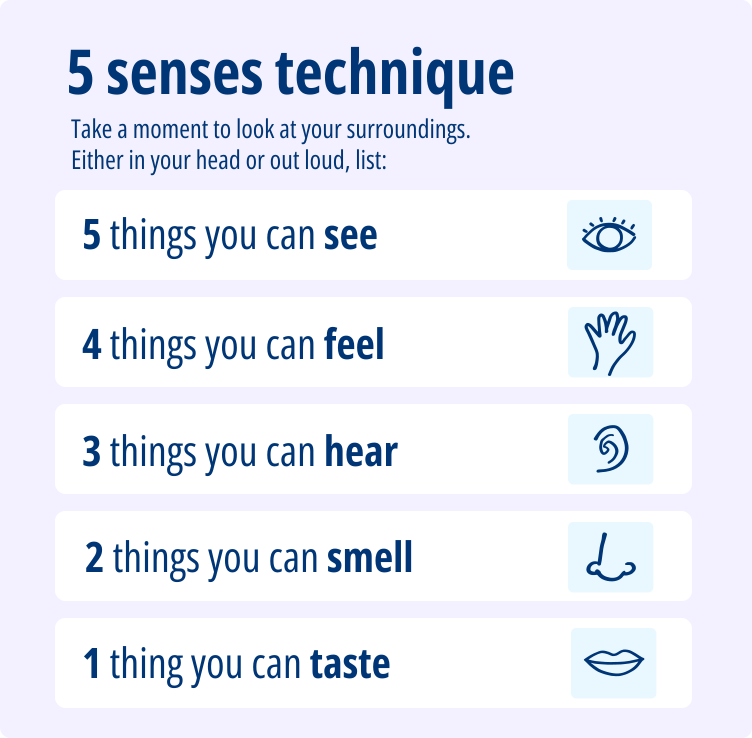
Grounding techniques can help you reduce the intensity of overwhelming emotions by helping you get out of your head by returning your attention to the world around you.
You can:
- Find an item in your immediate environment and pick it up. Try to describe it in as much detail as possible using as many of your senses as you can.
- Smell something with a strong scent, such as a cup of tea, a scented candle, herbs, or soap. As you inhale, try to describe what you can smell: is the scent sweet, fruity, floral, or something else?
- Come up with a category, such as cars or animals and try to mentally list as many things that fit into that category as you can.
- Imagine leaving your painful feelings behind. Visualise yourself watching your emotions as if they were being broadcast on TV. Then, visualise yourself grabbing the remote and switching channels or lowering the volume.
For suicidal feelings
It’s normal to blame yourself if you’re feeling suicidal or you recently attempted suicide. You may be carrying a lot of guilt and shame, especially if the people closest to you seem very worried about you. When you accept what you’re feeling and what has happened, you can shift the focus to taking care of yourself in the present. You can’t change the past, but you can take steps to move toward better mental health.
If you’re feeling suicidal, chances are you probably feel that your life is not worth much. You might have also started losing hope that things will get better. Writing a letter to yourself that restores your feelings of worth and hope and reading it when you’re feeling low can help.
Here’s what to include in the letter:
- Write about your happiest memories. Remind yourself that there are more experiences like this waiting for you in the future.
- Write about the people who care about you and what they mean to you. Remind yourself of how important you are to others and the role you play in their lives.
Reading a letter like this when you’re feeling suicidal can give you hope that you can experience joy again. It can also remind you that there are people in your life who love you very much and who would be shattered about losing you.
Feelings of worthlessness can be tackled by calling to mind and writing down a list of your strengths and achievements. If you’re hyper-critical it might be hard to come up with a list of things you’re proud of. In this case, ask family and friends for help.
Here are some things to ask yourself or others:
- What do you like most about me?
- What’s something I’ve done that you’re proud of?
- What do you think my strengths are?
Making an effort to schedule things to look forward to in your calendar each week can help you build hope and optimism about the future. It doesn’t have to be anything big — it can simply be having coffee with a friend or joining a new club or group.
Loneliness and isolation are feelings you may experience often if you’re thinking about suicide. Although you may feel alone or want to be alone, connecting with others can help you feel better.
When you want to withdraw, try to do the opposite, and instead, reach out to someone you trust. If you can’t meet up with anyone in person, call someone over the phone. If nobody is available, there are services here to help, including Lifeline. Connecting with others will help you feel supported, encouraged, and less alone.
When you’re in a lot of emotional pain, distracting yourself by doing an activity you enjoy can help. It may be hard to imagine any activity bringing you joy at this moment but tell yourself that you will at least try and see how you feel afterwards.
Make a list of activities that you once enjoyed, and use this list when you feel emotionally overwhelmed. Some examples could be:
- Go for a walk, cycle, or swim
- Try out a new recipe
- Visit a local market
- Paint or draw
- Hang out with a friend
- Listen to upbeat music
- Have a bubble bath.
Think about items or memories that bring you comfort and joy. Collect these and store them in a self-care box you can go through whenever you’re feeling down.
For example, it could include:
- Your favourite inspirational quotes
- Photos of your best memories
- Special letters or cards that you’ve received from people
- Artworks and poems
- Your favourite book
...and anything else that means something to you and makes you feel good.
I have a box full of things that make me feel better, such as a soft toy or a note from a friend. I also have things that help me if I'm feeling frustrated, angry or depressed.
For suicidal behaviours/urges
Sometimes suicidal feelings can be so intense that you don’t know how to cope. You may get the urge to harm yourself or do something to stop the pain.
Although physical pain may give you some relief from emotional pain, it can be dangerous and sometimes, it can result in fatality. So if you’re thinking about acting on your suicidal thoughts, here’s what you can do:
Lifeline is available 24/7 to help. When you call, text or message Lifeline, you’ll be connected to a compassionate supporter who will listen to you for as long as you need. You can stay anonymous and everything you share will be treated as completely private.
If you feel more comfortable talking to someone you know, try opening up to a close friend or relative about how you’re feeling. Talking to someone you trust can help you process your emotions and bring you comfort.
When you feel suicidal urges, tell yourself that you’ll wait 10 minutes to see if the urge passes. If after 10 minutes, you still feel the urge, try to wait for another 10 minutes, and so on. When you delay the urge, it will likely become less intense with time. You may even find another way to cope while you wait for the time to pass.
Wait three days, and if at any point during those three days, you feel like there's a ray of hope, start again and then make a connection with a professional.
When the urge to act on your suicidal thoughts comes up, try to do something else instead. Do something that will keep you occupied, such as going for a walk, playing with a pet, or cleaning your home.
When you get the urge to act on your suicidal thoughts, try replacing it with something that will allow you to release your emotions in a way that’s not harmful. For example, you could hold an ice cube, have a freezing cold shower, eat something with a strong taste such as chilli or vegemite, go somewhere and yell as loud as you can, or clap your hands vigorously.
Many suicide attempts are spontaneous in nature, meaning strong desires to end your life will often fade after a short period of time. Removing the means to hurt yourself can give you time to seek help and support. If you have no access to the things you might use to cause harm to yourself when you’re experiencing intense emotional pain and distress, you have some space and time to regain your sense of control and access the help that you need.
Substances like alcohol and drugs can affect your judgement and make you more likely to self-harm. So if you’re experiencing suicidal thoughts, it’s a good idea to avoid consuming alcohol and other drugs.
If you’re having a hard time practising these coping strategies on your own, there is support available. You should speak to your GP about getting a mental health treatment plan, and there are always services you can contact if you’re not feeling safe, including Lifeline.
After a suicide attempt, you may be at a greater risk for attempting suicide again. It's normal to feel a range of emotions right after an attempt, such as shame, anger, relief, disappointment, and/or confusion. Although you’re feeling overwhelmed, it’s important to remember that your emotions will pass. Putting a safety plan together should be a first priority, together with practising self-care and getting professional support. If possible, you should try to have someone stay with you until you feel able to cope on your own.
Look after your physical health
Physical and mental health are closely related. Taking care of your physical health will improve your mental health, whereas neglecting it may result in your mental health getting worse. Paying attention to what you eat, and getting enough exercise and sleep will help you cope better on an emotional level.
Below are some tips for looking after your physical health:
Research shows that what we eat and drink can impact how we feel and how we cope with stress. Here are some tips on how to fuel your body in a way that will best fuel your mind:
- Include a variety of foods from different food groups in your meal
- Aim for a balanced intake of carbohydrates, proteins, and healthy fats
- Incorporate plenty of fruits and vegetables into your meal
- Limit processed and sugary foods, which can alter your mood
- Stay hydrated by drinking plenty of water and reduce sugary drinks.
Our brains and bodies are linked, and exercise can increase endorphins which are the body’s natural “feel-good” chemicals. Exercise is also great for reducing stress levels and improving clarity and focus.
To feel its benefits, you don’t have to engage in vigorous movement. There is a lot of evidence that tells us that gentle exercise - like walking or yoga - creates the same mental health benefits as running or a high-intensity workout.
You might even like to combine the benefits of exercising with social connection by playing a team sport or simply going for a walk with friends.
Getting enough sleep is essential for maintaining emotional and mental wellbeing, but our feelings and thoughts can have a negative effect on sleep.
Developing good sleep habits can help you find the right balance. Here are some tips on how to improve your sleep habits.
- Switch off your screens an hour before bed.
- Avoid alcohol and caffeine before bed.
- If you can’t sleep, get up and do something calming until you feel sleepy.
- Try to avoid napping during the day.
- Make sure your bedroom is cool, dark and quiet.
- Practise stress-reducing techniques, e.g., meditation, deep breathing.
You can learn more about sleep and mental health in the article below.
Feeling overwhelmed when facing thoughts of suicide is understandable. Although some short-term strategies may be helpful in reducing these thoughts, we know that not all strategies will work for everyone.
If you are struggling with suicidal thoughts and are trying different strategies that are not working, do not lose hope. Keep exploring various options until you find the one that works best for you. Encouragingly, ongoing research is being conducted in this area, and new strategies are emerging regularly.
It's important to keep in mind that you are not alone, and there is always a way out. If the strategies you've tried do not seem to work for you right now, don’t hesitate to reach out for support. With the right help and guidance, it is possible to overcome suicidal thoughts and lead a fulfilling life.
Download our fact sheets:
Explore long-term strategies to manage suicidal thoughts and feelings
Recovering from suicidal thoughts, feelings and behaviours in the long term often means digging deeper. It’s about looking into why you feel suicidal and making permanent changes that will keep you from feeling suicidal again in the future.
Below are some suggestions for long-term coping strategies:
Therapy
Attending therapy on a regular basis can help you with your suicidal thoughts and behaviours. A psychologist can help you understand why you have suicidal thoughts, teach you coping skills, and support you through your recovery. Therapy can also help you develop self-awareness and healthy coping strategies that can help you better identify and handle triggers better.
Blocking out the critics both around me and in my own head gave me the strength to reject the stigma around mental health and finally get the help I needed.
Working with a psychologist can be a helpful way to explore the underlying emotional issues that may be contributing to your suicidal thoughts, feelings and/or behaviours.
- A safe and supportive environment where you can explore your feelings without judgement.
- A personalised treatment plan that addresses your unique needs and challenges.
- Identification of triggers and coping strategies that may be contributing to your suicidal thoughts, feelings and behaviours, and help developing coping strategies to manage those triggers.
- Learning and developing skills to better regulate your emotions and manage distressing feelings and thoughts in a healthy way.
- Help with identifying and addressing any underlying mental health issues, such as depression or anxiety, or deeply buried trauma, that may be contributing to your suicidality.
- Supportive care throughout your treatment and help to build a trusted network of family and friends who can provide additional support.
Remember, working with a psychologist for suicidality requires patience and a willingness to be open and honest about your feelings.
It's important to find a psychologist who you feel comfortable with. With time and support, it's possible to manage your suicidality and develop healthy ways of coping with difficult emotions and reducing your emotional pain.
If you can’t afford individual therapy, group therapy is another option. You can also try peer support groups, which are free.
The Lifeline Service Finder can help you to locate peer support groups in your area. Remember, support groups should not replace individual or group therapy.
- It’s often cheaper and more accessible than individual therapy
- It provides a safe space to share your story and hear from others who have been through similar things
- It offers an opportunity to learn effective coping tools from people who have walked in your shoes and know how you feel
- It can help you feel heard, supported and validated
- Other group members can offer you encouragement and help you rebuild your self-esteem.
Medication
Having a mental health disorder might make you feel suicidal. If this is the case, your psychologist might refer you to a doctor or psychiatrist who can prescribe medication to help stabilise your mood. When your mood is more stable, it can make it easier to work through uncomfortable emotions with a psychologist. Different medications work for different people, so you may need to try a few medications, or different dosages before finding the one that works best for you.
Changing your circumstances
Sometimes, certain issues or situations in your life can make you feel suicidal. It may be helpful to try to address these issues when possible, even though they can be complex.
This might feel challenging, but just taking the first step can make a big difference to your mental health, and give you back a sense of control.
Remember, you’re not alone. There are many people and support services that can help you through the steps you’re taking, and even help you understand which step to take first.
Some of the life circumstances that contribute to suicidal thoughts, feelings and behaviours include:
- Financial struggles or unemployment
- Homelessness
- Lack of community or connection
- Relationship problems
- Friendships that make you feel bad or encourage harmful behaviours.
Other long-term strategies
Suicidal thoughts and feelings usually have a trigger. Triggers could be stressful events, being alone for long periods of time, or something else.
Keeping a journal where you write about any intense, negative emotions can make you more aware of your triggers and what led up to them.
As you become more aware of your personal triggers, you’ll become better at managing them, and get a better understanding of what changes you might need to make to help prevent them from coming up in the future.
Click here to learn more about recognising and managing triggers.
Having a strong social support system can reduce your risk of suicide significantly, and is important for your long-term health and healing.
Friendships help us maintain our wellbeing in a number of ways:
- ‘A burden shared is a burden halved’ - friends help relieve stress and feeling connected can reduce the negative thoughts around isolation and loneliness.
- Help us see things from a different perspective
- Give us encouragement and support
- Help us plan activities
- Create space for us to talk things out and stop looping thoughts
- Help us celebrate things worth celebrating and create shared memories.
Making new friends is hard, especially as we get older. While we can’t just create new friends out of thin air, taking small steps in the right direction is what matters.
Below are some places you might like to start:
- A website or app where you can meet other people with shared interests, such as Meetup.com
- Volunteering at a local charity
- Joining an online community or discussion forum
- Trying to find common interests with people you work or go to school with.
We’ve got more suggestions on how to tackle feelings of loneliness here.
Creating purpose in your life can help buffer the negative impacts of stress. It can help protect you if you’re depressed or considering suicide.
Here are a few different ways to build more meaning and purpose in your life:
- Stick to a daily routine. It may seem odd, but having some kind of routine that you follow from one day to another can make life feel more meaningful. One of the key ingredients for a meaningful life is feeling that life makes sense, and this is the feeling routine gives.
- Set goals that are important to you. Goals can add meaning to your life because they give you direction and something to strive toward. If you’re unsure about what you want for your life, set goals that relate to the types of feelings and experiences you want in your life. For example, one goal could be “to spend more time with my family.” Another could be “to read 2 books a month.”
- Become part of something larger than yourself. You’ll experience purpose when you commit to a cause or group that connects you with others in a meaningful way. For example, volunteering, becoming part of a spiritual community, or joining a club or group.
Psychologists have labelled the positive change and growth many people experience after stressful life events, “post-traumatic growth.” Not everyone experiences post-traumatic growth, but a large percentage of people can, and do. Working through difficult experiences with a psychologist can help increase your chances of experiencing post-traumatic growth.
Whether you’ve been thinking about taking your own life, or you have attempted suicide in the past, there is a light at the end of the tunnel.
Here are some examples of post-traumatic growth:
- Build resilience: managing through periods of suicidal thinking can help you develop greater resilience and coping skills that can be applied in other areas of life.
- Greater self-awareness: surviving suicidality can help you become more aware of your emotional needs, personal values and strengths.
- Purpose and meaning: surviving a suicide attempt could help someone discover a sense of purpose and meaning in helping others facing similar challenges.
Here’s what post-traumatic growth can look like:
- Relationships with friends and family become stronger
- Increased positivity about the future
- The identification of new strengths and skills
- Increased self-confidence
- Increased self-reliance
- Strengthened spiritual values and beliefs
- Finding new meaning in life
- Re-evaluation of your life’s purpose and goals.
This kind of positive change and growth happens when you make meaning out of your experiences. It usually takes a lot of time and energy to get to this point, and getting to this point doesn’t mean that your pain disappears completely. It means that it no longer controls your life. You’re able to move on from what was driving you to take your own life and live a functional and fulfilling life.
When dealing with thoughts of suicide, it's natural to feel overwhelmed and disheartened if the long-term strategies you've tried don't seem to be working. However, it's important to remember that not every approach works for everyone, and there are always other options available.
Don't lose hope. Keep exploring different approaches until you find what works best for you. Remember that ongoing research is being conducted in this area, and new strategies and treatments are constantly emerging.
No matter how hopeless it may seem, you're not alone in this struggle. If you feel like you've exhausted all options, don't hesitate to seek help. Asking for support is a sign of strength and courage, and there's no shame in reaching out for assistance. With the right help and support, it's possible to overcome these thoughts and lead a fulfilling life. Remember that there is always hope, and things can get better.
Download our fact sheets:
Tools and apps for managing suicidal thoughts and feelings
Download our fact sheets:
Connect with support services who are here to help
If you or someone you care about is at risk of dying by suicide, call emergency services right away on 000. If you’re experiencing a suicidal crisis and you need somebody to talk to, connect with Lifeline by calling 13 11 14, texting 0477 13 11 14, or via online chat.
Peer CARE Companion Warmline
SANE
Support for after suicide
Search for more services
Use the Lifeline Service Finder to search for more local and national services available to help support you.
Download our fact sheets:
Have you been touched by suicide?
Our Touched by Suicide: Wellbeing support guide is for anyone impacted by the suicide death, suicide attempt, or suicidal behaviour of someone they are not closely related to or directly connected with.
For suicide bereavement support, you can visit our suicide grief page by clicking here.
Understanding suicidality and how you can help
Recognising the signs
If you’re worried about a loved one being at risk for suicide, there are warning signs you can look out for. Some warning signs are more subtle than others, but it’s important to take all signs seriously and act when you notice them.
Here are some warning signs that they might be at risk of suicide:
- Talking about suicide: They are talking about suicide, even if it's vague, such as "I wish I weren't here," or "I can't take it anymore,".
- Expressing hopelessness, helplessness, or feeling trapped: They feel there's no way out of their current situation or that they are stuck. They may express a feeling that nothing can be done to improve their situation. They may have stopped caring about the future. Maybe they have stopped studying for their exams or have stopped showing up for work.
- Giving away personal items: They may be giving away their prized possessions or saying goodbye as if they won't be seeing you/others again. They might have started giving away their possessions and doing other things that suggest they are preparing for death, such as writing a final will and getting their affairs in order.
- Engaging in risky behaviours: They may be engaging in reckless or self-destructive behaviours like driving recklessly, drinking excessively, or using drugs, especially more than usual.
- Withdrawing from activities or friends: They may be withdrawing from activities they previously enjoyed, or isolating themselves from friends and family. They also might’ve started distancing themselves from you. They have stopped reaching out and responding to you, or they make up excuses for why they can’t see or speak to you.
- Sudden mood changes: They may have sudden mood swings or changes, such as going from being very depressed to seeming much calmer and more peaceful. This could be a sign that they have made a decision to end their life.
- Preoccupation with death: They may be constantly talking about, or thinking about death. They may also talk a lot about death or dying, even if in a “light” or joking way.
- Changes in sleeping or eating patterns: They may experience changes in their sleeping or eating patterns, such as sleeping more than usual or not sleeping at all, or eating much more or much less than usual.
- A history of suicide attempts: If they have a history of suicide attempts, this puts them at a higher risk of attempting suicide again in the future.
- Feeling like a burden: They may express feelings of being a burden to you and/or others, and feeling like they are a disappointment or a failure, or that they are not worth the effort.
- Loss of interest in life: They may lose interest in activities they used to enjoy, neglect their personal appearance, and stop taking care of themselves.
- Increased irritability: They may become increasingly irritable, hostile, or aggressive.
Some things they might say:
- “I don’t know how much longer I can do this.”
- “I don’t see a way out.”
- “I’m a failure.”
- “Everyone would be so much better off without me.”
- “What’s the point?”
- “I wish I could just disappear.”
- “I just can’t take it anymore”.
- “I’m just so tired of fighting”
- “I can’t see anything in my future”
- “I just want the pain to stop“
- “I’m thinking about ending my life”
How to help
It can be incredibly difficult and emotionally taxing to be worried about someone who might be suicidal. The fear and uncertainty can be overwhelming, leaving you feeling helpless and powerless.
You may feel a mix of emotions including sadness, anger, guilt, and even resentment, but it's important to remember that these feelings are normal and valid. It can be challenging to know what to say or do, and you may feel like you're walking on eggshells around the person you are concerned about.
It's okay to feel overwhelmed and unsure of what to do next, but remember that by showing compassion, offering support, and encouraging them to seek help, you can make a positive difference in their life. Know that you are not alone in your concerns, and there is help and support available for you both.
Below is a list of things you can do to show your support to them:
Start a conversation
You may be hesitant to start a conversation with someone you’re concerned about. Maybe you’re worried about how they will respond, or whether talking about suicide will make them feel worse. Contrary to what many people think, talking about suicide will not encourage a suicide attempt. Instead, being willing to open up a tough conversation can help your loved one feel supported as long as you remain calm and non-judgemental.
Here are some tips for starting a conversation:
Talking about suicide can feel overwhelming, especially if you are worried about a loved one. Before reaching out to check in on others, it’s first important to check in with yourself to ensure you are feeling able to have this important conversation. Whatever your reaction or feelings, it’s important to be aware of these before reaching out to support others.
Getting some support for yourself, thinking about what you will say and having a plan may assist you. Speak with a trusted friend or professional, or contact services such as Lifeline for additional support. You don’t have to bear this responsibility alone.
You want them to feel comfortable opening up to you, so have this conversation somewhere they’ll feel safe to do that. Some examples are at their home or while taking a walk somewhere quiet.
Tell them about some of the things that they’ve been doing or saying that have you feeling worried about them. Be careful not to sound judgemental. It’s important to let them know that you’re concerned and that you want to understand and be there for them.
Unless someone tells you, the only way to know if a person is thinking of suicide is to directly ask. Asking the question shows that you have noticed things, been listening, that you care and that they’re not alone. Talking about suicide will not put the idea into their head but will encourage them to talk about their feelings.
For example, you could ask, "Have you been thinking about suicide?" or ''Some people who (tell them about the changes you've noticed) might start thinking of suicide. Is this something that is happening for you?'' These questions can help you understand their situation and determine the best course of action.
Most people thinking about suicide don’t necessarily want to die but just need someone to help them. With the right support, recovery is possible and they can go on to lead meaningful and fulfilling lives.
If you are worried about somebody, you've got to ask the question and listen to what the person has to say.
Talking through feelings can help them feel heard, validated and supported. Try to find out how long they’ve been feeling the way they do and whether they’ve felt this way before.
Listening to the person is essential to showing them that you care and that you want to understand what they are going through. Let them do most of them talking without offering any judgements or advice. Stay with them and work with them to ensure they aren’t alone – that might mean physically staying with them or finding someone else they trust to be there with them.
It's important to be supportive and empathetic when having this conversation. Validate their feelings and let them know that you're there to support them. Offer to help them find professional help or accompany them to appointments.
Let them know that it’s okay to feel the way they do and that suicidal thoughts and feelings are more common than they could imagine.
Try to encourage them that things can get better and that they will not always feel this way. Remind them there are many support options.
Ask questions like whether they’ve thought about when and how they’d kill themselves and whether they have the means to kill themselves. If they have thought about and taken steps toward ending their lives already, then they are at a higher risk of attempting suicide.
Try to encourage them to call Lifeline or to see a psychologist. Offer to help them find the right support.
Don’t end the conversation without making a safety plan with them if they have told you they’re considering suicide. You can get more details about what a safety plan is and how to make one here.
After you’ve had this important first conversation, it’s important to check in with the person soon afterwards to show them that you care, but also that you’re serious about supporting them. Showing them that you’re there for them can make all the difference. Ask them some questions about what support they have involved and offer to help them however they might need, for example to attend any appointments. Reminding them that while you don’t know how they’re feeling exactly, you want to help them get through this difficult time. Offering them hope that this difficult time will pass and there is help available to them. They’re not in this alone.
For additional resources about discussing suicide, visit Conversation Matters.
What if a loved one is at immediate risk of harm? If you have strong reason to believe that a loved one will attempt suicide, seek support from a suicide crisis line or a mental health professional. They may then recommend that you call emergency services, such as your local police department or 000. If a loved one has confirmed a timeline for ending their life, or they have called to say goodbye, don’t delay — call emergency services right away.
Other ways to help
If you know that they have ongoing struggles with suicidal thoughts, feelings, and behaviours, it can be helpful to learn their triggers. When you understand what potentially triggers them into an emotional crisis, you can then intervene when you notice warning signs.
You can learn about their triggers by starting a conversation with them. Creating a safety plan that includes information about their triggers is also a good idea.
You can show your support by giving them encouragement when the opportunity comes up. Look out for when they do things to support their mental health and acknowledge them for it. Acknowledging them for taking care of themselves will encourage them to keep persevering.
Here are some examples:
- Did they just start therapy? Let them know how great you think it is that they’re taking steps to feel better.
- Did they go for a walk today? Let them know it’s a big deal they were able to push themselves even though they may not have felt up to it.
Although you may want them to get professional help right away, they may not be ready to talk about how they’re feeling. It can be hard to know whether to keep what they’ve told you private or whether to seek help for them anyway.
Unless you strongly believe they will end their life soon because they have a plan in place and the means to carry it out, keep what they have told you private. If you’re still unsure, you can call Lifeline, or speak to a psychologist or doctor for advice.
For many of us, when a friend comes to us with a problem, our gut reaction is to try to solve or fix it. Although we may have the purest intentions, this approach is rarely helpful.
When you give someone you’re concerned about advice that you think is best for them, it can feel like you’re not hearing or understanding them. It’s much better to listen to understand rather than listen to respond. Ask thoughtful, relevant questions. Imagine you are trying to understand their experience from their own perspective. This can help guide your conversations with them in the right direction.
If someone you care about is going through an emotional crisis, they may be having a hard time taking care of their practical needs. You can show your support by asking them how you can help, or by offering to help when the need comes up.
Complaints often point to unmet needs, so if you notice them complaining about something, offer your help if you can. Here are some examples:
- Are they complaining that they can’t find the motivation to leave the house? You could offer to go out with them for a couple of hours. You could even visit them at their home and do some fun indoor activities together.
- Are they complaining that they haven’t been eating much lately? Offer to make dinner for them one night or help them put a simple meal plan together.
It’s quite common for people who feel suicidal to withdraw from activities and people that would usually bring them joy. You can help someone you’re worried about feel better by planning positive activities to do together.
For example:
- Invite them to try out a painting class or other hobby class with you.
- Take board games over to their home and play a game together
- Ask them to go for a walk with you
- Plan a weekend away together
- Invite them for a movie and takeout night.
If they are open to getting professional help, you can assist them in finding the right support. Here are some ways you can help:
- Give them Lifeline’s contact number
- Help them research different treatment options in their local area
- Offer to help them make calls to doctors, psychologists, or other support services to get more information
- Offer to accompany them to any meetings for moral support.
Looking after yourself and your own mental health
Remember that ‘you can’t pour from an empty cup’. The best way you can care for someone else is to make sure you are okay first. Looking after yourself as a carer means being tuned in to how you’re feeling, and looking after yourself when you need to.
This might include:
It’s important to know what your limits are, and to be able to communicate these to the person you are concerned about. This is especially true if you’re feeling worn out, are doing things you don’t feel comfortable doing or have changed your mind about how you can help.
Healthy boundaries might include setting limits on:
- The practical things you have time and energy to help with
- When and where you’re able to help, chat, or support
- Prioritising your needs, or the needs of other people you support as well.
It can be easier to support others if you’re not doing it alone. If there are other people that can support the person you’re concerned about as well, it’s ok to ask for help. Just remember to get their permission first.
Having someone you can talk to about your experience as a carer can help you feel more supported and lighten the load you’re carrying. It can also help to feel more connected to others, and you might even pick up some skills or tips from other people in similar situations.
You might want to think about what is appropriate to share about the person you’re supporting, or to just stick to how it’s impacting you.
Peer CARE Companion Warmline
Actively practice self-care
Being kind to yourself while caring for others is really important. You might feel frustrated, stretched, or even powerless, but adding shame or guilt to those emotions by criticising yourself will only make you feel worse. It’s ok to reduce the expectations you’ve set for yourself and to take a break when you need it.
Our diet can have a big effect on how we feel. Eating well doesn’t just make us physically healthier, it can also help with our sleep, energy levels, and mood.
Exercise is a great way to reduce stress and improve your mood. You don't have to engage in vigorous movement to feel its benefits. Find an activity that you enjoy, such as walking, yoga, or swimming and aim for at least 30 minutes per day.
You might also like to combine the benefits of exercising with social connection by playing a team sport or simply going for a walk with friends.
It can be easy to reach for substances when we’re feeling low, to make us feel better, or escape those feelings in the short term. But drugs and alcohol can be really harmful, especially when we’re already in a challenging mental state. Substances that alter our thought patterns can really amplify any feelings of distress.
Getting enough sleep is essential for your mental health, but taking on too much as a carer can negatively affect your sleep. Try developing good sleep habits to find the right balance.
Some good sleep habits include:
- Switching off your screens before bed
- Avoiding alcohol and caffeine before bed
- If you can’t sleep, getting up and doing something calming until you feel sleepy
- Trying to avoid napping during the day
- Keeping the bedroom for just sleep
Engaging in regular exercise, eating a balanced diet, and regular use of self-care tools like meditation, can make sleeping easier.
Research shows that being in nature can improve our mood. Connecting with the outside world is also a great way to reduce stress and our worries by reconnecting with the world around you.
Creating a regular routine can work wonders. Sticking to a routine can:
- Promote healthy habits
- Combat or prevent burnout
- Relieve anxiety
- Boost motivation levels
- Make us feel a sense of accomplishment.
Download our fact sheets: