Bondi Beach Incident: Wellbeing support guide

Support and wellbeing guidance following the Bondi Beach incident on 14 December 2025. Understand common reactions and find ways to cope and get help.
Read time icon 5 minutes
Helps with Trauma Overwhelm Grief Anxiety Stress
Illustrations – Intrusive thoughts – No background

If you’re feeling distressed, shocked, or overwhelmed following the incident at Bondi Beach on 14 December 2025, you are not alone.

Events involving violence or serious harm can have a profound and immediate impact, not only on those who were directly involved, but also on witnesses, families, first responders, local communities, and people across Australia watching or hearing about what has happened. When something frightening occurs in a familiar public place, it can strongly affect our sense of safety.

Strong emotional reactions in the hours and days after an event like this are normal, understandable, and deserve support.

If you are feeling unsafe right now, or at risk of harming yourself or someone else, please seek immediate help by calling Triple Zero (000).

Lifeline is available 24 hours a day, 7 days a week to support anyone who needs someone to talk to. You can learn more about contacting Lifeline here.


How you might be feeling

In the immediate aftermath of a traumatic event, people often experience intense and shifting reactions. You might notice:

  • Shock, numbness, or disbelief
  • Fear or feeling constantly on edge
  • Anxiety, panic, or racing thoughts
  • Sadness, grief, or tearfulness
  • Anger or irritability
  • Physical symptoms such as nausea, headaches, shaking, or fatigue
  • Trouble sleeping or concentrating.

These reactions may come and go or feel overwhelming at times. This does not mean anything is ‘wrong’ with you, it can be your body and mind responding to trauma.


Even if you were not at Bondi Beach, you may still be strongly affected.

Seeing or hearing about distressing events through news, social media, or word of mouth can trigger fear, past experiences, or a sense that the world is unsafe. Many people also feel guilt for being upset when others were more directly impacted.

It’s important to know that you do not need to justify your distress. Emotional responses after violent events are valid, regardless of how close you were to what happened.


Common acute trauma responses

In the short term, trauma can affect both the mind and body. You may notice:

  • Intrusive or distressing thoughts or images
  • Heightened alertness, jumpiness, or startle responses
  • Strong emotional reactions that feel hard to control
  • Withdrawal from others or a strong need for reassurance
  • A sense that places or situations no longer feel safe.

These responses are common in the acute phase following trauma. While uncomfortable, they are not signs of weakness.

If these reactions worsen, do not ease over time, or begin to interfere with your safety or daily functioning, reaching out for professional support is important.


Supporting children and young people

Children and young people may respond to traumatic events differently to adults.

They may:

  • Ask repeated or detailed questions
  • Become more clingy, withdrawn, or irritable
  • Show changes in sleep, appetite, or behaviour.

Try to keep explanations calm, factual, and age appropriate. Reassure them that they are safe right now and let them know they can ask questions when they need to.

If a child appears very distressed, unsafe, or their behaviour changes significantly, consider seeking additional support from a GP, school counsellor, or mental health professional.

Even though these reactions are normal, they can still feel isolating and overwhelming.

Thoughts like but I wasn’t even there! can make you feel like you don’t deserve to be feeling the way you do.

Remember, what has occurred is incredibly traumatic and you do deserve to feel upset by what has happened. You also deserve to feel supported.


What you can do right now

It’s important to remember that feeling on edge, short-fused, sad, unable to concentrate, having trouble sleeping, being all-consumed by the news, and/or just generally feeling overwhelmed, are completely normal after such a traumatic event.

When awful things like this happen, it’s important that we’re turning to techniques and strategies that help us pull through and feel better.

Keep in mind:

  • You are allowed to feel however you’re feeling
  • You’re allowed to care for yourself, even when so many others are in pain
  • You’re allowed to not know where to start or what to do to deal with the hard emotions that come in the aftermath of an event like this.

  • Practice self-care in a way that works for you. To take the pressure off thinking about what to do, you can create a self-care box to use whenever you need it.
  • Do a digital detox to limit your time exposed to social media and news reports related to the incident.
  • Use this support guide to manage any intrusive thoughts you might be experiencing. You can also try this thought-challenging activity.
  • Take time to unpack what you’re feeling and experiencing. It can be helpful to set aside time to ‘feel the feels’. This could be through 10 minutes of silence, a long walk, or journaling your thoughts and feelings.
  • Establishing a daily routine can help you feel more stable and in control of your days after an event like this. Try and prioritise good quality sleep, eating nutritious meals, exercising where you can, and practising things like grounding, mindfulness, and meditation.
  • Try talking to someone you trust. This could be a conversation with friends, family, colleagues or fellow members of the community. Remember, you’re not alone in how you’re feeling and connecting and talking with others can be really helpful. Lifeline is also a great option if you’re wanting someone to talk to. Click here to learn about what you can expect if you decide to reach out to Lifeline.
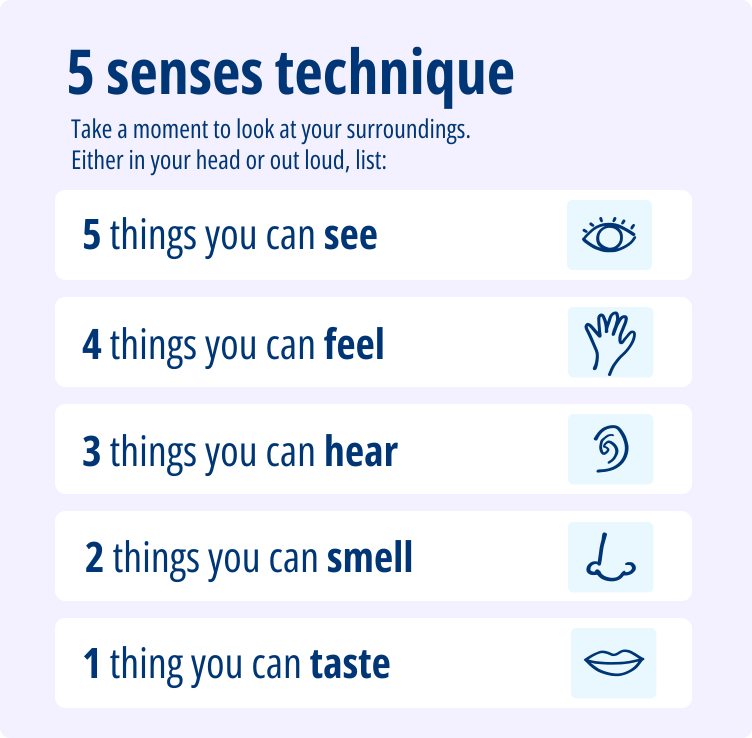
5 Senses Grounding Technique for Anxiety and Stress Relief – A simple mindfulness exercise on a light purple background with dark blue text. The instructions encourage you to take a moment to look at your surroundings and either in your head or out loud, list: 5 things you can see, 4 things you can feel, 3 things you can hear, 2 things you can smell, and 1 thing you can taste to help stay present and calm.

What occurred at Bondi Beach is a tragedy that has impacted many Australians in many ways.

No matter who you are, what your experience is, or how this has and/or continues to impact you, remember that every single person deserves support.

Lifeline is here and you don’t have to face this alone.


When to seek urgent support

Please seek immediate help if you or someone you care about:

In an emergency, call Triple Zero (000).

You can also contact Lifeline 24/7 on 13 11 14, or via text and online chat, for confidential support.

Support Service

Lifeline Crisis Support

Lifeline is a free and confidential one-to-one support service for anyone feeling overwhelmed, distressed or having difficulty staying safe.
Helps with Suicidality Safety Planning
Support Service

13YARN

13YARN is a free and confidential 24/7 national crisis support line for Aboriginal and Torres Strait Islander people who are feeling overwhelmed or having difficulty coping.
Helps with Worry Overwhelm
Support Service

Kids Helpline

Kids Helpline is a free and confidential 24/7 phone and online chat counselling service for kids, teens and young people. Call 1800 551 800.
Helps with Family Bullying
Support Service

Griefline

Griefline provides free and confidential counselling, resources and information to people experiencing grief and loss across Australia. Call 1300 845 745.
Helps with Grief & loss Finding Support
Support Service

NSW Mental Health Line

The NSW Mental Health Line is a free 24/7 statewide phone service that links people of all ages with NSW Health mental health services. Call 1800 011 511.
Helps with Finding support