Lifeline Crisis Support
Lifeline is a free and confidential one-to-one support service for anyone feeling overwhelmed, distressed or having difficulty staying safe.


Traumatic events can happen at all sorts of times in life. They can leave you feeling powerless, frightened, or like the world no longer makes sense.
‘Major traumatic events’ are something specific. They’re usually large-scale incidents that impact communities — such as acts of violence, mass attacks, or natural disasters. These events can affect you in all kinds of ways, from your thoughts, to how your body and mind respond.
Major traumatic events can affect anyone exposed to the event, including:
Even if you weren’t directly there, you can still feel impacted just by hearing about an event and feel unsettled when your sense of safety or predictability is shaken.
Everyone experiences and responds to events differently. Some people may move on quite quickly, but for others, the feelings might linger. However you're feeling right now whether it's confusion, numbness, fear, sadness, or anger, it's valid.
If you’re struggling after a major traumatic event, you might:
These responses are common, and often your body and mind’s way of making sense of something overwhelming.
Some people find they feel better with time and connection. For others, these feelings might hang around longer, and reaching out for support can help.

You are not alone, and support is available. Lifeline is here for you, anytime, on 13 11 14, via text or online chat.
In the days after a major traumatic event, you might still be in ‘survival mode’. You might feel jumpy, restless, foggy, or detached.
It’s important to be patient and kind to yourself during this time. There are also small steps you can take to help yourself recover.
Move to a place that feels calmer where you have space to yourself.
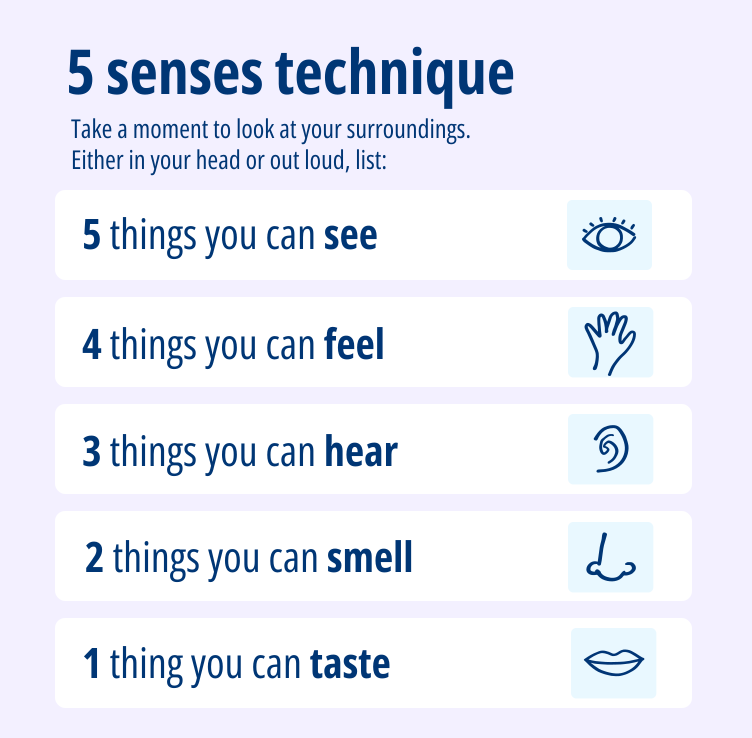
Ground yourself using your senses:
There are lots of tools and apps that can guide you through these techniques as well.
Healing doesn’t always follow a straight line. Some days might feel calmer, others more unsettled. That’s okay and can be expected. There are still things you can do over the longer term to help yourself through.
Spending time outdoors, doing something creative, or connecting with your culture, faith or community can bring purpose and perspective to the situation. Helping others or contributing to your community can also bring purpose and start to help you feel connected again.
Gently returning to your everyday routine can help you readjust. Trying to eat, wake up, and go to bed at regular times can make life feel more predictable and in control. Using planning apps or reminders on your phone can help you focus and keep you on track.
You may notice:
These are common trauma responses — not signs that something is wrong with you. Read more on our What is trauma? page.
You might want to talk about what happened, or just the feelings you’re having and changes you’ve noticed. Choose aperson and place that feels right to you, and you can share as much or as little as you want. You can also speak to a trauma-informed counsellor or GP.
Using options like Lifeline’s text and chat services can feel a little less confronting, and let you open up in your own time and space.
Sometimes you might try all these things and still find the difficult feelings and distress don’t shift. If things don’t shift after a few weeks, or if at any point you feel unsafe, overwhelmed, or unable to manage day-to-day life, it might be time to reach out for more support.
You could try:
What matters is finding support that works for you.
These self-guided options can help you explore trauma and learn ways to support your wellbeing:
You’re not alone. These services offer free or low-cost support:

 5 minutes
read
5 minutes
read
 9 minutes
read
9 minutes
read
 12 minutes
read
12 minutes
read
12 minutes
read
12 minutes
read
 20 minutes
read
20 minutes
read
Your feedback helps us improve our site for people like you.


