Help with homelessness: Resources for wellbeing, safety, and stability
Help is available for anyone experiencing homelessness
Every night, more than 122,000 Australians experience homelessness.
Homelessness isn’t just about sleeping rough. It can also mean staying in a shelter, couch surfing, or living in a car. If you’re facing homelessness, you are not alone, and it isn’t your fault. Many different factors, often outside your control, can make it hard to keep stable housing.
Being without stable housing can take a toll on your body as well as how you see yourself. It’s easy to start doubting your worth or feel like you don’t matter, but none of that is true. You are worthy, capable, and deserving of care and support.
No matter what’s happened, you still have value. Remembering this can help you take small steps towards stability and reconnect with the hope that things can change.
In this homelessness support guide, you’ll find information on:
- Where to find immediate help for food, shelter, and safety
- Ways to take care of your wellbeing during tough times
- Steps to rebuild stability and find support
- National and local services that can help
- Tips for supporting someone experiencing homelessness.
Scroll down to learn more.
Accessing support for food & shelter
Homelessness can affect every part of life.
- Looking after your health can be difficult: Finding medical care, mental health support, or medications isn’t always easy.
- Lack of sleep can make everything harder: Without enough rest, it’s easy to feel tired, down, or unsure what to do next.
- It can feel lonely or isolating: Losing stable housing can also mean losing connections with friends, family, or support networks.
- Getting work or support may feel like a challenge: Without a fixed address, ID, or reliable transport, things like applying for jobs or accessing services can be more complicated.
No matter your situation, worrying about where to sleep or when you’ll eat next can often be the most overwhelming. When your basic needs aren’t met, it’s hard to focus on anything else.
Below, you’ll find information on where and how to access food and shelter while staying safe.
If you need food, there are free meal services, food banks, and emergency relief programs across Australia.
Here are some services that can help:
- OzHarvest: Visit ozharvest.org to find free meal programs near you.
- SecondBite: Visit secondbite.org to see where they provide free meals near you.
- Vinnies Soup Vans: Call 13 18 12 or visit vinnies.org.au to access free meals (in select locations).
- Foodbank Australia: Visit foodbank.org.au to find a local foodbank.
- The Salvation Army: Call 13 SALVOS (13 72 58) or visit salvationarmy.org.au to learn about their homelessness services.
- Red Cross: Visit redcross.org.au to learn about their homelessness services.
- Neighbourhood Houses & Community Centres: Located across Australia, these offer free or low-cost food support, meal programs, and emergency relief. Search for one near you at anhca.org.
Click here to explore more support services for homelessness.
These services provide short-term housing, often with meals, showers, and support workers:
- Salvation Army: Call 13 SALVOS (13 72 58) or visit salvationarmy.org.au to learn about their homelessness services.
- Mission Australia: Call 1800 888 868 or visit missionaustralia.com.au to learn about their homelessness housing service.
- Red Cross: Visit redcross.org.au to learn about their homelessness services.
If possible:
- Call early: Shelters fill up fast. Calling in the morning gives you the best chance of getting a bed. If shelters are full or not the right fit for you, drop-in centres, community hubs, or temporary alternatives like couch surfing may be options.
- Check eligibility: Some shelters prioritise women, young people, or families. Ask if you qualify for specific support.
- Ask for referrals: If one shelter is full, staff may be able to connect you with another option.
If you're experiencing domestic and family violence (DFV), emergency accommodation is available.
- Leaving can be one of the most dangerous times in an abusive relationship. 1800RESPECT (1800 737 732) can help by providing confidential, 24/7 support to help you create a safety plan, find crisis accommodation or a women’s refuge, and connect with legal and financial assistance.
- Click here to learn about more DFV services that can help.
Where can I sleep if I don’t have a place to stay?
If crisis shelters are full, you may need to find a temporary or public place to rest. Here’s how to stay as safe as possible:
- Day centres and community hubs: Some offer overnight stays, warm spaces during the day, or lockers for belongings.
- Libraries, transport hubs, and hospitals: These places may allow brief rest, but be aware of local rules.
- Avoid isolated areas: Sleeping in well-lit, populated locations may reduce risk.
How can I stay warm?
Staying warm is crucial, especially in colder months. Here are some ways to access warmth and winter essentials:
- Find free warm clothing: Charities like Vinnies (13 18 12), Salvos (13 72 58), and local shelters provide free jackets, blankets, and sleeping bags.
- Layer your clothing: Wearing multiple thin layers traps heat better than a single thick coat.
- Check for winter shelters: Some cities offer extra beds and warming centres in cold weather. You can use Lifeline’s Service Finder to check for options near you.
Where can I access essentials like showers and hygiene products?
Having clean clothes, hygiene products, and a shower can help restore dignity and comfort. Here’s where to find free essentials:
- Laundry and showers: Orange Sky provides free mobile laundry and shower facilities in locations across Australia. Find a nearby service at orangesky.org.au.
- Sanitary products: Share the Dignity distributes free period products in public spaces, shelters, and charities via Dignity Vending Machines. Find a distribution point at sharethedignity.org.au.
- Hygiene kits: Many drop-in centres, shelters, and community hubs provide free hygiene kits (soap, toothpaste, deodorant). Search for a Neighbourhood House or Community Centre near you: anhca.org.
If you’re unsure where to start, visit a drop-in centre or homelessness service. They can connect you with free resources and support.
If you'd like to hear how others have found support, you can watch Gabi's story below.
You can also use Lifeline’s Service Finder to search for local support, including food programs, crisis accommodation, and emergency relief.
Try searching keywords like ‘homelessness support,’ ‘free meals,’ ‘emergency housing,’ or ‘financial assistance’ to find services near you.
Tips for staying safe
Your safety matters. While homelessness can put you in unsafe situations, there are steps you can take to protect yourself.
Below, you can find tips for protecting your physical safety as well as your wellbeing.
Crisis shelters aim to provide a safe space, but they can sometimes feel unsafe, especially if there’s violence, theft, or substance use. Some people choose to sleep rough because they feel shelters aren’t the right option for them.
If you’re in this situation, here are some things that can help:
- Ask about safer options: Some shelters offer women-only spaces, youth shelters, LGBTQIA+ inclusive housing, or separate areas for families.
- Check shelter rules: Some shelters have curfews, restrictions on belongings, or no-drug policies that may make the space feel safer.
- Trust your instincts: If a shelter doesn’t feel safe, ask staff about other options or request a referral to another crisis service.
- Reach out for support: A caseworker, outreach team, or crisis service may be able to help you find a better option.
Keeping your belongings safe without stable housing can be difficult, but small steps can help protect what matters most.
- Store important documents: Keep your ID, Medicare card, and bank card in a waterproof bag. If possible, carry them with you.
- Create backups: Take photos of important documents and email them to yourself or store them on a USB. A support worker may be able to help.
- Ask about secure storage: Some shelters and community centres offer lockers or safekeeping services.
- Protect medications: Carry only what you need and store extras safely. If you lose your medication, a bulk-billing GP or community clinic can help with a replacement.
- Keep your belongings close: If sleeping rough, a backpack you can carry is safer than leaving items unattended.
- Use a prepaid card: Carrying less cash can reduce the risk of loss or theft.
If you need help replacing lost or stolen documents, a homelessness support service or community legal centre may be able to assist. Click here to explore support services that can help.
Feeling isolated can make homelessness even harder, but staying connected, even in small ways, can help you feel supported and access help when you need it.
- Stay in touch with services: Keep a list of local drop-in centres and outreach programs. Even if you don’t need help now, knowing where to go for food, shelter, or support can be useful later.
- Visit a drop-in centre: Many offer free meals, social activities, showers, and support workers who can help with housing, health, and legal issues. Some also provide phone charging, internet access, and lockers.
- Find a support system: Having a trusted person facing similar challenges can provide safety and mutual support.
- Connect with a peer mentor: Some outreach programs offer support from people with lived experience of homelessness who understand what you’re going through.
A chat with a support worker or a moment with someone who understands can make a difference. Click here to learn tips for building social connections.
If you use substances, your safety is important. Here are ways to reduce harm:
- Avoid using alone: Having someone around means they can help if something goes wrong.
- Access clean needles: Needle and syringe programs (NSP) provide free, sterile needles to reduce the risk of infection. Check with your local or state government to find outlets near you.
- If withdrawing, seek medical support: Some substances can cause withdrawal symptoms that can be uncomfortable. A GP, hospital, or drug and alcohol service can help.
Click here to learn more about substance misuse and the support services that can help.
If you've been assaulted or threatened or feel unsafe, help is available. You are not alone, and support services can help you find safety and get the care you need.
- Call 000 if you are in immediate danger or need urgent medical attention.
- If you need confidential support: Call 1800RESPECT (1800 737 732). They’re the 24/7 national helpline for people affected by sexual assault or family violence. They can provide crisis counselling and help you explore options for safety and support.
- Find a safer place: If you’re unsafe in a shelter, ask staff about alternative options.
- Get medical care: If you’ve been hurt or assaulted, hospitals and community clinics can provide treatment and support.
- Reporting to police: You can go to a police station or call the Police Assistance Line in your state. A support worker from 1800RESPECT can accompany you.
Experiencing violence or assault is never your fault. Support is available, and you deserve safety. Click here to learn about more DFV support services.
Looking after your wellbeing
Homelessness can last for days, weeks, months, or years. And the longer it continues, the harder it can feel to cope. It’s common to feel overwhelmed, exhausted, or even disconnected from yourself and others. Feeling stressed, unsafe, or judged can start to wear down your confidence and sense of identity.
Self-esteem and mental health are closely connected; when one is impacted, the other often is too. That’s why taking care of your wellbeing matters so much right now. Looking after your mind and body isn’t just about ‘feeling better’. It’s about remembering who you are beneath the stress: someone who matters, who has strengths, and who is worth supporting.
Here are some simple ways to care for yourself, wherever you are:
- Move your body: A short walk, stretching, or deep breathing can help relieve tension and clear your mind.
- Rest when you can: Sleep may not always be easy to find, but even sitting in a safe place and taking a few deep breaths can help restore your energy.
- Stay hydrated and eat what’s available: Drinking water and getting some food in your system, even if it’s just a snack, can help with focus and energy levels.
- Listen to music or podcasts: Tuning into something familiar can provide comfort and escape. Many libraries and community centres offer free wifi and charging stations.
- Find small moments of comfort: Washing your face in a public restroom, wrapping up in a jacket, or holding onto a personal item can help you feel more grounded.
- Be kind to yourself: If your inner voice is harsh, try speaking to yourself as you would a friend. Even saying ‘I’m doing my best’ can make a difference.
If you're unsure where to start, ask yourself: What’s one thing I can do today to feel just a little better? Even small acts of self-care, like taking a deep breath or having a warm drink, are ways of looking after yourself.
Continue reading for more ways to manage stress, regain a sense of control, and find moments of relief, even if just for today.
Box breathing is a simple breathing technique that helps calm your body and mind. It works by slowing your breath and focusing your attention.
If you’re experiencing racing thoughts, difficulty breathing, or a rapid heart rate, a grounding technique like box breathing can help you feel more in control within minutes.
Here’s how to try it:
- Breathe in through your nose for 4 seconds
- Hold your breath for 4 seconds
- Breathe out slowly through your mouth for 4 seconds
- Hold again for 4 seconds
Repeat this cycle a few times. You can imagine tracing the sides of a box in your mind as you go: up, across, down, across.
This technique can be used anywhere, anytime you feel overwhelmed, anxious, or disconnected. Even a few rounds can help steady your breathing and clear your mind.
If you’d like to try box breathing now, click play on the video below.
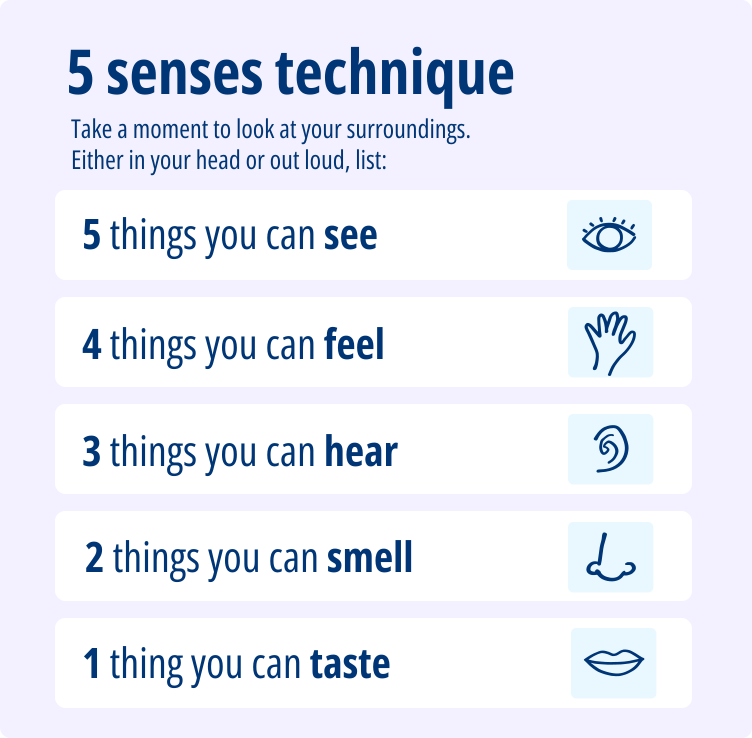
If you’re feeling anxious, unsafe, or stuck in negative thoughts, grounding techniques can help bring you back to the present moment. These simple exercises work by shifting your focus from what’s causing distress to what’s happening around you.
There are many grounding techniques to try, but one of the most effective is the 5 senses technique. You can try it now:
Click here to learn more about grounding techniques and find the options that work best for you.
When life feels overwhelming, putting your thoughts on paper can help clear your mind, ease stress, and bring a sense of control. You don’t need to write full sentences or find the perfect words - just getting something down, even a few words or phrases, can help you process what you're going through.
If you’re unsure where to start, here are some prompts to guide your reflection:
- Right now, I’m feeling __ because __.
- What’s one thing I wish someone understood about what I’m going through?
- What is one thing I still have control over, even when everything else feels uncertain?
- What is one small thing I did recently that I’m proud of?
- Who or what has helped me in difficult times before?
- What’s one step I can take today to feel a little more stable or safe?
- If writing feels too hard, you can also try voice notes, drawing, or making a simple list of words that reflect how you feel.
Click here to learn more about journaling for mental health and wellbeing.
When things feel overwhelming, talking about it with someone you trust can make all the difference. Remember - you don’t have to go through this on your own. Talking to someone, even for a short time, can help ease the weight of what you’re carrying.
Support can come in many forms:
- A friend or family member: Sharing how you feel with someone who cares can be a relief.
- A support worker or community service: Many organisations provide free, confidential support to help with wellbeing.
You deserve support, and you don’t have to wait until things feel unbearable to ask for help. Even a small conversation can be a reminder that you matter and you are not alone.
Click here to read our guide on talking to someone you trust.
Looking after your health (both physical and mental) is important, especially during tough times. If you’re experiencing homelessness, it might feel like support is out of reach, but there are free and low-cost options available. You don’t need a fixed address to get help.
This section shares where you can find support, including GPs, counselling, crisis care, and programs designed for people doing it tough.
Where to start:
- See a GP: Many clinics offer free or bulk-billed appointments. They can help with general health, prescriptions, and referrals to other services. Use Lifeline’s Service Finder to locate one near you.
- Visit a community health centre: These centres offer medical and mental health support, and often other services like social work, drug and alcohol support, and crisis care.
- Get a Mental Health Treatment Plan: A GP can help set this up so you can access subsidised counselling through Medicare. Read our guide on how to get one.
Counselling and specialist services:
- Neami National: Offers mental health and housing support, including outreach. Call 1300 173 293 or visit neaminational.org.au to learn more.
- Flourish Australia: Provides recovery programs and tailored support for people without stable housing. Call 1300 779 270 or visit flourishaustralia.org.au to learn more.
- Headspace (for ages 12–25): Offers youth mental health support, including free counselling and peer support. Visit headspace.org.au to learn more.
Need someone to talk to right now?
No matter what your situation looks like, you are still you, which is someone worthy of care, support, and moments of peace, even in difficult times.
Looking after your wellbeing is about finding small ways to care for your mind and body, even when life feels uncertain. Click here or on the article below to learn more about the importance of healthy self-esteem for wellbeing.
Self-esteem and mental health
Steps for rebuilding stability
If you’re experiencing homelessness, finding stability can feel like a distant goal, especially when you’re focused on getting through each day. But stability doesn’t happen all at once - it’s built step by step, and support is available to help you along the way.
Whether you need housing, financial support, or ways to care for your wellbeing, this section outlines practical steps to help you move forward at your own pace. No matter where you are right now, you deserve support, safety, and a path toward a more stable future.
Building stability takes time, but small daily actions can help create routine, connection, and purpose.
If possible, try to:
- Establish a simple routine: Small habits like waking up at the same time, having a regular meal, or journaling can bring structure.
- Connect with support networks: Feeling isolated makes everything harder. Support groups, peer communities, and caseworkers can offer emotional and practical help.
- Use Lifeline’s Service Finder to search for community services and peer support groups.
- Continue learning or upskilling: Free and low-cost courses can help open new job opportunities. You can look into programs from TAFE or consider the Skills for Education and Employment (SEE) Program. Visit dewr.gov.au to learn how to access free training for job seekers.
If long-term plans feel overwhelming, focus on one small step at a time.
Money stress can feel overwhelming, but free services can help you manage debt, apply for assistance, and find emergency relief. For example, a financial counsellor can help you set small, achievable goals like covering this week’s essentials. You don’t have to do it alone.
Here are some ideas for getting financial help:
- Talk to a financial counsellor: The National Debt Helpline (1800 007 007) offers free, confidential support for budgeting, debt management, and financial planning.
- Apply for emergency payments: If you're in financial distress, you may qualify for a one-off crisis payment from Centrelink. Call 132 850 or visit servicesaustralia.gov.au to learn more.
- Check for rental assistance: If you receive Centrelink payments, you may be eligible for Rent Assistance to help cover housing costs.
- Access emergency relief: Charities like the Salvation Army (13 72 58) provide one-off financial help for food, bills, or rent.
- You can also use Lifeline’s Service Finder to check for local services.
Work can provide routine, stability, and financial security. If you’re looking for work opportunies, free support is available.
Here are some options to consider:
- Access job-seeker programs: Many services offer resume help, training, and interview clothing.
- Workforce Australia: Visit workforceaustralia.gov.au to learn about job placement and training programs near you.
- Find homelessness-friendly employers: Some businesses prioritise hiring people with barriers to employment. Visit wiseemployment.com.au to learn more and to register as a job seeker.
- Consider short-term work: Casual jobs (delivery driving, hospitality, warehouse work) can provide immediate income while you search for something permanent.
- Dress for Success: Visit dressforsuccess.org to learn how to access free workwear and coaching for women. (Click 'find your local affiliate and then select Australia to search by state or territory.)
Even part-time or casual work is a step toward stability. If full-time work feels overwhelming, start small and build from there.
Getting stable housing can take time, but there are steps you can take now:
- Apply for public housing early: Waitlists can be long, so applying sooner helps.
- Consider shared housing: Renting a room is often cheaper than leasing an entire place.
- Ask about rental assistance: Some charities help with bonds, first-month rent, or emergency stays.
Housing services often have waitlists, but support workers can help you explore temporary options while you wait. Click here to explore support services that can help.
Finding stability takes time, but every step, no matter how small, moves you forward. This could be attending a support group, learning a new skill, or simply eating a meal at the same time each day.
And remember - it doesn’t matter if you need financial help, housing, employment, or mental health support; it’s possible to find certainty and happiness. Below, you can read or listen to Andrew’s story of how he held on to hope while experiencing homelessness.
Support services
If you’re experiencing homelessness, help is available. The following services provide free and confidential support, including food, housing assistance, financial aid, and basic essentials.
You'll also find services for domestic and family violence and crisis support.
Crisis support
Housing, food relief, and financial assistance
- Mission Australia: Provides housing and homelessness services, emergency relief, and employment support.
- Call 1800 888 86
- Visit missionaustralia.com.au
- Red Cross: Provides housing, meals, and homelessness services.
- Visit redcross.org.au
- Salvation Army: Offers crisis accommodation, financial assistance, food relief, and family support services.
- Call 13 SALVOS (13 72 58)
- Visit salvationarmy.org.au
- Vinnies: Provides meals, crisis housing, financial aid, and support programs for people in need.
- Visit vinnies.org.au
- Orange Sky Australia: Offers free mobile laundry and shower facilities in various locations across Australia, along with a friendly space to chat.
- Visit orangesky.org.au
Australian Capital Territory (ACT)
- OneLink: Connects individuals with support services, including homelessness assistance, in the ACT.
- Phone: 1800 176 468
- Website: onelink.org.au
- Street Law ACT: Offers free and confidential legal advice and assistance to people who are homeless or at risk of homelessness.
- Phone: (02) 6218 7900
- Website: canberracommunitylaw.org.au
New South Wales (NSW)
- Link2home Homelessness: Provides information, assessments, and referrals to homelessness services statewide.
- Phone: 1800 152 152 (Available 24/7)
- Website: nsw.gov.au
- Homeless Persons' Legal Service (HPLS): Provides free legal advice and ongoing representation to people who are homeless or at risk of homelessness.
- Phone: (02) 8898 6545
- Website: jec.org.au
- Legal Aid NSW – Homelessness Program Legal Service: Offers legal services to prevent homelessness or resolve legal issues to help clients re-enter housing.
- Phone: 1300 888 529
- Website: legalaid.nsw.gov.au
Northern Territory (NT)
- FACES NT: Provides information and referrals to support services throughout the NT.
- Phone: 1800 999 900
- Website: ntcommunity.org.au
- Darwin Community Legal Service – Tenants' Advice Service: Provides legal advice and assistance to tenants, including those at risk of homelessness.
- Phone: (08) 8982 1111
- Website: dcls.org.au
Queensland (QLD)
- Homeless Hotline: A telephone information and referral service for those experiencing homelessness or at risk.
- Phone: 1800 474 753 (Available 24/7)
- LawRight – Homeless Persons' Legal Clinic: Offers free legal advice and assistance to people experiencing or at risk of homelessness.
- Phone: (07) 3846 6317
- Website: lawright.org.au
South Australia (SA)
- Homeless Connect SA: Statewide telephone service offering assistance to individuals experiencing homelessness.
- Phone: 1800 003 308 (Available 24/7)
Tasmania (TAS)
- Housing Connect: Offers emergency accommodation and assistance for those at risk of homelessness.
- Phone: 1800 800 588
- Website: homestasmania.com.au
Victoria (VIC)
- Homelessness Statewide After-Hours Service: Offers support and referrals for individuals experiencing homelessness (and need emergency accommodation) outside business hours.
- Phone: 1800 825 955 (Available 24/7)
- Website: housing.vic.gov.au
- Justice Connect – Homeless Law: Provides legal help to people facing homelessness and tackles unfair laws that affect people who are homeless.
- Phone: (03) 8636 4400
- Website: justiceconnect.org.au
Western Australia (WA)
- Entrypoint Perth: Provides assessment and referrals for accommodation and support services.
- Phone: 1800 124 684
- Website: entrypointperth.com.au
Support for escaping domestic and family violence
Escaping a domestic or family violence (DFV) situation can be dangerous and overwhelming, but support is available to help you leave safely.
1800RESPECT provides confidential, 24/7 support to help you create a safety plan, find crisis accommodation or a women’s refuge, and can connect with legal and financial assistance.
Australian Capital Territory (ACT)
- Domestic Violence Crisis Service (DVCS): Provides 24/7 assistance, including crisis intervention, safety planning, and access to emergency accommodation.
- Phone: (02) 6280 0900
- Website: dvcs.org.au
New South Wales (NSW)
- NSW Government: Use the NSW Government to search for crisis accommodation providers across the state. You can also contact the Housing Response Centre via 1800 422 322.
- Website: nsw.gov.au
Northern Territory (NT)
- Dawn House: Provides crisis accommodation and support services for women and children escaping domestic violence.
- Phone: (08) 8945 1388
- Website: dawnhouse.org.au
Queensland (QLD)
- DVConnect: Offers 24/7 crisis support and refuge placement for women and children experiencing DFV.
- Phone: 1800 811 811
- Website: dvconnect.org
South Australia (SA)
- Women's Safety Services SA: Provides crisis support, including safe accommodation and safety planning.
- Phone: 1800 800 098
- Website: womenssafetyservices.com.au
Tasmania (TAS)
- Family Violence Response and Referral Line: Offers crisis support and referrals to safe accommodation.
- Phone: 1800 633 937
- Website: safeathome.tas.gov.au
Victoria (VIC)
- Safe Steps: Provides 24/7 crisis support and access to safe accommodation for women and children.
- Phone: 1800 015 188
- Website: safesteps.org.au
Western Australia (WA)
- Women's Domestic Violence Helpline: Offers support, counselling, and referrals to safe accommodation.
- Phone: 1800 007 339
- Website: wa.gov.au
Tips for supporting someone experiencing homelessness
If someone you care about is experiencing homelessness, it can be difficult to know how to help. You might feel helpless, frustrated, or even overwhelmed by the situation.
It’s important to remember that you don’t have to solve everything. Just being there to listen can be enough. Small acts of kindness can make a real difference in helping someone feel supported, safe, and valued.
At the same time, caring for someone else can take a toll on your own wellbeing. Looking after yourself, both mentally and emotionally, ensures that you can continue to offer support without becoming overwhelmed.
- Listen without judgement: Homelessness can happen to anyone, and many people feel shame or isolation because of their situation. Let them share their experience without pressure or assumptions.
- Help them connect with services: Many people experiencing homelessness aren’t aware of available support or may struggle to access it. Offer to help research food banks, housing services, or financial aid. You can use Lifeline’s Service Finder to look up local services together.
- Provide essentials if you can: A meal, clean clothing, a phone charger, or a prepaid transport card can provide immediate relief. If direct support isn’t an option, donating to organisations that assist people experiencing homelessness can also help.
- Respect their choices: Stability takes time, and they may not be ready or able to accept certain help. Support looks different for everyone, so focus on what they do feel comfortable receiving.
- Check in regularly: Even if you can’t offer financial or housing support, simply checking in through a call, text, or meeting up can remind them they aren’t alone.
For more information on offering support, you can read our support guide on talking to someone about their mental health.
Looking after your wellbeing as a carer
Supporting someone experiencing homelessness can be emotionally challenging, and it’s important to look after yourself, too.
- Acknowledge your own feelings: It’s okay to feel overwhelmed, sad, or frustrated. Supporting someone through hardship is tough, and your emotions are valid.
- Prioritise self-care: Make time for rest, healthy routines, and activities that help you recharge. Supporting someone else is easier when your own needs are met.
- Set healthy boundaries: You can’t pour from an empty cup. Offer support in ways that are manageable for you, and remember that their journey is not your responsibility alone.
- Reach out for support: Talking to a trusted friend, support group, or counsellor can help you process your emotions and avoid burnout.
- Educate yourself: Learning about homelessness and the challenges people face can reduce frustration and stigma, helping you offer more effective support.
- Know that small efforts matter. Even if you can’t change their situation, your support can make a difference.
For more tips, you can read our support guide on the importance of self-care for mental health and wellbeing.
Self-care for mental health and wellbeing
Support is available
If you’re supporting someone experiencing homelessness, you don’t have to manage everything alone. There are services that can provide guidance, emotional support, as well as practical resources and financial support.
Carer Gateway offers free counselling, respite care, and financial assistance for people who are supporting someone in need. They can help you access practical advice, connect with peer support groups, and find ways to look after your own wellbeing.