Reaching out to Lifeline: What to expect and how to feel more prepared

Learn practical tips for speaking with a crisis supporter, explore calming strategies, and find reassurance that whatever you’re going through is valid and you’re not alone.
Read time icon 9 minutes
Helps with Finding Support
A stylised illustration of a person wearing a headset and glasses, smiling as they sit at a computer with a speech bubble above them.

You deserve support no matter what you’re facing

Reaching out can feel overwhelming, especially if you’re not sure how to put what you're feeling into words. You might be thinking: ‘I don’t even know where to start’ or ‘I’m not sure what’s going on; I just know I don’t feel okay.’

When it comes to contacting Lifeline, you don’t need to have it all figured out. A simple moment of courage is enough. Whether reaching out through 13 11 14, text, or chat, our crisis supporters are here to gently guide the conversation and hold space for whatever you're going through.

On top of not knowing what to say, it’s common to second-guess yourself when things feel heavy. You might have thoughts like: ‘Other people have it worse’, ‘This probably isn’t a real crisis’ or ‘I should be able to handle this on my own.’

Here’s what we want you to know: If you’re feeling unsafe, overwhelmed, or just 'not okay' - that’s enough.

A crisis is anything that makes you feel like you can’t cope right now.

Whether you're wanting support for yourself or are worried about someone else, this support guide is designed to help you feel a little more ready to reach out to Lifeline.


What to expect when connecting with a crisis supporter

Whether you reach out via 13 11 14, text, or chat, your Lifeline crisis supporter will:

  • Listen without judgement
  • Give you space to talk or type about what’s on your mind
  • Help you make sense of what you’re feeling
  • Support your safety and wellbeing
  • Work with you to decide any next steps if that’s something you want.

While you're waiting to be connected, it can help to start noticing what you’re feeling. Naming your emotions, even roughly, can take some of the intensity out of them and help you feel a little more grounded.

You might try starting with: ‘Right now I feel...’

Don’t worry if it’s more than one thing: ‘angry, numb, unsure, sad, too much’

If you're struggling to find words, you might like to try a comparison: ‘It feels like a storm,’ ‘like everything’s buzzing,’ or ‘like fog’.

  • ‘I don’t know where to start, but I need to talk.’
  • ‘I’m feeling really overwhelmed right now.’
  • ‘I don’t even know what I’m feeling, but I don’t feel okay.'

It’s also okay if you need a moment to cry, breathe, or sit in silence. You’re not alone, and you’re never too much.

You deserve to feel heard, even if you don’t know what you need yet.


Reaching out for someone else

If you’re worried about someone in your life (a family member, friend, neighbour, colleague, or anyone in your community), you can contact Lifeline. You don’t have to be in crisis yourself to reach out.

Caring for someone else can feel heavy, and you don’t need to handle it alone. Our crisis supporters are here to:

  • Listen to what’s going on for you and the person you're concerned about
  • Help you talk it through and explore what support might look like
  • Offer guidance on how to care for yourself while caring for someone else
  • Support your own wellbeing, too.

Remember, you don’t need to have the ‘right’ words or a clear plan.

  • ‘I’m worried about someone in my life and don’t know what to do.’
  • ‘I want to help a friend who’s struggling, but I’m feeling overwhelmed too.’
  • ‘I just need to talk this through with someone.’

Whether you’re reaching out because someone’s in immediate danger or you’ve just noticed a change in their mood, you’re doing something important by reaching out.

Looking after others starts with looking after yourself. Lifeline is here for both.


Calming strategies for before, during, or after your Lifeline interaction

When we’re in distress, our brains go into survival mode. The part of the brain that helps us put thoughts into words can go quiet while the part that manages fear gets loud. That’s why it can be hard to talk or even think straight when you’re feeling really overwhelmed.

Below, we’ve listed quick techniques that you can use to help calm your body and mind. This can make it easier to start a conversation or sit with what you’re feeling.

You don’t need to do them perfectly. Just give them a go and see what feels right for you.

When we’re stressed or anxious, our breathing often becomes fast or shallow without us realising it. Slowing it down can signal to your body that you’re safe. Box breathing is a simple breathing pattern that can help you regain a sense of calm.

How to do box breathing:

  • Inhale through your nose for 4 seconds
  • Hold your breath for 4 seconds
  • Exhale through your mouth for 4 seconds
  • Hold again for 4 seconds
  • Repeat for a few rounds.

If counting feels tricky, you can follow along with our guided video below.

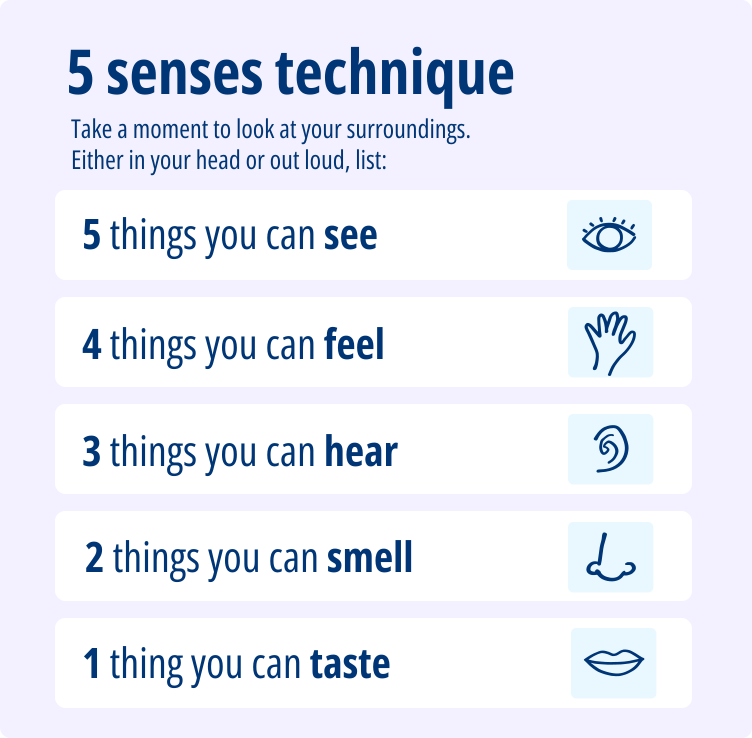
When thoughts are racing or emotions feel too big, a grounding exercise like the 5 senses technique can gently shift your focus back to what’s real and right in front of you.

You can try it now by following the instructions below.

Infographic titled "5 senses technique." It encourages grounding by listing:  5 things you can see (with an eye icon),  4 things you can feel (with a hand icon),  3 things you can hear (with an ear icon),  2 things you can smell (with a nose icon),  1 thing you can taste (with a lips icon). The instructions suggest taking a moment to observe your surroundings and list these items either in your head or out loud.

Strong emotions or distress can make you feel disconnected or out of control. Grounding through touch can help remind you that you’re here, and you’re okay.

Here’s how to do it:

  • Press your feet firmly into the ground or your shoes
  • Notice the pressure and weight beneath you
  • You can also press your hands into a table or your lap
  • Focus on that contact - the texture, the steadiness, the warmth.

This can be especially helpful if you feel ‘spaced out’ or disconnected.

In moments of panic or distress, our thoughts can loop or spiral. Repeating something structured can interrupt that pattern and offer a sense of order.

Here are a few ideas to get started:

  • Count backwards slowly from 10
  • Say the alphabet or days of the week
  • Repeat the lyrics of a song or a comforting phrase
  • Recite your name and birthdate.

The goal isn’t perfection. It’s about offering your mind something simple and known to hold onto.

When we're feeling anxious or on edge, our bodies often hold onto stress without us even noticing. You might be clenching your jaw, tensing your shoulders, or tightening your fists. PMR can help you release that tension bit by bit.

Here’s how to do PMR:

  • Start at your feet and work your way up
  • Gently tense a muscle group (like your feet or hands) for 3-5 seconds
  • Release the tension slowly, noticing the difference
  • Move to the next area - calves, thighs, stomach, shoulders, jaw - one at a time
  • Breathe gently as you go.

You don’t have to do your whole body. Even just a few areas can help. The goal is to tune into how your body feels and give it permission to soften. If you’d like to follow along with someone, you can use the video below.


Tips for figuring out next steps

After talking to a crisis supporter, you might feel a mix of things: relief, exhaustion, uncertainty, or even a little stuck. That’s really common.

Reaching out is a powerful step, but it doesn’t mean everything feels clear straight away.

You don’t need to have it all figured out right now. You’ve done something important by reaching out, and that matters.

When you're ready, here are a few gentle ways to keep moving forward:

And remember - the Support Toolkit is always here. Whether you’re having a tough day, looking for guidance, or just want to feel a little less alone, you can come back to it whenever you need.

Tools & Apps

Beyond Now Safety Planning

Beyond Now Safety Planning provides an app and website for you to create a step-by-step plan to stay safe when you are overwhelmed or having thoughts of suicide.

Helps with Crisis Overwhelm

Real stories from others who’ve reached out to Lifeline

Sometimes, hearing from others who’ve reached out can remind us we’re not alone and that things can shift, even in our hardest moments.

Below, you can read or listen to real stories from people who contacted Lifeline and found support, strength, and moments of hope when they needed it most.

Real Story

Lachie's Story

Lachie Samuel is a former FIFO mining worker, flying in and out of some of the most remote, desolate places in Australia, places where male suicide and mental health issues are rife.
Read time icon 30 minutes read
Helps with Anxiety Depression
Real Story

Monwell's Story

In this episode of Lifeline's Holding on to Hope podcast, Monwell shares his struggles with substance misuse, gambling, and suicidal thoughts and how his journey to recovery led to self-discovery.
Read time icon 12 minutes read
Helps with Suicidality Healing & Recovery
Real Story

Davina's Story

Davina, a journalist and mother of two, shares her story of battling anxiety, post-traumatic stress disorder (PTSD), postnatal depression, and suicidal thoughts.
Read time icon 22 minutes read
Helps with Anxiety & Depression Trauma
Real Story

Jaz's Story

Three years ago, Jaz was a very unhappy woman. Today, Jaz is sharing how his decision to transition helped him let go of years of body image issues, suicidal thoughts, and fears of not being accepted.
Read time icon 30 minutes read
Helps with Anxiety & Depression Substance Misuse
Real Story

Ian's Story

Ian shares his story of holding on to hope after experiencing serious domestic violence and sexual abuse by a family friend at a young age.
Read time icon 29 minutes read
Helps with Suicidality Domestic & Family Violence

Click here to discover more stories from people who’ve held on to hope.


Finding the support that’s right for you

Lifeline is here for all Australians, anytime and for any reason. If you prefer to connect with a service that better reflects your identity or experiences, that’s completely valid.

Your wellbeing matters, and you deserve support that feels safe and culturally respectful. Scroll down to find the option that feels best for you.

Techniques & Guides

Contacting Lifeline – Guide

Learn how Lifeline can support you, what to expect when you reach out, and the different ways to connect with a crisis supporter.
Read time icon 5 minutes read
Helps with Taking steps Finding Support
Support Service

13YARN

13YARN is a free and confidential 24/7 national crisis support line for Aboriginal and Torres Strait Islander people who are feeling overwhelmed or having difficulty coping.
Helps with Worry Overwhelm
Support Service

MensLine Australia

MensLine Australia provides free 24/7 counselling, information, and referrals for men with relationship, mental health, and wellbeing concerns. Call 1300 789 978.
Helps with Relationships Mental Health
Support Service

Kids Helpline

Kids Helpline is a free and confidential 24/7 phone and online chat counselling service for kids, teens and young people. Call 1800 551 800.
Helps with Family Bullying

Search for more services

Use the Lifeline Service Finder to search for more local and national services available to help support you.

Support Service

Lifeline Service Finder

Lifeline's Service Finder is an online directory of free or low-cost health and community services in Australia. Search for GPs, counsellors, material support and much more.
Helps with Finding support