Supporting someone with a mental health condition: A wellbeing guide for carers
Practical support and wellbeing tips for carers
When someone you care about is living with a mental health condition, it’s natural to feel a mix of emotions like love, hope, worry, exhaustion, grief, and even resentment. Caring for someone can bring deep meaning. It can also bring real challenges.
You might not have planned to become a carer. You might not even call yourself one. But if you’re currently offering regular practical or emotional support to someone, you're in a caring role and what you offer matters.
When caring for someone else, it’s easy to put your own needs aside. You might catch yourself thinking, 'It's not about me' or 'I'll take care of myself later.' But your wellbeing matters just as much. Understanding your own needs and giving yourself permission to meet them is part of caring in a sustainable, compassionate way, for both you and the person you support.
In this guide, you’ll find information on:
- Strategies for managing stress and overwhelm
- Tips for reaching out for support
- Understanding your rights as a carer
- Tools, apps and support services for carers.
Scroll down to learn more.
What does it mean to be a carer?
Being a carer doesn’t always mean providing round-the-clock help. It can look different for everyone, and it often changes over time.
Caring can look like:
- Sitting with the person you care about when they’re struggling to get out of bed
- Checking in with a simple text to remind them they’re not alone
- Helping with meals, appointments, medications, or daily routine
- Learning more about what they’re experiencing, so you can walk alongside them, not ahead, not behind
- Encouraging them to leave the house when anxiety or panic makes it feel impossible
- Offering steady support when they feel overwhelmed, stuck, or isolated
- Helping them stick to a treatment plan, or gently encouraging them to seek professional support
- Walking beside them as they navigate recovery from substance misuse challenges.
However your role looks today, it’s important to recognise that what you’re offering matters.
Strategies for managing stress and overwhelm
When caring for others, it's completely natural to feel stressed at times, especially when you’re carrying a lot of responsibility or facing uncertainty about how to best help.
Stress doesn't always look like panic. It might feel like tiredness that won't lift, feeling on edge, snapping more easily, or finding it hard to focus.
Having simple strategies you can turn to when stress builds up can make a real difference. They can help you stay grounded, steady, and better able to care for both the person you support and yourself.
Here are a few techniques you can try:
When emotions start to rise, slowing your breath can help calm both your body and mind. It sends signals to your brain that you’re safe, helping you feel less overwhelmed and more in control.
Box breathing is a simple grounding technique you can use when you notice stress building up, before a tough conversation, or even just to reset your body during a busy day.
Here’s how to do it:
- Breathe slowly through your nose for four counts
- Hold your breath for four counts
- Exhale slowly through your mouth for four counts
- Hold your breath again for four counts
- Repeat the cycle for a few rounds or for as long as it feels helpful.
If you'd like, you can follow along with our guided box breathing video below.
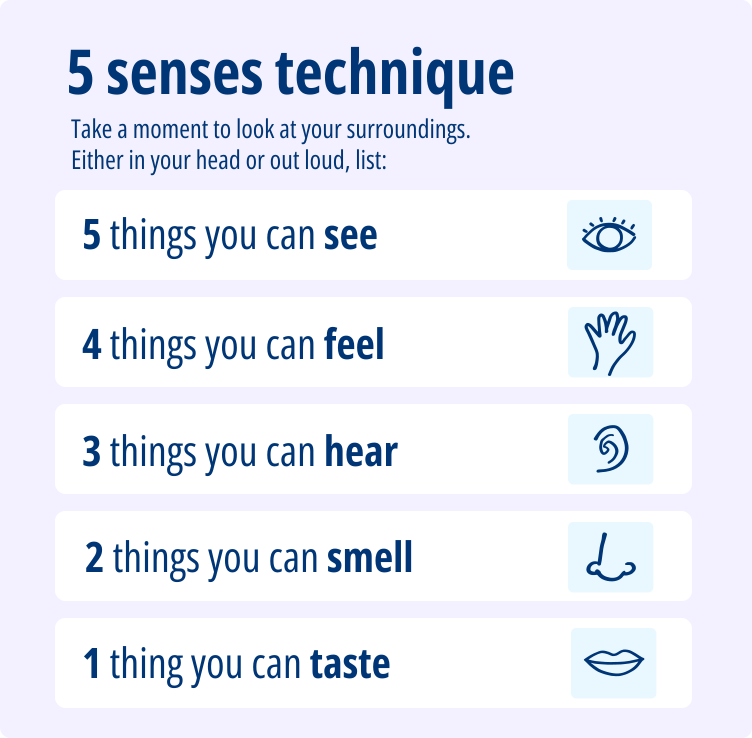
When stress or anxiety feels overwhelming, it can help to focus on the world around you. The 5 senses technique is a simple grounding exercise that brings you back to the present moment by tuning into what you can see, hear, feel, smell, and taste.
You can use this technique whenever you feel your thoughts spiralling, your body tensing up, or you just need a break from worry. It only takes a minute or two and can help slow racing thoughts, steady your breathing, and reconnect you to the here and now.
When you’re caring for someone else, it’s easy to push your own feelings aside. Writing down what you’re feeling, even just a few sentences, can help clear your mind, ease big emotions, and give you a little more space to breathe.
You don’t have to write neatly or perfectly. You don’t even have to write full sentences if you don’t want to. Just let your thoughts flow, without judgement.
Journaling can also be a powerful way to remind yourself of all the care and strength you offer every day, especially on days when it’s hard to see it clearly. If you’d like, you can use these prompts to reflect on the care you’re already giving:
- How do you show up for the person you care about? (It might be listening without judgement, helping them organise their week, or simply being there on the hard days.)
- What small acts of care have you offered recently? (Think about moments like sending a text, making a meal, giving them space when needed, or encouraging them to do something they enjoy.)
- How has your caring role changed over time? (You might notice that your support looks different now and that’s okay.)
- What strengths have you discovered in yourself through caring (Patience, resilience, compassion, or even the courage to keep showing up are all strengths, even if they sometimes feel invisible.)
You might choose to journal every day, once a week, or just when you need a moment to pause and reflect. There’s no right or wrong way to do it. The most important thing is giving yourself the time to be seen and heard.
Click here to learn more tips for journaling your thoughts and feelings.
When you’re carrying a lot, sharing it with someone you trust can make a real difference. Talking things through doesn’t mean you have to explain everything or have it all figured out. Sometimes just saying a few words out loud can ease the weight you’re holding.
It’s okay if you’re not sure how to start. Here are some things you might say or text:
If you want someone to listen:
- 'I'm finding things a bit heavy right now. Can I talk to you for a few minutes?'
- 'I don't want advice at the moment. I just need someone to listen. Would that be okay?'
If you need practical support:
- 'Would you be able to check in with me every now and then? It would mean a lot.'
- 'Could you help me with [a meal, running an errand, sitting with them while I take a break]?'
If you're feeling overwhelmed:
- 'I'm struggling a bit with everything that's going on. I’m not sure what I need, but I didn’t want to keep it bottled up.'
- 'Today feels really tough. Would you have time for a chat or a coffee?'
You can also text something simple:
- 'Hey, can I lean on you for a bit today?'
- 'Could use a listening ear when you’re free.'
Remember, you don’t have to tell your whole story if you don’t want to. Start small. Choose one person you feel safe with. You deserve support, too.
If you’re feeling overwhelmed and not sure who to reach out to, you can always connect with a Lifeline crisis supporter. We're here to listen to whatever you're going through 24 hours a day, 7 days a week via 13 11 14, text, and chat.
Click here to learn more tips for talking to someone you trust.
When life feels busy, stressful, or overwhelming, it can be hard to slow down your mind. Mindfulness is about taking a few moments to notice where you are, what you’re feeling, and what’s happening around you without trying to fix it or change it.
If you’re not sure where to start, mindfulness apps can make it easy. They offer guided exercises you can listen to anytime, whether you’re taking a break, getting ready for sleep, or needing a few minutes to reset during a busy day.
Here are some popular apps you might like to try:
Even a few minutes of mindfulness each day can help lower stress, improve sleep, and make it easier to respond calmly when things feel tough.
Click here to learn more about mindfulness and how to get started.
Having simple ways to manage stress and overwhelm can make a real difference, helping you feel more grounded and in control, even on tough days.
Tips for reaching out for support
Caring can feel isolating at times, which is why it's important to lean on others for support.
It’s really common to feel unsure about what to say when you reach out for help, whether it’s to a service, a support group, or someone you trust.
Remember:
- You don’t have to have the perfect words.
- It’s okay to feel emotional, nervous, or unsure.
- You only need to share as much as you feel comfortable with.
- The person you’re speaking to is there to listen and support you without judgement.
- There’s no ‘wrong’ way to ask for help.
You just have to take the first step. Just reaching out is a huge and important step and one you can be proud of. Continue reading for more tips you can use to reach out for support.
Lean on a support network
A support network is simply the people, services, and connections you can lean on when you need encouragement, advice, or a break. It might include trusted family members, friends, neighbours, workmates, carer groups, or professional support services.
You might already have a network around you or you might be building one from scratch, and that’s okay too. Here are some ways you can start building or reaching out to your support network:
You don’t have to do everything on your own. Asking for practical help can give you more breathing room and protect your energy for the things that matter most.
Think about tasks that feel overwhelming or take up a lot of your time. Is there something a family member, friend, neighbour, or colleague could help with?
Here are some things you might ask for:
- Cooking a meal or helping with grocery shopping
- Sitting with the person you care about while you take a break
- Picking up medications or running small errands
- Driving you or the person you support to appointments
- Checking in with you regularly to see how you’re doing
- Helping with housework like laundry, dishes, or garden care
You might say something like:
- 'Would you be able to bring over a meal this week?'
- 'I could really use a break. Would you mind sitting with [their name] for an hour or two?'
- 'Could you check in on me now and then? It would mean a lot.'
People often want to help but don’t always know how. Being specific about what you need can make it easier for them to say yes and easier for you to accept support without guilt.
Caring for someone with complex mental health needs can be emotionally and physically demanding. Professional support services are available to provide the assistance you need, whether it's emotional support, practical advice, or connecting you with resources.
- SANE Australia: SANE offers a range of free digital and telehealth support services for people over 18 with complex mental health needs, and their family, friends, and carers. Services include counselling, peer support, online groups and events, 24/7 community forums, and online information and resources. Click here to learn more about SANE.
- Carer Gateway: Carer Gateway provides a range of services to support carers, including:
- Emotional support: Counselling and peer support to help you manage the emotional aspects of caring.
- Practical assistance: Help with navigating services, managing appointments, and accessing respite care.
- Financial Support: Information on payments and subsidies available to carers.
Click here to learn more about the resources available for carers.
Talking to someone who understands what you’re going through can make you feel less alone. Peer support groups, whether in-person or online, offer a safe place to share experiences, get advice, and find emotional support from people who truly ‘get it.’
You can connect with other carers through:
- SANE online forums: A free, professionally moderated space where carers, family members, and friends can share stories, ask questions, and support each other. Click here to learn more.
- Carer Gateway peer support groups: Online groups where you can meet other carers, share experiences, and build a sense of community. Click here to learn more.
- Local carer support groups: Your GP, a community centre, or mental health services can also help you find local groups where you can connect face-to-face.
Finding others who understand your journey can offer new strength, new hope, and remind you that your experiences and emotions are valid.
Here’s a simple example you can follow or adapt in your own words:
'Hi, my name is [your name]. I'm supporting someone close to me who’s living with a mental health condition and I’m finding it a bit tough at the moment. I’m not really sure where to start, but I was hoping to talk to someone or find out what support is available for carers like me.'
You could also add:
- 'I'm mainly looking for someone to talk to.'
- 'I'm interested in finding local support groups.'
- 'I'd like advice on balancing caring and looking after my own wellbeing.'
Click here to learn about the support services available for carers.
Learn about mental health and build practical carer skills
It’s common to feel unsure or overwhelmed when someone you care about is living with a mental health condition.
Understanding a little more about what they’re experiencing can help you feel more confident, connected, and better equipped to support them while also protecting your own wellbeing.
Here are some things you can do right now:
If you'd like to learn more about a specific mental health condition, you can explore the resources available for carers in the Support Toolkit.
I'm supporting someone experiencing:
If you’d like to feel more confident supporting someone with mental health challenges, Lifeline offers a range of mental health and wellbeing training programs.
Courses are designed for everyday people and focus on practical ways to support mental health and wellbeing in your community, workplace, or personal life.
Topics include:
- Recognising signs of mental distress and knowing how to respond
- Having safe and compassionate conversations
- Building resilience and promoting wellbeing
- Supporting someone through crisis situations.
Courses are available nationally and can be completed online or in person, depending on what suits you best. Learning new skills can help you feel more prepared, more confident, and better supported in your caring role.
Click here to learn more about Lifeline's workplace and community training courses.
The Carer Skills online program is a free, self-paced course designed to help carers build practical skills, strengthen their own wellbeing, and feel more confident supporting someone experiencing mental health challenges.
The program covers topics like:
- Communicating effectively and compassionately
- Managing stress and preventing burnout
- Setting healthy boundaries
- Navigating the ups and downs of caring
You can complete it at your own pace, and you’ll find real-life tips and strategies from carers who have been there too.
The more you understand, the more confident and empowered you’ll feel to walk alongside the person you care about.
Finding balance in how you care
When you care deeply about someone, it’s natural to want to be there for them as much as you can. But caring for someone doesn’t mean saying yes to everything, or giving more than you have to give.
Setting healthy boundaries is a way of protecting your own wellbeing, so you can continue to offer care with patience, compassion, and strength over time.
Boundaries aren’t about pulling away from the person you care about. They’re about finding a balance between their needs and your own, so you can both stay connected in a healthy, sustainable way.
Here are a few ways to find balance in how you care:
Caring doesn’t mean saying yes to everything. It's okay and important to be honest about your limits.
You might say something like:
- 'I can help you with your appointments this week, but I won't be available over the weekend.'
- 'I'm here to listen, but I may not have the energy to talk late at night.'
- 'I can drive you to the doctor, but I need to head straight home afterwards to rest.'
Being clear about your availability and energy helps set healthy expectations for you and for the person you care about. It also gives the other person the opportunity to build their own coping skills, knowing they can still rely on you without being dependent on you for everything.
Protecting your time and energy doesn’t mean you care less. It means you’re taking steps to care for them for as long as they need.
It’s natural to want to make things better when someone you care about is hurting. But supporting someone doesn’t mean you have to fix their problems or have all the answers.
Often, what the person you care about needs most is your presence, not your solutions. Sitting with them, listening without judgement, and gently encouraging small steps forward can be more powerful than trying to ‘make it better’ straight away.
You might say things like:
- 'I'm here with you. You don't have to go through this alone.'
- 'I don't have all the answers, but I can sit with you while you figure things out.'
- 'What would feel helpful for you right now?'
Letting go of the pressure to fix everything gives you and the person you care about more space to focus on small wins, day by day.
Caring for someone can sometimes pull your focus so completely onto their needs that you lose sight of your own. Taking time to notice how you’re feeling is an important part of protecting your wellbeing.
If you find yourself feeling stretched too thin, resentful, exhausted, or emotionally numb, these can be signs that you’re running low on the energy and compassion you need.
Try asking yourself:
- 'How am I feeling today?'
- 'What do I need right now?'
- 'Am I giving more than I have to give?'
If the answer points to needing rest, support, or a break, it’s okay to listen to that. Taking a step back, asking for help, or giving yourself permission to recharge can help you maintain your care over the long term.
Your feelings matter just as much as the person you’re supporting. Checking in with yourself is not stepping away from caring; it’s part of caring wisely.
Sometimes, the most caring thing you can do is to gently encourage the other person to take small steps on their own.
Building independence can look like:
- Helping them make their own appointments, rather than booking everything for them
- Encouraging them to reconnect with friends or hobbies they enjoy
- Supporting them to take part in their treatment decisions where possible
- Cheering them on when they manage a task, even if it’s something small.
These small steps can help rebuild their confidence, sense of purpose, and belief that taking care of their mental health and wellbeing is possible.
It’s okay to offer support while also stepping back a little when it’s safe to do so. You’re not abandoning them; you’re showing belief in their ability to move forward, even in small ways.
Keep in mind - you don’t have to be available every minute of every day to make a difference.
Rest is how you protect your energy, patience, and compassion, so you can keep showing up in a way that's sustainable, not overwhelming.
Taking time for yourself, even if it’s just a short walk, a quiet coffee, an afternoon off, or a full day to reset, can give your body and mind the space they need to recover.
You deserve time for yourself, just as much as the person you care about deserves your support.
Finding balance is a journey, not a one-time decision.
Some days you’ll feel more available, and other days you’ll need to protect your space more carefully. Both are part of caring with compassion.
Self-care as a carer
Caring for someone can be physically tiring and emotionally heavy. Without small moments of care for yourself, it's easy to feel exhausted, overwhelmed, or chronically stressed.
Self-care helps you recharge, so you have the energy and strength to keep supporting the person you care about while looking after yourself too.
You don’t need to do anything big or fancy. Here are some simple ways you can care for yourself every day:
- Eat and move regularly: Caring for someone else takes emotional and physical energy. Keeping your body fuelled and moving a little each day can help lift your mood, sharpen your focus, and build the stamina you need to keep going. Even small amounts of movement, like stretching at home or walking around the block, can help clear your mind and give you a boost of energy.
- Prioritise rest and protect your sleep: Giving your body enough time to rest and reset is one of the most powerful ways to care for your wellbeing. Sleep helps regulate your emotions, strengthens your immune system, and gives your brain time to process the day. Short rest breaks during the day, even just sitting quietly, can also help recharge your energy. Click here to learn more about why sleep matters for mental health and tips for improving yours.
- Make time for small things you enjoy: Doing things you love, even for a few minutes, can reduce stress, boost your mood, and remind you that your life matters too. It might be listening to music, drawing, reading, gardening, or watching a favourite show. Enjoyable moments help build resilience and can make it easier to cope on a tough day.
Click here to learn more about self-care for mental health and wellbeing.
Your rights as a carer
When you’re caring for someone living with a mental health condition, it’s easy to feel like the responsibility falls heavily on you.
You may find yourself navigating health services, advocating for support, or making decisions without always having access to the information you need. It can be challenging, especially when you're trying to balance respect for the person's privacy with your own need for support and inclusion.
Recognising your rights as a carer is part of protecting your wellbeing and helping you advocate more confidently.
- Access to information (with consent) from health professionals about the person’s care and treatment
- Involvement in treatment planning, where appropriate
- Education and support from carer organisations
- Financial assistance through options like carer payments via Centrelink
- Flexible work arrangements and carers' leave under Australian workplace laws
- Access to respite care without losing your carer payment when you need a break
- Counselling support through your GP or local community services
- The right to make a complaint or seek advocacy if you’re concerned about the services being provided.
Visit SANE to learn more about carer rights and responsibilities.
While health professionals must respect patient confidentiality, they can still provide general information about mental health conditions, treatments, and how you can offer support.
In some cases, the person you are caring for may need to give consent for detailed information to be shared with you.
If you feel shut out of important conversations, it's okay to ask:
- 'How can I best support [their name] through their treatment?'
- 'What should I watch for if I’m concerned about their wellbeing?'
- 'Are there services or resources you can suggest for me as a carer?'
Remember, you don’t have to navigate these conversations alone. Support services like Carer Gateway and SANE can help.
Resources for carers
There are tools, apps, and services designed to support you in your caring role and to help you look after your own wellbeing too.
Here are some resources you might find helpful, whenever you’re ready to explore them.
Tools and apps
Support services
Carer Gateway
SANE
Search for more services
Use Lifeline's Service Finder to search for more local and national services available to help support you.
Looking after your own wellbeing is what allows you to keep showing up with patience, compassion, and strength, without losing sight of yourself along the way.
When you care for yourself, you’re not stepping away from the person you support; you’re building the resilience you both need for the road ahead.