National Alcohol & Other Drug Hotline
The National Alcohol & Other Drug Hotline is a free and confidential phone service that provides counselling, advice, and information for those struggling with addiction. Call 1800 250 015.
If life is in danger, call Triple Zero (000)

Translation notice: Lifeline Crisis Support is delivered in English. This page was translated automatically and may not be fully accurate. Spot an issue?
Share feedback about automatic translation accuracy.

Substances include alcohol, nicotine, prescription and illegal drugs, and even household chemicals like petrol or glue that alter how we feel, think, or act.
Some common substances are:
People use substances for many reasons. Sometimes it's to relax, socialise, or enhance experiences. In Australia, drinking to celebrate is as common as having a morning coffee.
But for some people, substance use can start to have a negative impact on their health, wellbeing, and relationships.
Substance misuse isn’t just about how much you’re using; it’s about how it’s affecting you and those around you.
While it can look different for everyone, you might be experiencing substance misuse if you:
Many people use substances as a way to escape stress, numb pain, or manage difficult emotions. This is a really common human response. Everyone wants to feel better when they’re struggling.
But while substances might bring relief in the short term, over time they can lead to more harm, both physically and emotionally.
'Smoking cannabis helped me to cope with the pain in my life and cope with PTSD.'
Substance misuse is sometimes called:
While not everyone who misuses substances develops an addiction, it can be helpful to understand the cycle of addiction, which is a pattern that can make it hard to stop using.
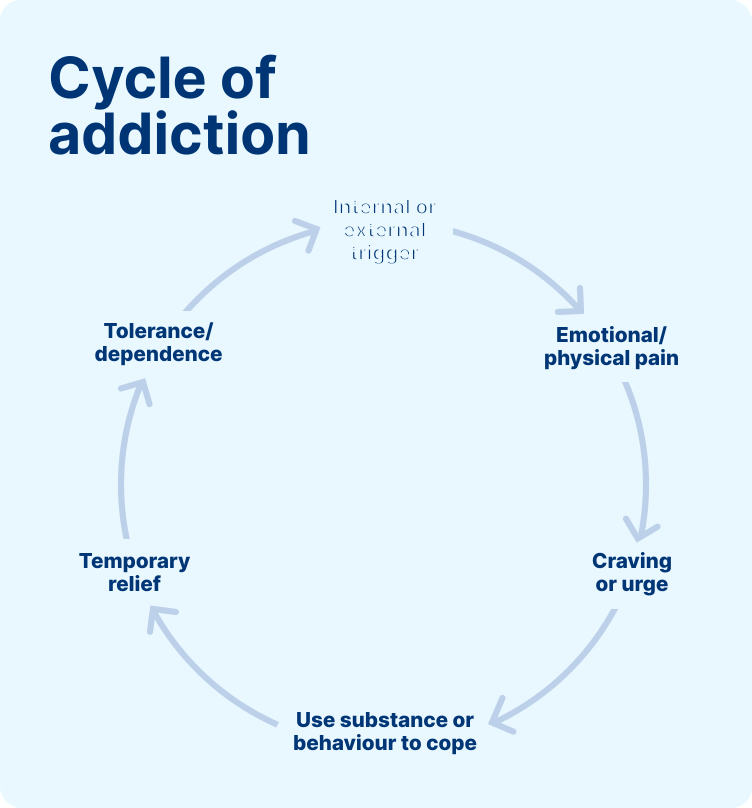
Click here to read our support guide on understanding and managing addiction.
Because substances like alcohol and prescription medications are widely used, it’s not always easy to know when use becomes misuse. But we do know that:
These numbers show that many people use substances, often as a way to manage stress, emotions, or difficult life circumstances.
'Having suffered from anxiety and depression for many years, drinking helped me to relax and cope with stress.'
While substances might feel like an easy way to cope, over time they can lead to more harm, making challenges feel even harder to deal with.
If you’re starting to feel like substance use is having a negative impact on your life, you’re not alone, and there are ways to take back control.
Click the links below to:
You don’t have to make big changes overnight. Small steps can make a big difference over time.
And if you need to talk, Lifeline is here for you 24/7. You can connect with us via 13 11 14, text, and chat.
Substance misuse can look different for everyone.
For some, it might mean using more than they intended or struggling to cut back. For others, it could be about using substances to cope with difficult emotions or changes in mental or physical health.
Whatever your experience, it’s okay to acknowledge what’s going on. Understanding the signs and effects of substance misuse can be an important first step in finding the support that’s right for you.
Substance use can shift from something occasional to something that starts to affect different parts of your life. You might notice that you’re using more over time, struggling to stop, or prioritising substances over things that once felt important.
Some common signs include:
If you recognise any of these experiences in yourself or someone you care about, know that you’re not alone. Support is available, and there are ways to take steps towards feeling better when you're ready.
Substance use doesn’t just affect your body. It can also have an impact on your emotions, thoughts, and relationships. You might find yourself turning to substances to manage difficult feelings or pulling away from people you care about.
Some common emotional and mental effects include:
The way a substance affects you isn’t just about what you take; it’s also about how you’re feeling and what’s happening around you at the time.
For example, having a drink while celebrating with friends can feel very different from having that same drink alone at home when you’re already feeling down or lonely. In some situations, it might be harder to control how much you use or to manage difficult thoughts and emotions.
'Once you start taking it frequently, it becomes a physical thing. You need to have it to get through the day.'
Substance misuse can also take a toll on your body, sometimes in ways that are easy to miss at first. Over time, you might notice changes in weight, sleep, or how you feel when you’re not using.
Some of the most common physical effects include:
If you notice any of these in yourself, remember there are short term things you can do if you’re experiencing cravings, and long-term strategies that work to manage substance misuse.
You can also reach out to support services like the National Alcohol & Other Drug hotline.
Substance misuse can look completely different for everyone. It might involve different substances but also misusing them in different ways.
For example, in the case of alcohol, misuse could look like any of the following:
The substances we choose can be influenced by what we enjoy, past experiences, culture, what’s available, and what’s socially accepted.
Any substance can be misused but the most common include:
'My first drink is always nine o’clock on a dot and I continuously drink all day until bedtime.'
Scientists still don’t know the exact causes of substance misuse, and the reasons can be very different for different people.
However, below are some of the reasons people might end up misusing substances.
The most common reason people misuse substances is to dull emotional or physical pain or to escape from the painful feelings caused by problems or difficulties in life.
'I couldn’t get pregnant, so I fell into a deep depression. That’s when I think that drugs saved me because they allowed me to still be here.'
This is a totally normal desire, and while it can make us feel better in the short term, this coping mechanism can have serious long-term consequences on our health and wellbeing.
Physical pain, especially chronic or severe pain, can massively impact our lives and our ability to go about our day as we wish.
Some of the common causes of chronic or severe pain include pain from an injury or other trauma, surgery, illness, cancer and migraines.
Your doctor might prescribe legal painkillers or other medications that are effective at treating the pain but can become addictive after long-term use. Equally, some people may use illegal drugs or other substances to help manage physical pain, which can turn into a substance misuse problem.
Minimising or escaping painful feelings or memories is another common reason for using substances.
These feelings or memories might include:
Escaping uncertain, painful, or difficult circumstances in your life can be another reason for misusing substances.
These circumstances might include:
As mentioned above, wishing to escape painful memories or feelings resulting from things that happened to us when we were young is a natural desire and one reason why some people might end up misusing substances.
In addition, young people often learn and imitate behaviours by observing others. If your parents or people in your environment used alcohol, drugs or other substances, you may have picked up these habits or behaviours as a way to cope.
Feelings of loneliness can arise if we’re unhappy with our level of social connections.
We might also feel disconnected in a range of different ways. You might feel:
We all deserve to be loved and cared for by those closest to us.
Not feeling seen, understood or valued by the people around you, especially those who you love, can make it hard for us to have a sense of self-worth, self-confidence and self-esteem.
It’s natural that we want to fit in with the people around us. Peer pressure, who we spend time with, and the environment we’re in, can also be contributing factors to substance misuse.
People who are misusing substances may find that being around others who are using or consuming can trigger them.
For example, if you’re struggling with alcohol misuse, joining a few friends for a drink after work might quickly become a situation where you’ll find it hard to stop.
Some studies show that some people are more likely to misuse substances based on their genetic makeup. There are also specific genes related to how your body reacts to and breaks down substances, which can change how some people experience substances.
Regardless of the genetic factors involved, there are short-term things you can do if you're experiencing cravings, and long-term strategies that work to manage substance misuse.
Some substances can create physical and psychological dependence after regular use, that will lead to withdrawal symptoms if you stop taking them. It’s important to consult with a doctor before stopping the use of some substances, including heavy alcohol consumption, opiates, antidepressants, and benzodiazepines.
However, in many cases, people’s addiction to a substance is caused by a strong desire to escape other painful thoughts, feelings and situations.
'Substance misuse was about altering my mind state. I was trying to silence what was going on.'

If you’re in crisis, contact Lifeline, or if your life is in danger, call 000.
Substance misuse can be very challenging to face, and taking the first few steps is likely to be difficult. However, the most important thing is being willing to try.
If things feel difficult at first, it’s important to not feel discouraged. Dealing with substance misuse can look different for everyone, and different methods will work for different people. It’s important to find the right approach for you.
Below we’ll cover some things you can do in the moment when experiencing cravings or a desire to consume/use. We also have information on next steps you can take and long term strategies too.
You may find it helpful to employ a strategy called The 3 D’s:
Opening up to someone about how you’re feeling can be really hard, but is also one of the best ways to manage substance misuse. It’s ok to ask for help, or to at least share some of what’s going on for you.
You might like to consider talking to someone you trust, or connecting with an anonymous, confidential support service like Lifeline or the National Drug Hotline.
Sometimes, if you’re feeling particularly overwhelmed, it can help to take your mind off your cravings by distracting yourself until the urge is less intense.
You might like to try:
‘Urge surfing’ is an effective mental technique that can help with cravings. It involves observing and experiencing the urge without engaging in it.
Waves are strong and powerful, and that’s what an urge can be like too. Like a wave, an urge can be intense but it usually doesn’t last long, and if you can make it past the peak of the urge, it will get easier to manage.
Some people like to visualise themselves riding a wave. Try reminding yourself:
Grounding is a technique designed to settle the stream of thoughts or cravings in your mind by connecting with your body in the present moment. It can help you find stability if you’re feeling overwhelmed, disconnected or distressed.
One of the ways you can practice grounding is by using your five senses to draw attention to the present moment.
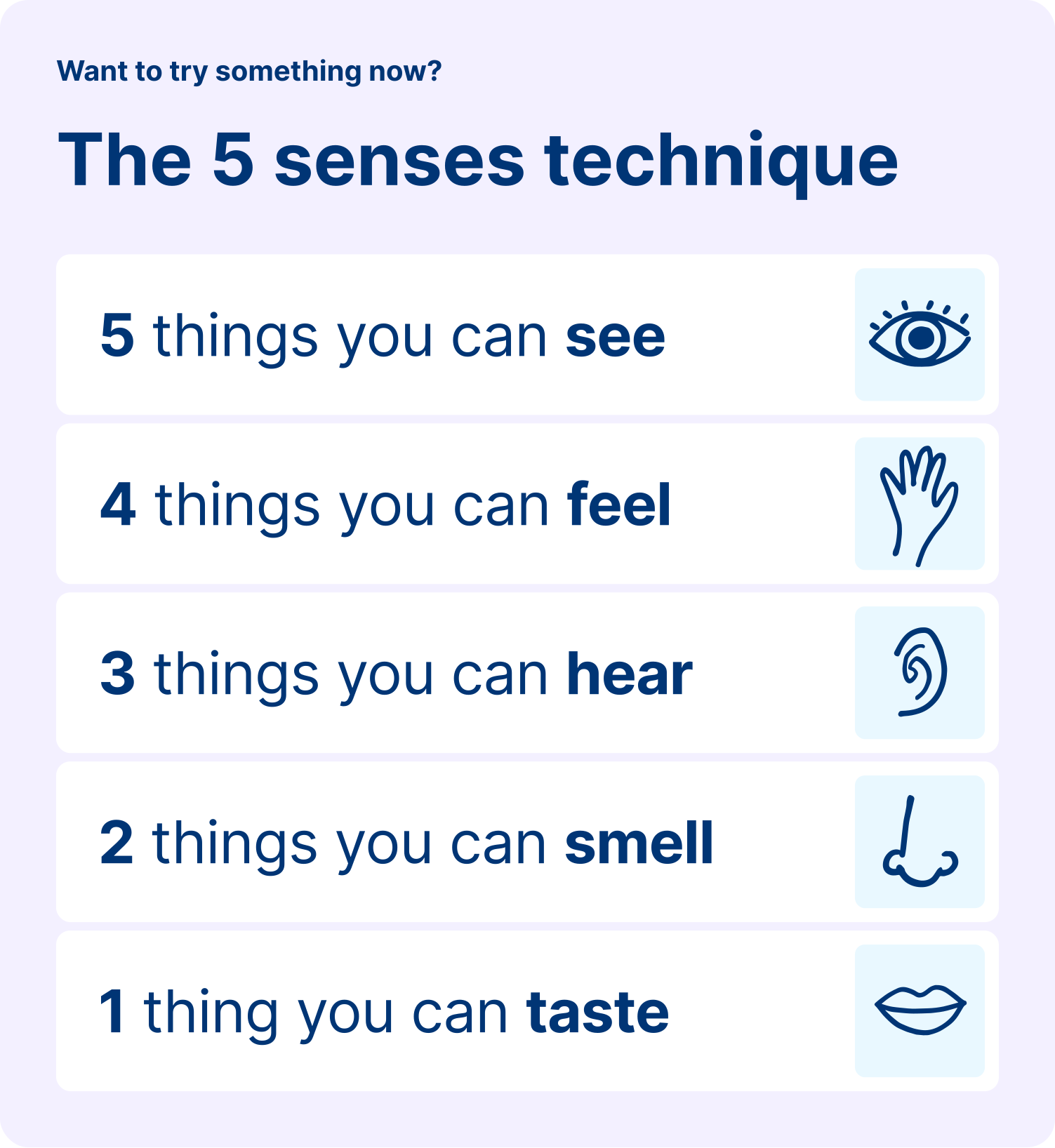
You can take this technique with you wherever you go and use it to manage cravings that come up in the moment. Click here to learn more about finding relief through grounding techniques.
Making changes to substance use isn’t just about stopping; it’s about understanding why you use, recognising what triggers you, and finding new ways to cope.
You might feel unsure about cutting back or stopping. That’s a really common experience. Substances may have helped you in some way, whether by numbing pain, easing stress, or providing an escape. It’s okay to acknowledge that.
But if you’re here, you might be noticing that the downsides of using are outweighing the benefits. That’s an important realisation. Even small steps now can help you feel more in control.
On this page, you'll find simple strategies to help you manage cravings, reduce use, and regain a sense of balance.
Certain people, places, situations, or emotions can make it harder to resist using substances. Recognising these triggers can help you plan ahead and respond in a way that supports your wellbeing.
Common triggers can include:
If you’re not sure what your triggers are, try keeping a small journal or notes on your phone. Over time, you may start to notice patterns.
If certain triggers make it harder to avoid substances, small changes in your environment and routine can help.
You don’t have to change everything at once; even small adjustments can make a big difference.
If having substances around makes it harder to resist, you can try:
This isn’t about punishing yourself. It’s about making things easier for the future you.
Some places and social settings make it harder to say no. It’s okay to set boundaries around situations that put you at risk.
You can try:
You don’t have to cut people out of your life completely. But creating some distance from certain situations can help you focus on your goals.
Holidays, anniversaries, and other milestones can bring up tough emotions. If you know a difficult date is coming up, you can:
Making changes doesn’t have to happen all at once. Even small adjustments add up over time, helping you build confidence in your ability to cope without substances.
If something doesn’t work right away, that’s okay. It’s all part of finding what works best for you.
Stopping use of substances suddenly can feel uncomfortable and might even be unsafe for some people.
It’s important to talk to an Alcohol or Other Drug (AOD) professional or a GP before you make any sudden changes to your drug or alcohol use.
Breaking an addiction can leave you feeling overwhelmed, distressed, and alone. If you need someone to talk to, Lifeline crisis supporters are here for you 24 hours a day, 7 days a week via 13 11 14, text, and chat. If life is in danger, call 000.
You can learn more about support options for substance misuse by clicking here.
Some triggers can’t be avoided. Having a plan for when cravings hit can help you feel more in control.
When urges come up, you can try:
Cravings feel intense in the moment, but they usually pass. You may find it helpful to employ a strategy called The 3 Ds:
Being around certain people, places, or activities can trigger substance use, sometimes without you even realising it.
If certain places, people, or activities make you want to use, stepping away, even briefly, can help. Over time, avoiding triggers can weaken the connection between them and the urge to use.
Substance use can feel isolating, and cravings can be harder to manage alone. Talking to someone you trust can:
Many people use substances as a way to cope with stress, boredom, or difficult emotions.
Finding other activities that help you feel good like:
Over time, these activities can replace substance use as your go-to coping strategy. Click here to learn more about self-care and how to get started.
Cravings and distressing emotions can feel all-consuming, making it hard to think clearly. Grounding techniques, like the 5 senses technique, can help bring you back to the present moment and calm your nervous system.
This can reduce the intensity of cravings and give you a sense of control when emotions feel overwhelming.
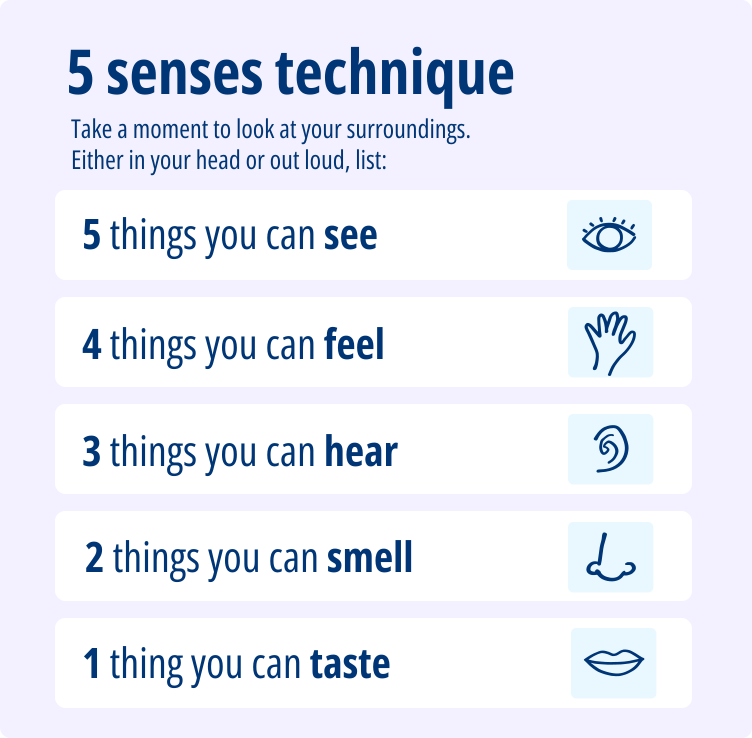
Click here to explore different types of grounding techniques.
These strategies aren’t about willpower; they’re about giving yourself tools to manage cravings and triggers in a way that supports your wellbeing. The more you practise them, the easier they become.
A grounding technique like box breathing can help ease distress and shift your focus. You can follow along with the video below.
Remember, these are just a few small steps you can take to avoid using substances the next time you want to. Keep reading for long term strategies that work to stop or minimise your use.
You may also find it helpful to listen to someone who's been in your shoes and found support. Watch Jay's story below.
Finding ways to cope with urges or uncomfortable feelings can be helpful on your journey to recovery, but dealing with substance misuse long-term requires strategies and support.
Below are some evidence-backed ways that work. Remember, the journey to wellbeing looks different for everyone, and you’ll likely need to find the options that work best for you. For most people, a combination of multiple options is the most effective approach.
Substance misuse is a particularly challenging problem to try and tackle on your own, for the simple reason that substances can affect how we think and make decisions.
Asking for help can be really hard, but remember that there are lots of people and organisations who are set up to support you, who will respect your confidentiality, and in many cases, allow you to remain completely anonymous.
Opening up about your relationship with substances may feel challenging, but joining a support group can make you feel supported in more ways than one.
Support groups can give you an insight into other people’s experiences with substance misuse, and remind you that you’re not alone. They can also help you build motivation, cope with urges, problem solve and find people who can support you through triggers or troubling times.
Alcoholics Anonymous - AA is one of the most popular support groups in the world for alcohol-related problems. It aims to help people attain and maintain long-term recovery through a 12 step programme that’s been used over decades, helping millions of people.
Narcotics Anonymous - Similar to AA, Narcotics Anonymous is a well-known support group that helps people using drugs feel supported and connected by helping them to attain long-term recovery.
GROW - A community-based organisation that empowers those with mental health issues. It is a free, peer-to-peer led support group that offers practical advice through shared experience.
Recovery can be challenging, but working with a professional can make the road feel a little less bumpy. There’s a wide range of services available, as well as a range of different substance-misuse professionals you can work with.
The best way to start seeking help is to reach out to your local GP or medical professional. You can also contact the National Alcohol and Other Drugs Hotline.
They will listen to you and help connect you with the best specialist or organisation for your needs.
Strategies like therapy can help you find better ways to cope and manage challenging situations in your life, including your relationship with substances. There are many different versions of therapy that can help manage substance misuse, including cognitive behavioural therapy (CBT), acceptance and commitment therapy (ACT), and others.
Therapy can help you:
Rehab can refer to a range of services that can help people detox, quit or manage substance misuse in numerous ways.
These can include:
Visit the Lifeline Service Finder to find out more.
The most common reason people misuse substances is to dull emotional or physical pain, or to escape from the painful feelings caused by problems or difficulties in life.
In combination with tackling your use of substances directly, it can be really helpful to try and address the underlying causes of why you might be using substances.
Therapy in particular can help you find healthier ways to cope with difficult emotions like loneliness, depression or anxiety, or painful memories or experiences in your past such as abuse, neglect, trauma, violence, grief, relationship issues or big life changes.
There are also many organisations and services that can help you deal with difficult circumstances or situations in your life, including homelessness, financial stress, relationship breakdowns, domestic and family violence and more.
Visit the Lifeline Service Finder to find out more.
There are a range of practical tools designed to help you manage or quit substance misuse. Tools and apps can help you:
You can find out more here.
As humans, we all need social relationships. We’re naturally wired to live in groups and rely on each other - counting on the support of other people is how we’ve survived and thrived as long as we have.
Strong social relationships can be a preventative factor to substance misuse, depression, anxiety and other mental health conditions. When managing substance misuse, it’s important that the people around us encourage healthy behaviours and support us to break old behaviour patterns.
Friendships help us maintain our wellbeing in a number of ways:
Making new friends is hard, especially as we get older. While we can’t just create new friends out of thin air, taking small steps in the right direction is what matters. Below are some places you might like to start:
Creating a regular routine can work wonders if you’re struggling with substance use. People can find it hard to feel motivated or productive, so you might find implementing structure into your day-to-day life helpful.
Sticking to a routine can:
Below is a curated list of apps, online programs, and real stories to help you understand and manage substance misuse.
Below are a number of support services you can connect with to get help with managing substance misuse.
Use the Lifeline Service Finder to search for more local and national services available to help support you.
Is someone you care about currently misusing substances? Your support can play an important role in helping them cope and feel better.
It’s common to feel stuck between wanting to help and not knowing how. Even if you don’t know where to begin, or what will help, often simply being there for them can mean a great deal.
Caring for someone with a substance misuse problem can be really challenging. It’s common to feel worried, frustrated and alone, but remember there are support services available specifically for carers.
On this page you will find practical steps you can take to support someone with a substance misuse problem, ways to look after yourself, and support services to help.
Caring for someone struggling with substance misuse or addiction can be challenging, tiring, and sometimes frustrating. It’s really important to remember:
Substance misuse can look different for everyone, and isn’t always easy to spot from the outside. For some substances (ie prescription medication) the line between normal use, and substance misuse, can be blurry.
Substance misuse can also be a symptom of other mental health problems, or more general challenges in life.
'The question is not why the addiction, but why the pain?'
Some of the signs your friend or family member might be struggling with substances include:
If you notice these changes in your friend or family member, it may be time to check in with them.
If you are unsure if someone you know is experiencing substance misuse, we have more information about understanding what it is here. If you’re still unsure about whether you should offer support, it’s usually best to simply ask the person if you can help, in a non-confrontational and non-judgemental way.
It’s common for people to reach for substances as a way to escape or soothe different types of pain. That pain could be physical, it could be related to painful memories or experiences, or come as a result of difficult life situations and circumstances.
When helping someone struggling with substances, it can be helpful to try to empathise with the underlying causes of their distress, rather than to assume that the substance or addiction itself is the only problem. It’s natural for everyone to want to soothe their pain. You can read more about causes of substance misuse here.
Remember, most people will want to have control over their own life and make their own decisions, so it’s important to respect their choices and boundaries. It’s usually most helpful to play a supportive role through non-judgemental conversation, and helpful actions.
Often one of the most powerful things you can do for a friend or family member is to let them know that you’re there for them.
Knowing how and when to have this important conversation can be tricky.
Here are a few tips:
It can be common for people to become defensive or angry, or deny they have a problem. This usually stems from a sense of shame about their use. If this happens, it’s best not to argue, and to try and revisit the conversation later.
It can also be helpful to focus on how their use is impacting you, and to try to separate their use or behaviour while under the influence, from who they are as a person.
Sometimes offering practical support to give your friend or family member the time and capacity to focus on their mental health can be helpful.
However it’s important to balance this with the need to ensure:
Reaching out for help, or taking the first step to finding a support service can be daunting. Knowing where to turn, and what help is available can be confusing too.
Having the help of a family member or friend can make the difference between seeking help, and not.
You could offer to help by:
It can be really hard to support someone struggling with substances. They may require extra attention or specific support that especially impact the people around them. If you’re feeling overwhelmed, you are not alone, and there are support services available specifically for anyone who supports those with mental health issues (also known as a carer).
Remember that ‘you can’t pour from an empty cup’. The best way you can care for someone else, is to make sure you are okay first. Looking after yourself as a carer means being tuned in to how you’re feeling, and looking after yourself when you need to.
This might include:
When a friend or family member is struggling with substance misuse, it’s natural to want to help them in any way you can. That might include supporting them financially, taking care of their responsibilities or rearranging your needs (and the needs of other people you support).
Although it might feel like you’re helping, this can end up shielding them from the consequences of their actions, and actually end up ‘enabling’ their continued use (not to mention the important effect on your own wellbeing).
Setting healthy boundaries and saying ‘no’ to your loved one can be really challenging, but can also provide the motivation they need to seek help and change. Healthy boundaries might include:
It can be easier to support others if you’re not doing it alone. If there are other people that can support your friend or family member as well, it’s ok to ask for help.
Having someone you can talk to about your experience as a carer can help you feel more supported and lighten the load you’re carrying. It can also help to feel more connected to others, and you might even pick up some skills or tips from other people in similar situations.
You might want to think about what is appropriate to share about the person you’re supporting, or to just stick to how it’s impacting you.
Being kind to yourself while caring for others is really important. You might feel frustrated, stretched, or even powerless, but adding shame or guilt to those emotions by criticising yourself will only make you feel worse.
It’s ok to reduce the expectations you’ve set for yourself, and to take a break when you need it.
Research shows our diet can have a big effect on how we feel. Eating well doesn’t just make us physically healthier, it can also help with our sleep, energy levels, and mood.
Our brains and bodies are linked, and exercise releases chemicals that boost our mood including endorphins and dopamine.
To feel its benefits, you don’t have to engage in vigorous movement. Gentle exercise like walking or yoga creates the same mental health benefits that running, or a high-intensity workout does.
You might also like to combine the benefits of exercising with social connection by playing a team sport or simply going for a walk with friends.
It can be easy to reach for substances when you’re feeling low to make us feel better, or escape those feelings in the short term. But drugs and alcohol can be really harmful, especially when we’re already in a challenging mental state. Substances that alter our thought patterns can really amplify any feelings of distress.
Sleeping well is a really important part of mental health, but taking on too much as a carer can make healthy sleep patterns feel impossible.
Developing good sleep habits can help find the right balance.
These can include:
You might find that engaging in regular exercise, eating a balanced diet and the regular use of self-care tools like meditation can make sleeping easier.
Research shows that being in nature can improve our mood. Connecting with the outside world is also a great way to reduce stress and our worries by reconnecting with the world around you.
Creating a regular routine can work wonders. Sticking to a routine can:
Doing things that bring you joy is important for good mental health. It can help stop looping or painful thoughts, find a sense of achievement and increase positive emotions.
Hobbies are also a great way to form and strengthen social connection, and they can help you to develop routine and structure. You might also like to learn or try something new.
Translated fact sheets are available to download below in the following languages:
Your feedback helps us improve our site for people like you.
We’d love to hear why!
Support looks different for everyone. Use the drop down bar to find what feels right for you.