Sleep and mental health
Improving your sleep can also improve your mental health. Learn about common sleep problems, tips for creating healthy sleep habits, and strategies for falling asleep.
 15 minutes
read
15 minutes
read
If life is in danger, call Triple Zero (000)

Translation notice: Lifeline Crisis Support is delivered in English. This page was translated automatically and may not be fully accurate. Spot an issue?
Share feedback about automatic translation accuracy.

While feeling anxious is a normal response to stressful situations, anxiety is when anxious feelings such as worry, dread, and fear stick around or show up unexpectedly, and make it difficult for you to go about everyday life.
Typically, anxiety is experienced over something that might happen in the near or distant future. However, if you don't know why you're experiencing anxiety, it could be due to something in your past.
Experiencing anxiety from time to time is a normal and healthy response to stress. However, anxiety can be classed as a mental health condition if the symptoms you experience prevent you from doing things like daily tasks, going to work, socialising, having healthy relationships, and making time for self-care.
Even though they might feel uncomfortable, stress and anxiety are important ways we keep ourselves safe.
When we're in situations that feel threatening or dangerous, our brain automatically triggers our body's 'fight, flight or freeze' response, which releases hormones like cortisol and adrenaline.
This response can:
It's normal to experience anxiety before, during, and after stressful situations. However, there are a few common causes that may make you experience anxiety more frequently and intensely.
If you are experiencing anxiety, you are not alone.
Anxiety is the most common mental health condition in Australia, with 1 in 4 people (1 in 3 women, and 1 in 5 men) experiencing anxiety at some stage in their life.
With the right support, recovery is possible for everyone.
You may want to speak to a health professional if:
No matter how overwhelming your symptoms might feel, all types of anxiety are treatable.
'I can't always explain why I feel anxious. Sometimes, my body just seems to react to something before I get a chance to tell it everything is okay.'
If you'd like more information on anxiety, you can:
Because there are different levels and types of anxiety, the feelings and effects can look and feel different for everyone.
For example, anxiety can look like:
Scroll down to learn more about the common thoughts, feelings, and physical sensations of anxiety.
When you experience anxiety, it tends to be about things that are out of your control.
As a result, you may have thoughts and feelings about all the possible outcomes (both good and bad) that could occur.
When you're experiencing anxiety, you might feel:
'I was like a duck on a pond – the surface looked still and serene, but underwater my legs were paddling furiously trying to stay afloat.'
Because anxiety is part of your body's stress response, it's common to feel physical sensations.
When you're experiencing anxiety, you might also notice:
In some instances, anxiety can lead to:
To learn more about what it's like to live with anxiety, you can:
While everyday life stressors can cause anxiety, there are a few biological and environmental factors that may lead you to experience anxiety as a mental health condition.
Keep in mind that everyone responds to stress differently. What may cause one person to experience anxiety may not impact you at all.
Scroll down to learn more.
You may experience anxiety if your childhood wasn’t stable, nurturing or emotionally supportive.
In an unstable environment, our brains try to keep us safe by looking out for threats, which is helpful in the short term but can also lead to a constant feeling of being on edge or at risk, even when you’re not.
Equally, if you grew up with an anxious parent or family member, you may have learned anxious thinking patterns and behaviours from them, just as we learn so many other things from those around us when we’re young.
Childhood experiences that could lead to feelings of anxiety include:
Our level of satisfaction with our home lives, our jobs, and our relationships can be common causes for feelings of anxiety.
This is particularly true if we feel uncertain or unhappy with big questions like whether we can see a hopeful future for ourselves, are happy with our relationships, and feel financially secure.
These are all understandable and natural reasons for feeling anxious, but when that anxiety causes significant distress, or impacts your daily life, it is a good idea to look for ways to manage your anxious feelings.
Anxiety can be caused or exacerbated by life stressors like:
'I began to experience anxiety as a result of being diagnosed with an aggressive form of cancer.'
Specific events, situations, objects or experiences can cause feelings of intense anxiety.
These can include (but are not limited to):
Our thoughts and behaviour patterns can both contribute to and be a symptom of our anxiety.
Our thoughts can:
We don’t completely understand the link between anxiety and genetics just yet, but we do know that our genes can affect our likelihood of experiencing anxiety.
Research involving identical twins raised in different homes has strengthened the evidence that there is a genetic link. Studies show that twins have a higher than average rate of developing similar phobias – even when they are raised completely separately.
Even if genetics play a role in our experience of anxiety, there are still things we can do to feel better in the moment as well as long-term strategies that work to reduce our anxiety.
With the right support, any type of anxiety is treatable. To learn more about the support options available, you can:
While most people experience anxiety from time to time, some people find specific situations and stressors to be particularly triggering.
Depending on how much anxiety impacts your daily life and emotional wellbeing, it may be diagnosed as one of the following types of mental health conditions.
Anxiety is diagnosed as generalised anxiety disorder when you have excessive and uncontrollable worries about aspects of everyday life rather than a specific stressful event you can attribute your anxiety to.
For example, you might feel physically and emotionally overwhelmed:
Social anxiety is when you're constantly afraid of being judged, observed, or performing in front of others.
For example, you might feel physically and emotionally overwhelmed:
Social anxiety can lead to avoidance of social situations. As a result, you may experience isolation and loneliness.
Phobias are out-of-proportion and long-lasting fears of specific objects, activities or situations.
Some of the most common phobias include extreme fear of:
A panic attack is a sudden rush of intense anxiety or fear combined with a surge of frightening thoughts and physical sensations.
Panic attacks can happen to anyone, as well as those with:
PTSD was previously considered an anxiety disorder, however, it is now classified as a trauma and stress-related disorder.
While the feelings and effects of post-traumatic stress disorder (PTSD) are similar to those of generalised anxiety disorder (GAD), the main differences are that PTSD is specifically caused by a traumatic experience and the symptoms can be intrusive.
For example, someone experiencing PTSD may experience anxiety as well as:
Click here to learn more about the feelings and effects of trauma.
Obsessive-compulsive disorder (OCD) is now classified separately from anxiety disorders but is often associated with immense anxiety or fear.
OCD typically consists of uncontrollable and overpowering desires to do something such as:
However, OCD may also include intrusive thoughts or urges that trigger distressing feelings. As a result, OCD can cause behaviours to deal with those thoughts.
For example, excessively checking in with loved ones because you fear that they’re hurt.
To learn more about why you might be experiencing anxiety and things you can do to feel better, you can:
Anxiety can look and feel different for everyone, which means different strategies will work for different people.
Finding the ones that are right for you may take a bit of trial and error and that's okay. The most important thing is that you're showing yourself kindness and compassion.
Remember:
Scroll down to learn more practical and evidence-supported techniques that can help reduce feelings of anxiety right now and in the long term.

If you’re feeling overwhelmed right now, Lifeline is here to support you. You can reach us 24 hours a day, 7 days a week via phone, text, and chat. If your life is in danger, please call 000.
Sleep and mental health are closely connected, which is why it's common to struggle with your sleep if you're experiencing mental health challenges and struggle with your mental health if you're experiencing sleep problems.
If you have a mental health condition like anxiety, poor sleep can make it harder to manage symptoms. You can learn tips for improving your sleep in our sleep and mental health article.
When you're having anxious thoughts about something potentially happening in the future, try asking yourself questions such as:
If you’re feeling anxious or like a panic attack coming on, it can be helpful to engage in a grounding technique like deep breathing.
Breathing can help by distracting your mind, calming your nervous system, and decreasing your overall stress.
There are a number of different helpful grounding techniques to try but a great one to start with is box breathing. Watch the video below to try it now.
Sometimes even just saying our fears out loud can make them feel less overwhelming.
Opening up about your anxiety can be challenging but talking to someone you trust can:
Creating a designated worry time once a day can help you interrupt the repetitive thinking cycle and take control of your worries and thoughts.
As worries arise throughout the day, jot them down and tell yourself that you'll acknowledge them during your worry time.
When your worry time comes around, use it to review the worries you’ve added and ditch the thoughts that no longer matter to you.
Ideally, choose a time and space that's comfortable and not too close to your bedtime.
Sometimes when we feel anxious, it can be challenging to stop the endless stream of thoughts in our head.
Journaling can be a helpful tool in making sense of things. If you can name it, you can tame it - simply naming our emotions has been shown to reduce their power over us.
You might like to write your thoughts down on a piece of paper, record a voice memo, or even draw a picture – whatever works for you is perfect.
You might like to get started with any of these questions that feel right for you:
It’s important to accept how you feel, but sometimes in a particularly anxious moment, taking your mind off your emotions can be helpful in the short term.
You might like to try:
Instead of having to deal with my anxiety alone, it takes an immense amount of pressure off myself when I let someone else in.
To learn more about what it's like to experience anxiety and ways to manage it, you can:
On top of the things you can do in the moment to manage feelings of anxiety, there are several long-term actions you can take to minimise stressors in your life.
Anxiety feeds off uncertainty, which is why understanding what triggers it for you can be helpful. By making connections between certain situations and your emotions, you can reach for self-care strategies or learn to avoid triggers when possible.
Over the next few days and weeks, try to think about:
You can keep your answers in a journal, in your phone's notes app or in a wellbeing app like Calm.
Scroll down to learn more strategies you can try.
Identifying and minimising the stressors in your life can be an effective way of reducing symptoms of anxiety.
While you might not be able to resolve everything straight away, you can begin to take the steps needed to reduce the impact that these stressors have on you.
Common stressors include:
By being aware of your stressors, you can:
While avoiding what makes you feel anxious can provide relief and make you feel good in the short term, it can also create a snowball effect where the anxiety gets bigger the longer you avoid the stressor.
One way we can reduce feelings of anxiety is by acknowledging that what we fear isn't likely to happen but if it does, we can cope with it.
This technique is known as ‘exposure therapy’ and has been shown to be effective for different types of anxiety.
For example, if you're in anxious in social environments, one small step might be to try and make eye contact and smile at someone at work. Or, if you have a fear of dogs, you could try letting a friend’s dog you know is gentle and safe sniff your hand.
It’s important you only try what feels safe in small steps and that there are mental health professionals who can help you use this technique effectively.
Self-care strategies are how we take care of ourselves so that we can stay physically, mentally, and emotionally well.
Self-care will look different for everyone, but common practices include:
It can feel challenging to engage in self-care when you are feeling anxious but research shows these strategies can reduce anxiety by helping you manage stress, adapt to changes, and recover from setbacks more easily.
Click here to learn more about what self-care might look like for you.
'When I was willing to let go and not focus on “success” I found peace and my joy back.'
Our mental and physical health are deeply affected by one another. One of the best ways to look after how we feel emotionally is to look after our body physically.
Research shows that what we eat and drink can impact how we feel.
If you're anxious, it can be helpful to:
Studies show that exercise can work wonders for decreasing anxiety levels. Exercise can take your mind off anxious thoughts and worries, and has been shown to improve our mood by releasing endorphins - our body’s natural pain relievers.
If you’re feeling anxious, it can often be helpful to avoid substances. Substances can significantly alter our physical state, emotions and thinking patterns, which can have big effects on our feelings of anxiety.
You might find it helpful to reduce or avoid the following substances in particular:
Sleeping well is one of the most effective ways to manage anxious thoughts, but anxiety itself can make having a good night’s rest challenging. Developing good sleep habits can help you get better sleep.
These can include:
You might find that engaging in regular exercise, eating a balanced diet and the regular use of self-care tools like meditation can make sleeping easier. Learn more in our sleep and mental health article.
Anxiety isn't something you have to deal with on your own.
Remember, 1 in 4 people experience it. Having the courage to ask for help can be hard but is one of the best things you can do for yourself.
Talking to someone you trust or others who experience anxiety can help you feel less alone.
It can also help you learn new coping strategies and give you a greater understanding of your triggers and experiences.
You might like to try talking in a peer support group, or even on an online forum.
Therapy is one of the most effective treatments for feelings of anxiety available. Different therapists specialise in using different techniques, including cognitive behavioural therapy (CBT), acceptance and commitment therapy (ACT), and others.
Talking to an expert who has experience with treating anxiety can help you:
One of the steps you can take is to book an appointment with a GP to discuss what you're going through.
If you feel comfortable, you can ask about getting a Mental Health Treatment Plan through Medicare.
A Mental Health Treatment Plan allows you to access free or subsidised sessions from particular mental health professionals such as registered or clinical psychologists, eligible social workers, and occupational therapists.
To learn more ways to manage feelings of anxiety, you can:
9 minutes
read
Below, you'll find tools and apps that can help you understand anxiety and learn practical techniques to help manage symptoms.
Below are a number of support services you can connect with to get help with managing feelings of anxiety.
Use the Lifeline Service Finder to search for more local and national services available to help support you.
When someone you care about is experiencing anxiety, it's common to feel stuck between wanting to help and not knowing where to begin.
The good news is - simply being there for someone can play an important role in helping them cope and feel better.
On this page, you'll find information on:
Scroll down to learn more.
Anxiety is a normal part of our body's stress response and one of the key ways we keep ourselves safe. However, certain types of anxiety can become a mental health condition if they begin to impact a person's daily life.
Recognising if someone is experiencing anxiety isn’t always easy because everyone can show different signs and symptoms.
Someone experiencing anxiety may express or notice that they're:
If you are unsure if someone you know is experiencing anxiety, we have more information about what anxiety can look like on our feelings and effects page.
It can be tempting to jump in with solutions right at the start, however, it's best not to go straight into problem-solving when offering support.
While some people might be ready for help, others may need more time or would prefer to just have someone listen.
Often, one of the most powerful things you can do for a friend or family member is to simply stay connected. This could be through weekly walks, catching up for coffee, chatting on the phone or sending a text.
Below are a few more ways you can offer support.
If possible, have a private and face-to-face conversation with the person you care about.
It can be really hard for people to open up, especially the first time, so don’t be disheartened or hurt if your friend or family member doesn’t want to talk about their anxiety.
Just gently let them know that you'll always be there if they change their mind or if there’s something you can do in the future.
Feelings of anxiety can make it hard to carry out everyday tasks and meet commitments.
Offering practical support is often a good way to give the person you care about the breathing room to focus on their mental health without extra pressure.
Practical support might involve:
Reaching out for any type of help can be daunting. Knowing where to turn, who to speak with, and what help is available can be confusing too.
Having the help of a family member or friend can mean the difference between someone seeking help and not.
You could offer to help by:
When listening to the person you care about, try to resist the urge to paint a silver lining or minimise their concerns.
Instead, it can be helpful to validate their experience by saying things that allow them to know that you see and understand them.
For example, you could say: ‘It sounds like you are going through a really tough time right now’ or ‘That must be so difficult to have to carry'.
In the video below, Dr. Brené Brown explains how empathy can be more powerful than sympathy in our toughest moments.
Caring for someone struggling with their mental health can be challenging, tiring, and sometimes frustrating.
It’s really important to remember that we can’t always help or ‘fix’ someone else. You might try your best and do everything you can without them improving and that’s not your fault.
When supporting someone who's experiencing mental health challenges like anxiety, it can take a big toll on our mental and physical health.
Depending on the level of care they need or the type of support they're open to, you might feel:
If you’re feeling overwhelmed, you are not alone. Being part of someone's support system is a big job. It's okay to take breaks and it's okay to ask for help. Nobody is expected to pour from an empty cup.
Below, we've outlined a few things you can do to look after your own mental health and wellbeing when acting as a carer.
Boundaries are an important way we can protect our mental and physical health. By knowing and communicating what our limits are, we can ensure that we're not putting ourselves in situations that compromise our wellbeing.
Healthy boundaries as a carer might include setting limits on:
It can be easier to support others if you’re not doing it alone.
If possible, see if there are other people who can support your friend or family member.
Remember, it’s always ok to ask for help.
Having someone you can talk to about your experience as a carer can help you feel more supported and lighten the load you’re carrying. It can also help to feel more connected to others, and you might even pick up some skills or tips from other people in similar situations.
Keep in mind that you're keeping the focus on how the relationship is impacting you and that you're only sharing what's appropriate about the person you’re supporting.
A panic attack is a sudden rush of intense anxiety or fear together with a surge of frightening physical sensations and thoughts.
While not everyone who experiences anxiety will have panic attacks, they can happen, which is why it's helpful to know the signs.
Signs of a panic attack can include:
Panic attacks can be frightening, especially if it seems as if they have come out of the blue.
If someone you care about is experiencing a panic attack, there are things you can do to help.
Most people who experience panic attacks may already have their go-to coping methods.
If they seem open to support, here are some steps you can take to help.
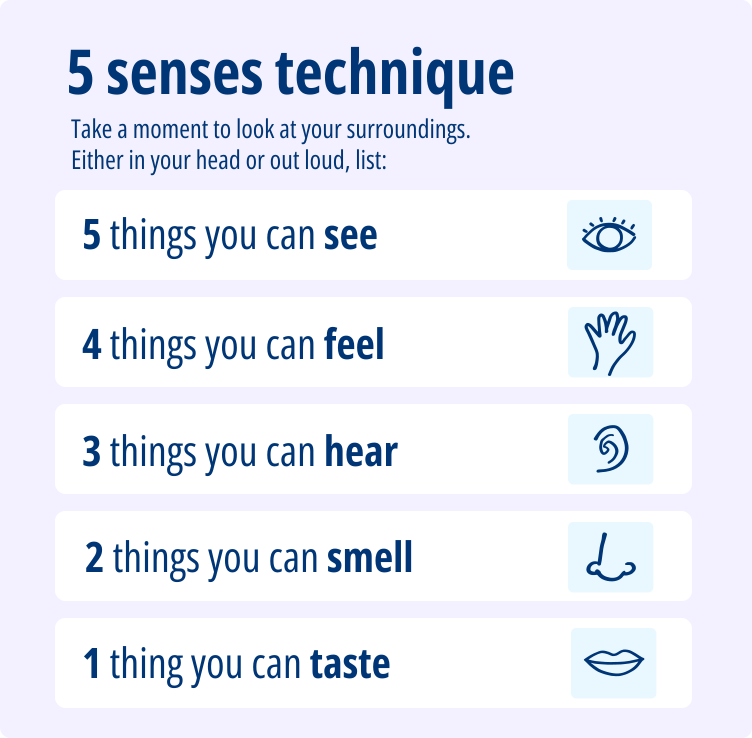
To learn more about anxiety and ways you can support someone you care about, you can:
Translated fact sheets are available to download below in the following languages:
Your feedback helps us improve our site for people like you.
We’d love to hear why!
Support looks different for everyone. Use the drop down bar to find what feels right for you.