Lifeline Forums
Connect with peer support, find hope, and discover ways to take care of your mental health and wellbeing from anywhere in Australia.
If life is in danger, call Triple Zero (000)

Translation notice: Lifeline Crisis Support is delivered in English. This page was translated automatically and may not be fully accurate. Spot an issue?
Share feedback about automatic translation accuracy.

Loneliness is the feeling of wanting greater social connection than you have. If you feel lonely, you are lonely.
Loneliness is not the same as being alone. You can spend time totally secluded in a cabin in the bush and not feel lonely. Equally, you can be surrounded by familiar faces at a vibrant party, yet still feel completely isolated.
Loneliness generally relates to the quality of our relationships, rather than their quantity. Everyone has a different appetite for social connection, so it’s not about how many friends you have, but how close you feel to them.
Everyone deserves to feel seen, valued, and cared for by those closest to them. Loneliness is our body’s way of telling us we should try to develop new or stronger social connections.
Loneliness is not a mental health condition on its own. However social relationships are a fundamental human need, so loneliness can have serious impacts on both our mental and physical health.
One study has even shown loneliness can affect our physical health as much as smoking 15 cigarettes a day.
Loneliness is also linked to mental health in two important ways:
'Having anorexia meant I couldn’t talk to anyone about it because no one understood, and that made me feel alone and isolated.'
Loneliness doesn’t always turn into depression or another mental health condition. However, it can harm your health if it's not managed. No matter how long you’ve felt lonely or how strong those feelings are, loneliness can be treated.
We have both short and long-term strategies that can help you, and if you need to talk, Lifeline is just a phone call, text or chat away.
Loneliness doesn’t discriminate. It can affect anyone, regardless of age, gender, relationship status, education, or social standing. It can affect the social butterfly just as much as the lone ranger. Nobody is immune to loneliness because as people, we all have social needs we have to fulfill to live happy and rewarding lives.
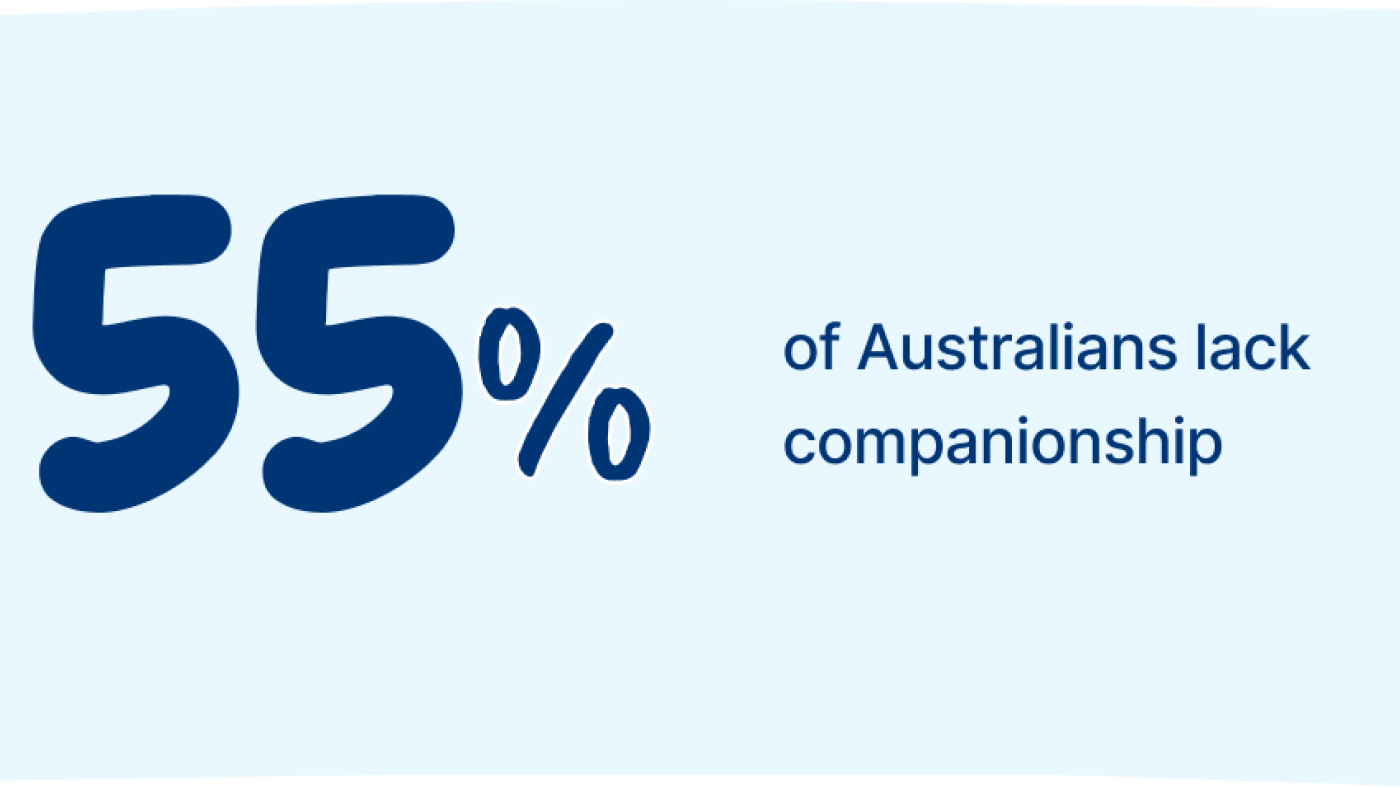
Loneliness is more common than you may think.
In Australia:
So if you’re feeling lonely, you’re certainly not alone.
Loneliness is a problem when it feels like a problem for you.
It’s normal to feel lonely now and then, but if you relate to any of the following, then you may want to consider reaching out for support:
If you’re feeling lonely, you can explore our short-term or long-term strategies for coping with loneliness. The tips we have put together are practical, easy to apply, and can help you feel connected and valued by the people around you.
If you need to connect with someone, remember that Lifeline is always here for you, and we’ve curated a list of support services and tools and apps you can use to tackle loneliness too.
Loneliness can have really serious effects on how we feel, what we think, and even on our physical health.
We all deserve to have nourishing social connections, so if you’re feeling lonely, remember there are things you can do right now, and long-term strategies that work.
'It feels like there’s a hole inside me, and as much as I try to fill it with other things, it just keeps eating away at me.'
Loneliness can often cause other related feelings, such as:
When we have these feelings, our brains naturally try to make sense of them. We might justify these feelings with reasons for why we are lonely (“nobody likes me”), or come up with thoughts to try and make ourselves feel better (“being alone means I won't get hurt anyway”).
That means you might think some of the things listed below - but it’s important to remember these aren’t necessarily true or accurate.
You might think:
These self-critical thoughts are often the opposite of what’s really true and just leave you feeling worse. You can explore some of the real reasons why you might feel lonely on our causes page.
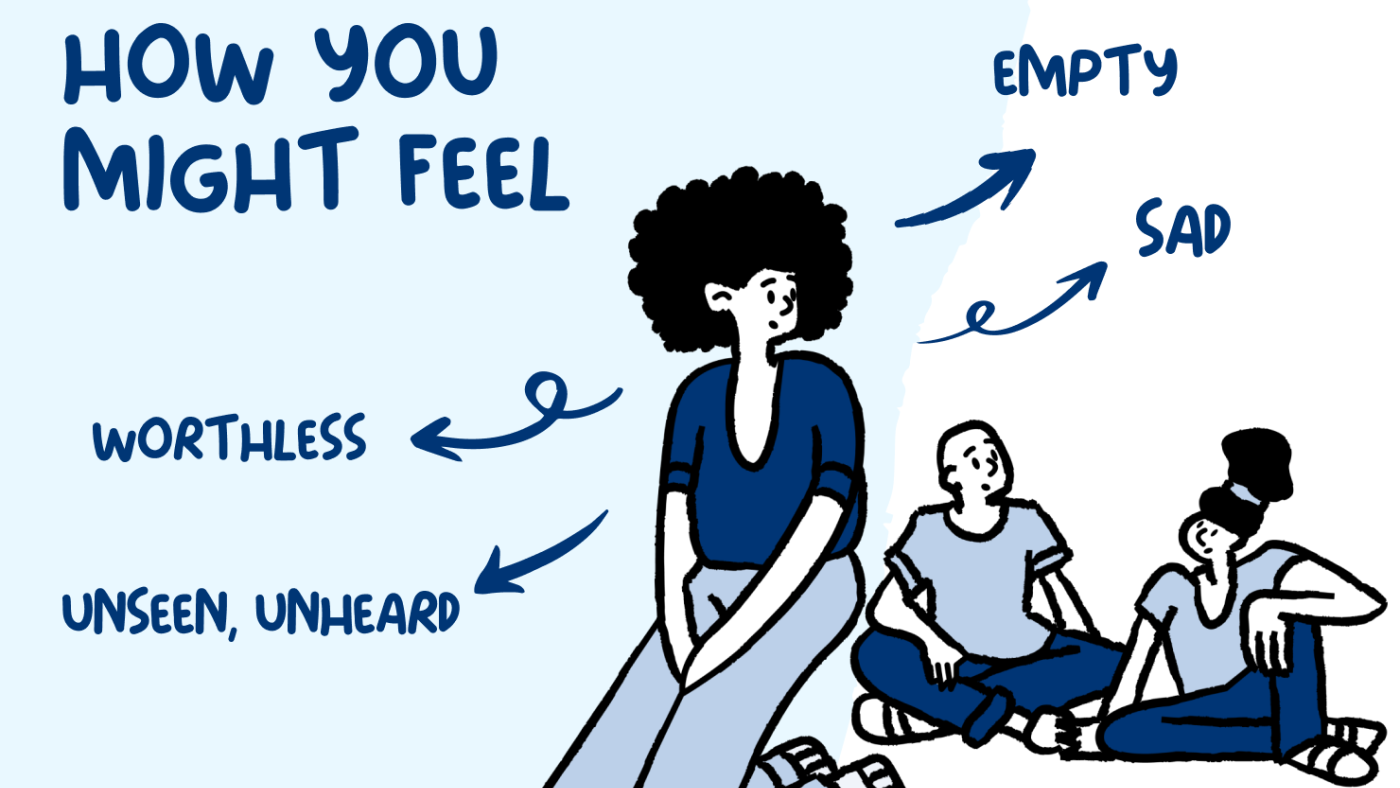
'I started to isolate myself from everyone around me. It felt as if everything was moving, and I was just stagnant; I couldn’t catch up.'
Our mind and body are inseparable from each other - meaning how we’re feeling emotionally has effects on our physical health too.
Other studies have found that loneliness may also be linked to:
It’s natural to want to escape feelings of loneliness, which can lead some people to try and fill the void inside with coping mechanisms that can cause both immediate and long-term problems.
Some common unhelpful coping mechanisms include:
Feeling lonely doesn’t mean you’ll necessarily experience any of these effects. Learning more about loneliness, like you’re doing right now, is the first step to feeling more connected.
There are also things you can do right now and in the long term to reduce feelings of loneliness.
Click here to download, save, or print our loneliness fact sheet.
The reasons why people feel lonely are as diverse as the people who feel it.
Sometimes loneliness can be caused by something you might experience, like the loss of a loved one, the end of a relationship, or moving to an unfamiliar place. But equally, loneliness can come from more subtle changes.
Growing apart from an old friend, a lack of confidence in starting conversations, or deciding that you’d like a romantic interest in your life, could all lead to just as powerful feelings of loneliness.
'I arrived in Australia by myself in early 2022 and found myself feeling extremely overwhelmed and anxious. I was in a relatively unknown environment with no one to turn to. I didn’t know anyone around me.'
Below we’ve outlined some of the most common causes of loneliness, but remember:
Experiencing any of the following can put you at greater risk of feeling lonely:
When you experience something that changes your life in a big way, it’s normal to feel lonely for a period of time. Losing connections means losing friendships, support, community, security and routine.
However, this doesn’t mean that you’ll always feel lonely.
Loneliness is our body’s message to ourselves that we should look to develop new social connections.
"I lost touch with most of my friends after school. We used to see each other every day, but suddenly that, and all the events we had, just sort of stopped."
Your current life situation can also contribute to feelings of loneliness. Some circumstances that may cause you to feel lonely include:
"Walking home alone while my classmates jump on the bus together always reminds me how lonely I am"
Some mental health conditions can cause or increase feelings of loneliness and isolation, for example:
What society values today is very different from what we valued in the past. For most of human history, our survival depended on belonging to a group (think being defended from wild animals and other tribes!) and so we developed the need for strong social ties.
This need is so fundamental to being human, it’s baked into our biology.
Yet much of our modern society now places greater value on self-sustainability, personal achievement, and individual expression. Our connection to culture, community, and family have become less valued than they used to be, which is a common reason many people feel lonely today.
The relationships we develop in childhood with our parents or carers have an impact on our relationships later on in life. If you grew up in a family where your emotions were ignored, dismissed, or minimised, your childhood may have felt quite lonely. Lonely children are more prone to feeling lonely as adults.
It can be difficult to connect with others on an emotional level if you didn’t see good examples of rewarding relationships growing up. Rewarding social connections are generally the ones where we feel completely comfortable being ourselves and can share what we’re going through, no matter how challenging.
That means being open and comfortable about emotions, which is a skill that takes practice, and which we usually learn from seeing other people do it well.
In most cases, there are a combination of reasons you might be feeling lonely, rather than just one.
If you feel lonely, you are lonely. You don’t need to have a reason.
Remember, there are things you can do right now, and long term, as well as support services and tools and apps you can use to feel less lonely.
'Being in another country where I didn't speak the language and being away from the support networks that I did have in Australia made me feel more isolated.'
Click here to download, save, or print our loneliness fact sheet.

If you’re in crisis, remember Lifeline is here for you, or if your life is in danger, call 000.
If you’re feeling lonely right now, and want to explore some options for what you can do about it, the tips below are here to help.
Some might feel more challenging for you than others. It’s important to not push yourself too much, but remember growth comes when you step outside your comfort zone.
You might want to get started with something that feels a little tricky, but is still achievable for you. As you build confidence, you can try other options that will take you even further.
It might sound obvious, but the best place to look for a friend is the friend’s you already have, or have had in the past. Reaching out to someone you already know can be intimidating and hard, but is also the shortest route to authentic connection. Keep in mind:
Try reaching out to someone you already know. If they don’t reply, or don’t want to connect, don’t be disheartened, it’s likely more of a reflection of their busyness than it is on you.
Feelings of loneliness can come out of the blue, often at times when it’s impractical to connect with a friend right there and then. Taking the time to schedule activities ahead of time is a good way to maintain social connections to actively prevent loneliness, as well as to have something to look forward to when you are feeling lonely.
Planning things in advance makes it more likely people will have time to hang out and connect too.
You might consider:
If you spend a lot of time alone, it’s easy to start focusing on feelings and thoughts of loneliness, and get a little trapped in this cycle. Creating a plan to keep yourself engaged and occupied can help by:
Here are some ideas for keeping your mind engaged:
Loneliness is a negative emotion and like any negative emotion, if you focus on it, it can become all-consuming. When this happens, it can be hard to remember the positives you may be experiencing in your life. So, if you’re feeling lonely, practicing gratitude by acknowledging the positives in your life is one way you can feel better in the moment.
Practicing gratitude has consistently been shown to help people deal with adversity, improve their health, feel more positive, and build strong relationships.
At a time that works for you each day, write down at least three things you are grateful for in a notebook, or on the notes app on your phone. You might like to think about:
Practicing gratitude can help to keep your spirits up and help you stay hopeful as you work toward becoming less lonely.
The evidence for the effect of social media on loneliness is mixed. Studies have shown that social media can either cause or help prevent loneliness, depending on how you use it.
The first step is to reflect on how you feel when using social media. If you feel worse after scrolling through social media platforms like Facebook, Instagram, and Tiktok, that’s a good indication that it might be time to make a change.
Using social media to connect with distant friends and share your passion for common interests can help you feel more connected. However, following people you don’t know and jumping quickly from one post to another, can just leave you feeling worse.
That’s because it’s natural for us to compare our own lives to what we’re seeing in our feed.
But social media usually shows us a selective, stylised version of the best bits of other people’s lives. That means we’re comparing apples with oranges, and we’re likely to feel bad about the mediocre or boring bits of our lives in comparison. The reality is other people also have boring bits, compare themselves to others, and sometimes feel lonely.
Here are some steps you might like to take to reduce the impact of social media on feelings of loneliness:
Some social media might do a better job of showing us a less stylised, curated version of our friend’s lives. For example, Be Real gives users just 2 minutes to post a picture of what they’re doing then and there, once per day.
When you’re feeling lonely, it’s quite common to feel that nobody cares about you.
You may start to doubt your worth, so it’s extra important to show yourself love and kindness by practicing self-care.
Self-care can be any activity or behavior you engage in that promotes good mental and physical health. Here are some examples of ways you can show yourself love:
Self-care doesn’t just make you feel better, it builds your self-esteem, and gives you more confidence to reach for the next step in your wellbeing journey.
When there’s nobody to meet up with or nobody who you feel you’d have a good time with, then you may not have much motivation to leave the house. However, research consistently shows simply getting outside and, if possible, spending time in nature, has positive effects on how we’re feeling.
If there’s nobody for you to meet up with, it doesn’t mean you can’t still go out on your own. Simply being in nature has been shown to make us feel more connected, and getting out of the house can provide opportunities to connect with new people in an organic way. You never know who you may meet on a walk around your neighborhood.
If a significant event has contributed to your feelings of loneliness, then your normal routine has probably been interrupted in some way. For example, if you’ve just come out of a long-term relationship, you have probably lost the routine activities you used to share together.
Having a consistent routine gives us comfort and security. So when it suddenly stops or changes, you may feel disconnected, unstable, and lonely.
Creating a new routine can provide some comfort, help you manage negative emotions like loneliness, and develop resilience. When coming up with a daily schedule, make sure to include time for the following:
When big feelings like loneliness come up, recognise and accept that they’re there (and that they’re normal), but then try and return your focus to the next thing in your schedule.
When you feel lonely and you’re overcome by intense emotions, it’s easy to get sucked into a spiral of negative thoughts. You may start to dread alone time because of the way it makes you think and feel.
But alone time doesn’t have to mean feeling lonely, particularly if you use it to do things you enjoy. Changing the way you view alone time and being intentional about how you spend it can be a good first step.
Here’s how:
Below are a number of strategies you can use to address feelings of loneliness in the long term. Remember, what works for one person might not work for another – so try a few and see what works for you. For most people, a combination of different strategies is the most effective approach.
If you’ve been lonely for a long time, some of the suggestions below might feel like too much. Opening up to someone or talking to a stranger can be terrifying. It’s important to only bite off what you can chew and to go at your own pace, so we’d recommend starting with something small.
You could try connecting with an online community, spending time with animals, or organise to connect with just one person in a familiar place first.
As your confidence grows, you can take the next stepping stone and try something a little more challenging.
We often wear ‘masks’ to fit in with the environment we’re in. We’ll say “I’m fine, thanks” when asked how we are, say we did “nothing much” when talking about our weekend, or water down our true opinion when asked.
These masks are important - they keep us safe when we’re feeling vulnerable or unsure, and help us fit in when we’re somewhere new. But strong friendships and connections are built around authenticity. We feel valued as a person when we show someone who we really are, warts and all, and are still shown care, love and acceptance. Showing our true selves is also usually when our personalities light up and we become more interesting to others.
Gradually taking your mask off is an important step to forming closer relationships. You don’t have to do it all at once - it’s best to start with something small first, because it’s important to know the other person is going to treat our vulnerability with respect, and open up a little themselves too.
You might like to try sharing a little of how you’re really feeling the next time someone asks genuinely, or opening up about one of your passions or hobbies when someone asks about your weekend.
Celebrate the courage and bravery it took to share something that felt a little uncomfortable. And if the other person wasn’t interested, authentic, or respectful, don’t be discouraged! That’s on them, and you did your best to connect. Try again with someone else!
We like people who like us. One of the best ways to build relationships with new people is to put ourselves aside for a moment, and be genuinely curious about them and their lives. Showing an interest in other people will help you get to know them better, and almost always results in them showing more interest in you. You might like to ask someone:
If you feel like your social skills could be better, the good news is that, like any other skills, you can improve them with practice. Everyone has a different level of comfort and capability when it comes to interacting with others, so try not to compare yourself to others - just focus on what you’d like to improve.
It’s a good idea to think about what specific goals you’d like to achieve. Whether it’s feeling comfortable making eye contact with a stranger, or trying to build a deeper relationship with someone you only know casually, there are lots of resources and advice out there that can help. Books and youtube videos are a great place to start.
Social skills don’t always come naturally, so there’s absolutely no shame in studying, learning and practicing (even in front of the mirror if you like).
Fake it ‘till you make it
The old saying ‘fake it until you make it’ is absolutely true for social skills. From small talk to public speaking, “acting out” or “performing” is a great way to try something that feels uncomfortable. You might like to watch someone else who does it well, or even consult a movie or some youtube videos to see how other people do it well.
The first time you try and ‘fake it’ will probably feel awkward and unnatural, and that’s totally fine - the important part is that you tried. Once you’ve ‘faked it’ a few times, you’ll realise that you can do it, even when it’s hard and challenging. This will increase your confidence, which will gradually make it easier, until suddenly one time you realise that you don’t have to fake it anymore. ‘Faking it’ allows you to acknowledge the discomfort it takes to try something new, but does not let it hold you back from trying.
Rewarding, long term relationships don’t happen on their own, and aren’t always easy. They take time, commitment, and compromise, because there’s always things that get in the way.
For instance, we might be too busy to organise time to see our friends, disagree with a colleague about politics, or perhaps our neighbour has an annoying habit that gets on our nerves.
Sometimes maintaining and building relationships means we have to make compromises. For instance, we might have to:
Prioritising people means recognising that we can’t always have everything we want. Sometimes it’s better to let something go, so that we get something much better in return - strong and rewarding friendships.
Deep relationships don’t happen overnight. They take tens, or hundreds of hours spent together. It’s no coincidence many long-term friendships come our of school, university, work or shared experience.
It also helps to have mutual interests, to laugh and play together, and to talk about things that are more important and meaningful to us, rather than small talk.
Developing new relationships means finding situations where you will have the opportunity to spend extended periods of time with people. Below are some examples of how you can do just that:
Volunteering is a great way to form new connections. Generally, volunteering takes time, teamwork and shared values - the perfect environment for friendships to form.
More than that, the act of giving to others releases chemicals in our brain that make us feel happier and more socially connected. When you become a volunteer, there’s also a strong chance that you’ll meet people with similar interests who you could build a meaningful relationship with. Even if you don’t, volunteering for a cause you care about can help create meaning and purpose in your life.
Think about a cause that strikes a chord for you. It could be cooking for those facing food insecurity, working with animals, spending time with the elderly, or anything else that matters to you - there are a huge variety of opportunities out there. You can search for volunteering opportunities in your local area through GoVolunteer or volunteering.com.au, or consider volunteering as a crisis supporter for Lifeline.
Feeling lonely can make it seem like other people don’t understand or relate to you. Sometimes connecting with the right people can make a big difference. It’s easier to develop new connections with people who share the same interests and values as you.
One way to find like-minded people who could become friends is to join a club or organisation that appeals to you. If you love running, join a running club or if you’re religious, visit a local church.
You might even like to have a look at what clubs or organisations are around you, and (with an open mind) you might even discover a new hobby or interest by getting involved.
Meetup.com and Facebook are two great resources for finding local in-person, and online groups to join. No matter what your interests are, you’ll be sure to find a group of people who are interested in the same thing as you. If joining an in-person group seems too intimidating, you could try an online group first instead.
Science has shown us that we’re naturally wired to feel connected to both:
Giving and receiving help from others usually puts a smile on our dial. It reminds us that most people are good, and every stranger could be a friend we just haven’t met yet. Putting some good out into the world through small acts of kindness can help start a connection. Even if it doesn’t, chances are it will make us feel good about ourselves, and connected to the world around us. You might like to try:
If part of the reason you’re feeling lonely is that you find it hard to share your inner thoughts and feelings with others, then walking with a friend might help. Walking has proven useful in helping people to open up and connect on a deeper level. Psychologists have started using walking therapy as a supplement to traditional therapy because of how powerful it can be.
Here’s how walking with a friend may help you to open up and be more vulnerable:
Although connections in the natural world are generally better at combating feelings of loneliness, sometimes online connections can be a good option too. Particularly if:
Online communities can be just as supportive, nurturing and long-lasting as natural-world ones. Online communities also enable you to connect with people around the world with niche interests, or to do things that work best online (like play online games together).
Here are some ideas for socialising with people online:
"Sometimes, I think my friends from my online hobbies are better friends than the friends that I met in the “real world”."
If you’re feeling lonely because you lack companionship, then spending time with animals or getting your own pet might be a good option for you. Interacting with animals releases the same feel-good hormones that are released when interacting with another person.
Pets are a big, long-term commitment and responsibility, but have been shown to increase feelings of connectedness and companionship. If you’re considering getting a pet, make sure they fit your needs and circumstances.
If getting a pet is not something that makes sense for you right now , there are other options that allow you to interact with animals. For example, you could try volunteering at an animal shelter, foster a pet for a shorter period of time, or hang-out at a cat-cafe or dog park near you.
Therapy can be a helpful tool for some people to overcome loneliness. Therapy might be for you if you:
If you’ve tried to make yourself feel better but nothing has worked, or if you’re feeling hopeless and discouraged, remember Lifeline is always available.
There are also a number of support services that are available to help, including ‘FriendLine’, established specifically to help with social connection.
Sometimes, even when you know what may make you feel better, it can be difficult to muster the courage and motivation to go ahead and do it. It can help to talk about what’s holding you back and get support from someone who understands and can meet you where you’re at.
Click here to download, save, or print our loneliness fact sheet.
Below is a curated list of some tools and apps you can use to help manage feelings of loneliness.
Below are a number of support services you can connect with to get help with managing feelings of loneliness.
Use the Lifeline Service Finder to search for more local and national services available to help support you.
Watching someone you care about experience loneliness or isolation can be challenging. You might feel unsure how to help, especially if the other person finds it difficult to open up about what they’re going through.
Some people may withdraw further when feeling lonely, while others crave connection but aren’t sure how to ask for it.
This page offers practical ways to start conversations, provide meaningful support, and look after your own wellbeing along the way. With small steps and consistent care, it’s possible to help someone feel more connected and supported.
It’s not always easy to know what to say when someone you care about is feeling lonely. You might worry about saying the wrong thing or feel unsure how to bring it up. Even a simple check-in can remind them that someone cares, which can be incredibly powerful.
Every conversation is different, but small things can help it feel easier for both of you.
Finding the right time and space can help the other person feel more comfortable opening up.
If the other person isn't ready to talk, that’s okay. What matters most is letting them know you’re there whenever they are. A gentle reminder like, ‘I’m here when you feel like talking,’ can be reassuring without adding pressure.
When someone opens up, your response matters. While it can be tempting to want to jump in with solutions, the best thing to do is use the C.A.R.E. Framework to guide your response:
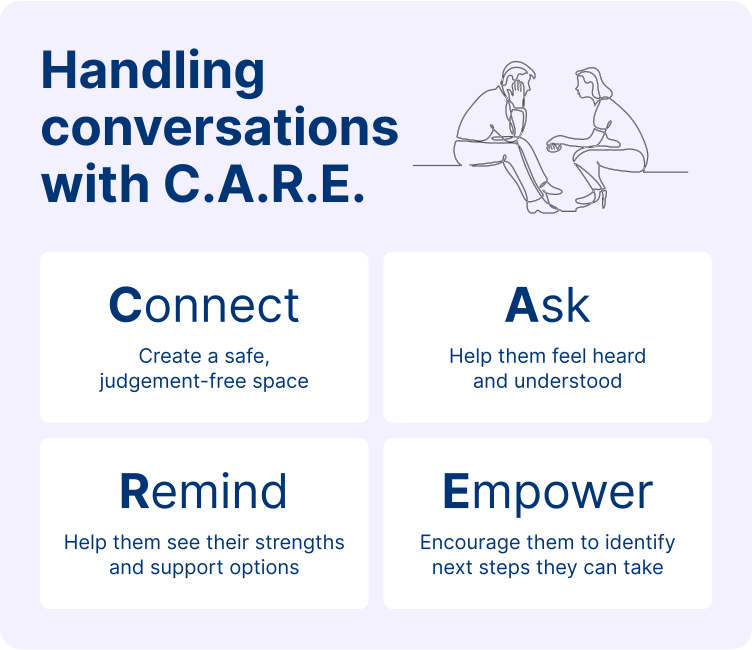
You can learn more about the C.A.R.E. Framework and tips for talking to someone about their mental health by clicking here.
Empathy means sitting with someone in their experience and showing them they’re not alone. It’s about listening, validating, and creating space for them to share, even if you don’t have the perfect response.
In contrast, sympathy often involves trying to make someone feel better by offering reassurance or perspective, but it can unintentionally create distance. Responses like ‘At least you have...’ or ‘It could be worse’ might come from a caring place but can leave the other person feeling unheard.
Here are some examples to help show the difference:
For a powerful explanation of empathy, you can watch Brené Brown’s short video below.
While adults often recognise loneliness as a lack of social connection, young people may not always have the words to explain what they’re feeling. Instead, loneliness can show up in changes in behaviour like withdrawing, becoming more irritable, or spending excessive time on devices.
Technology offers countless ways to stay connected but it can also deepen feelings of isolation, especially for young people. Social media, online gaming, and constant notifications can make it feel like everyone else is more connected, popular, or happier.
For some kids, digital spaces offer a genuine sense of belonging. For others, constant scrolling fuels feelings of exclusion and comparison, leaving them feeling lonelier than ever. It’s not about removing devices altogether but helping them balance online activity with real-world connection.
Even the smallest connection (online or offline) can help a young person feel less alone.
Sometimes, kids and young people aren’t ready to open up, even when they’re struggling and that’s okay. What matters most is letting them know you’re there, whenever they are.
Let them know your door is always open. A gentle reminder like, ‘I’m here whenever you feel like talking,’ can help them feel safe and supported.
Click on the article below for more tips on supporting a child or young person you're concerned about.
 12 minutes
read
12 minutes
read
When someone is feeling lonely, even small gestures can make a big difference. Practical help can remind them they’re not alone and show that you care.
Here’s how you might try helping:
Supporting someone through loneliness can be emotionally demanding. It’s natural to want to be there for them as much as possible, especially if they’re relying on you as a primary source of connection. But constantly being available can leave you feeling drained or even isolated yourself.
Caring for your wellbeing isn’t selfish. It’s essential. When you take time to rest and recharge, you’re better able to offer meaningful and sustainable support.
Below, you can find tips and ideas for protecting your wellbeing as a carer.
It’s natural to want to ‘fix’ the situation for someone you care about. But remember - your role isn’t to solve everything. Supporting someone through loneliness is about walking alongside them, not carrying everything for them.
When someone is lonely, it’s easy to feel like you should fill the gap for them, but this can be overwhelming. It’s important to recognise that you can’t meet all their needs on your own.
Boundaries not only help protect your wellbeing, but they can also encourage the person you care about to build other connections.
Supporting someone through loneliness can stir up a lot of emotions. You might feel sadness, guilt, frustration, or even resentment. All these feelings are valid. Taking time to process and release them can lighten your emotional load.
It’s essential to step back and take breaks when you need them. Caring for someone who’s lonely can take a toll, especially if they lean heavily on you for emotional support. Regular breaks help prevent burnout and allow you to offer more genuine care.
Supporting someone through loneliness can be meaningful, but it’s important to care for yourself too. Setting boundaries and taking time to rest helps you recharge, so you can offer steady, compassionate support without burning out.
And if it ever feels too heavy, you can always reach out to someone you trust or a support service like Carer Gateway.
You can also always speak with a Lifeline Crisis Supporter. We're here for you 24 hours a day, 7 days a week via 13 11 14, text, and chat.
For more support resources for loneliness, you can:
Translated fact sheets are available to download below in the following languages:
Your feedback helps us improve our site for people like you.
We’d love to hear why!
Support looks different for everyone. Use the drop down bar to find what feels right for you.