Touched by Suicide: Wellbeing support guide

If you or someone you care about has been impacted by suicide, this support guide can help. Find information and resources for understanding why it’s okay to feel how you’re feeling as well as ideas for taking care of your wellbeing.
Read time icon 10 minutes
Helps with Understanding suicidality Managing Emotions
Illustrations – Suicide

Who is this support guide for?

This support guide is for anyone emotionally impacted by the suicide death, suicide attempt, or suicidal behaviour of someone they are not closely related to or directly connected with.

This includes but is not limited to:

  • Bystanders and witnesses
  • Colleagues and classmates
  • Business owners and managers
  • Teachers and coaches
  • First responders and health care workers
  • Community members
  • Extended family members and acquaintances
  • People who have heard about the event.

This guide is also for anyone looking for ways to support someone who’s been touched by suicide.

‘Touched by suicide’ or ‘impacted by suicide’ is used to describe someone experiencing emotions like grief and loss after the suicide attempt, death, or suicidal behaviour of a person they’re not closely related to or directly connected with.

Touched by suicide is different to ‘suicide bereavement’, which is used to describe someone experiencing these emotions after losing a person they were closely related to or directly connected with.

Keep in mind that a person doesn't have to attempt or die by suicide for you to feel emotionally impacted.

Any type of suicidal behaviour can be difficult to experience.

Anybody can be touched by suicide regardless of how, when, and where the event happened.

For example, you can be touched by suicide if a celebrity or public figure you admired died by suicide or if you learned that someone from your hometown had once attempted suicide.

Even though we can all be touched by suicide, there are specific groups who may be exposed to suicide more frequently, including:

  • Journalists and news reporters
  • First responders, law enforcement, and healthcare workers
  • Mental health researchers, educators, and service providers
  • Railway workers
  • Retail workers in shopping centres
  • Those living near or working at public sites where suicide deaths and attempts are more likely to occur.

For every 1 suicide, up to 135 people can be impacted.

Due to how easily and quickly news can land in our inboxes and social media newsfeeds, anyone exposed to these reports online has a higher chance of being touched by suicide.

Even though Australian media outlets are encouraged to minimise the use of distressing headlines, details, images, and videos, it’s hard to prevent unregulated outlets from doing so. As a result, you may be exposed to information and imagery about suicide that you wouldn’t generally look for.

As a society that tends to spend a lot of time online, it’s important to disconnect from the news when distressing events occur.

If you would like some support in finding a way to disconnect, you might find a digital detox  helpful.


What are the impacts?

When you’re touched by suicide, it’s normal to experience a range of different emotions that can be unexpected, vary in intensity, and come in waves. You might notice them immediately or not feel them until weeks or months later.

Some common emotional responses are sadness, guilt, and fear of further suicides, however, any type of emotional response you experience is valid.

It’s important to recognise that being touched by suicide can be really overwhelming, especially if your experience was traumatic.

  • Don’t feel like you have a right to feel sad about someone you aren’t directly connected with
  • Are worried about making the situation about yourself
  • Feel like you should have done more to prevent or intervene in the suicide or suicide attempt
  • Struggle to find acknowledgement or validation from others.

While everyone will be impacted by traumatic events in different ways, it’s common to experience:

  • Emotional turmoil and stress: You may find yourself on edge or jumpy
  • Rumination or intrusive thoughts: You may be replaying thoughts over and over again or noticing unsettling thoughts
  • A sense of responsibility: You may feel guilt and shame about not being able to intervene or do more
  • Worry about others: You may be concerned for the person’s family and friends
  • Intrusive memories if you witnessed the event: You may notice ‘flashbacks’ of what happened or have physical responses to certain triggers
  • The urge to self-harm: You may find yourself using harmful coping mechanisms.

To learn more about trauma, you can watch the video below or visit our information page.

If you'd like to speak with someone about what you're going through, you can always contact Lifeline.

Being touched by suicide is a significant experience and you might feel the impacts mentally and physically for a long time. This is normal, and it’s okay if your feelings change or become stronger over time.

If you’ve been touched by suicide, you might also be experiencing:

Techniques & Guides

Sleep and mental health

Improving your sleep can also improve your mental health. Learn about common sleep problems, tips for creating healthy sleep habits, and strategies for falling asleep.
Read time icon 15 minutes read
Helps with Sleep Anxiety

Scroll down for tips that can help you feel better right now and in the long term.


Tips to help you feel better

It's important to find ways to take care of yourself if you've been touched by suicide.

Experiences like these, especially when experienced as trauma, can potentially lead to depression, anxiety, suicidal ideation or post-traumatic stress disorder (PTSD) if you don't prioritise your emotional wellbeing.

This is why it’s important that you’re sleeping and eating well, moving your body, getting fresh air, doing activities you enjoy, and connecting with family or friends.

Depending on your experience, you may need to make time and space to grieve.

This could mean taking a few days off school or work to:

Below are a few more practical things you can try.

Remember, you don’t have to face your experience of being touched by suicide alone.

Whether it’s with a friend, family member, intimate partner, or therapist, talking to someone you trust can help you feel better and process your experience. If it feels appropriate, it can be helpful to connect with others who may have shared the same experience as you.

For example, if you are a teacher who has been touched by the suicide of a student, you may have a conversation with trusted colleagues.

Depending on the type of support you’re looking for, you can ask for help with:

Click here to learn more tips for talking to someone you trust.

Setting time aside to ‘worry’ is an effective way to manage stress, anxiety, and/or rumination.

There are plenty of ways to schedule and track your worry time, but ReachOut’s WorryTime app makes it easy and convenient.

If you’re worried about intrusive thoughts, you can:

Distressing news stories can make our emotions feel overwhelming and sometimes may bring on intrusive thoughts of your experience or flashbacks.

One way you can protect your mental health and wellbeing is by doing a digital detox.

By disconnecting from your devices, you can give your mind a chance to rest, recharge, and process what you’re going through.

Click here to learn more about doing a digital detox.

If you’re finding it hard to stay focused during the day or are struggling to sleep, you may want to try practising mindfulness and meditation.

Mindfulness is the practice of paying attention to the present moment with an attitude of curiosity, openness, and non-judgement while meditation is the practice of actively training your brain to focus on the present moment.

To learn more and get started, you can:

Similar to mindfulness, grounding techniques can help shift your attention away from distressing feelings and redirect it to what is happening right now.

Grounding can be particularly helpful if you’ve been touched by suicide as it can allow you to move away from negative thoughts or flashbacks.

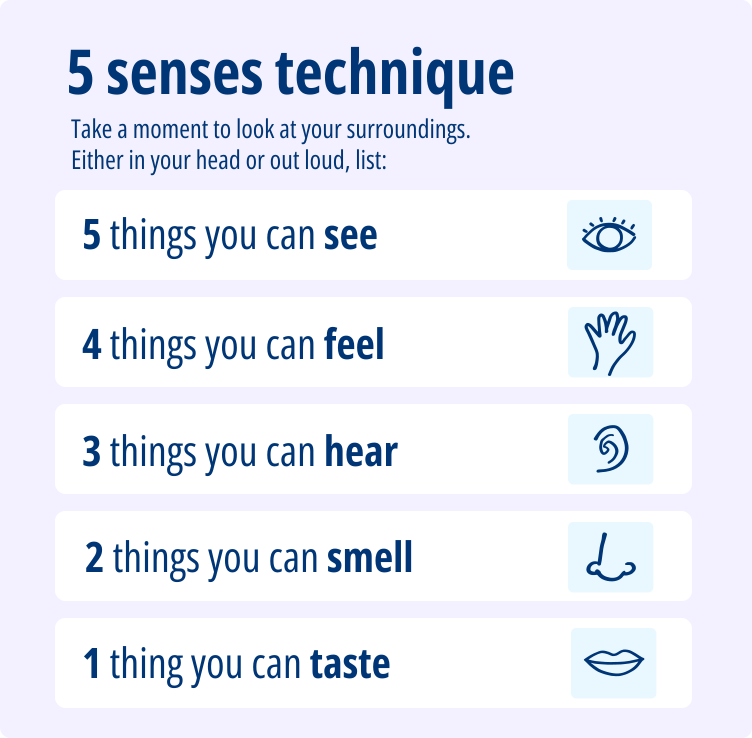
There are several different grounding techniques, but a great one to start with is the five senses check-in because it can be really helpful in decreasing the intensity of your feelings.

5 Senses Grounding Technique for Anxiety and Stress Relief – A simple mindfulness exercise on a light purple background with dark blue text. The instructions encourage you to take a moment to look at your surroundings and either in your head or out loud, list: 5 things you can see, 4 things you can feel, 3 things you can hear, 2 things you can smell, and 1 thing you can taste to help stay present and calm.
Techniques & Guides

Finding relief through grounding techniques

When feeling overwhelmed, grounding techniques can be a practical yet powerful way to feel calm and regain control. Learn how they can help you.
Read time icon 11 minutes read
Helps with Anxiety Stress

If you’re currently struggling to cope or are experiencing suicidal thoughts, there are steps you can take to stay safe and feel better.

You can:

An experience like this can bring up a range of emotions and it’s understandable to feel the way you’re feeling. But remember, you're not alone and there are people who want to help.

For more support options, you can book an appointment with your GP to discuss getting a Mental Health Treatment Plan.

A Mental Health Treatment Plan can help you access professional therapists and psychologists who can see if therapies like cognitive behavioural therapy (CBT) or eye movement desensitisation and reprocessing (EMDR) are right for you.

Techniques & Guides

What is a Mental Health Treatment Plan?

Getting a Mental Health Treatment Plan is a great first step to making a lasting difference to how you’re feeling. It can be tricky or intimidating to navigate at first, so here we have broken it down to its simplest form.
Read time icon 5 minutes read
Helps with Treatment Understanding

Supporting others

When someone you care about is hurting, it can be difficult to know what to do or how you can help. It can be particularly tough if they’re experiencing something you might not fully understand or relate to.

Supporting someone who’s been touched by suicide is similar to supporting someone who’s been bereaved or has experienced something else traumatic.

For many people, it can be helpful to simply have acknowledgement, validation, and the comfort of knowing you’re there.

Here are a few more ways you can offer practical support:

  • Let them know you’re there to listen (without judgement) whenever they’re ready to talk
  • Help them prioritise self-care by encouraging them to go for a walk, catch up with a friend or sign up for an activity they enjoy
  • Ask if they’d like assistance finding support options
  • Remind them that it’s okay that they’re hurting and that you’ll be there for as long as it takes.

Being a supporter doesn’t mean stopping someone from feeling the way they do. It’s about walking alongside someone through their experience.

Abbie

While you may be willing to support someone for ‘as long as it takes’, this support can only be sustained if you’re prioritising taking care of yourself.

It’s important that you’re:

  • Aware of what level of detail you’re willing to hear. It’s perfectly okay to say, ‘I’m here for you but I’m not ready to hear specific details.’
  • Prioritising your self-care. It’s important that you’re getting enough sleep, food, connection, support and fun in your own life.
  • Asking for help if it’s becoming too much. You don’t have to be someone’s sole support. You can ask mutual friends to step in or you can recommend support services to help lighten your load.
  • Reaching out for your own support. Carer Gateway offers online and phone counselling for carers looking for emotional and practical support.

Supporting children who have been touched by suicide

It can be overwhelming thinking about how to help or how to talk to a child who’s been touched by suicide.

Some kids might express emotions or show changes in behaviour straight away, but it’s quite common for children to have a delayed reaction to the event and this can often happen days, weeks or months later.

While each child will respond in their own way, depending on factors like age, emotional development, and personality, you might notice:

  • Mood swings, including big outbursts and tantrums
  • Loss of confidence or interest in activities they once enjoyed
  • Neediness or reverting to childish behaviour
  • The urge to talk about, draw, or act out what happened
  • Anxiety about the event happening again
  • Nightmares and problems with sleep
  • Physical symptoms like headaches and stomach aches.

These are all normal and understandable responses to traumatic events.


Here are a few ways you can provide support

  • Stick to routines
  • Help them understand what happened
  • Remind them that they are safe
  • Validate their feelings
  • Explain the different ways traumatic events can impact our minds and bodies
  • Know when to get help.

For more information on talking to kids about suicide, you can read this guide from the Black Dog Institute or contact Kids Helpline for advice.

Kids Helpline is a free and confidential 24/7 online and phone counselling service for kids, teens, young people and the adults who care about them.

Support Service

Kids Helpline

Kids Helpline is a free and confidential 24/7 phone and online chat counselling service for kids, teens and young people. Call 1800 551 800.
Helps with Family Bullying

Supporting those touched by suicide at work, on campus, or within a group

When suicide touches an entire organisation or group, it can be difficult to know how to move forward.

While everyone will respond in their own way, it’s important for site owners and leadership to:
  • Acknowledge what happened
  • Openly promote support options such as on-site counselling or organisations like StandBy
  • Provide information on practical strategies that can be used for processing thoughts and feelings, managing intrusive thoughts, and prioritising self-care
  • Encourage people to take time off if they need it
  • Continue monitoring staff/student wellbeing
  • Save or print this support guide.

Click here to download the StandBy Support After Suicide Toolkit


Support services

Below are support services that can help if you've been touched by a suicide death, suicide attempt, or suicidal behaviour of someone you're not closely related to or directly connected with.

Support Service

Lifeline Crisis Support

Lifeline is a free and confidential one-to-one support service for anyone feeling overwhelmed, distressed or having difficulty staying safe.
Helps with Suicidality Safety Planning
Support Service

StandBy

StandBy provides free and confidential phone and face-to-face support for anyone in Australia bereaved or impacted by suicide, regardless of when the loss or attempt occurred.
Helps with Finding support Suicide bereavement
Support Service

Kids Helpline

Kids Helpline is a free and confidential 24/7 phone and online chat counselling service for kids, teens and young people. Call 1800 551 800.
Helps with Family Bullying
Support Service

13YARN

13YARN is a free and confidential 24/7 national crisis support line for Aboriginal and Torres Strait Islander people who are feeling overwhelmed or having difficulty coping.
Helps with Worry Overwhelm
Support Service

Beyond Blue

Beyond Blue offers free and confidential 24/7 counselling for anyone looking for a little help with their mental health.
Helps with Mental Health Wellbeing
Support Service

Griefline

Griefline provides free and confidential counselling, resources and information to people experiencing grief and loss across Australia. Call 1300 845 745.
Helps with Grief & loss Finding Support
Support Service

Peer CARE Companion Warmline

Peer CARE Companion Warmline is a suicide prevention call-back service by Roses in the Ocean. They provide a safe place for people with lived experience of suicide to connect and chat with each other in a shared space of compassion, understanding, and respect. Call 1800 77 7337.
Helps with Suicide Peer support