Support Toolkit

Domestic and family violence

Understand what domestic and family violence looks like, how to recognise the signs, and where to find support for you and the people you care about.

Understanding domestic and family violence

Domestic and family violence (DFV) is a broad term used to describe any type of abusive behaviour in any relationship that’s manipulative, threatening or violent.

In most DFV situations, one person uses repeated patterns of abusive behaviour to gain power and maintain control over someone they’re close to.

It’s also common to hear terms like:

  • Intimate partner violence (IPV)
  • Coercive control
  • Emotional abuse
  • Family violence
  • Sexual violence
  • Domestic abuse, domestic violence (DV) or ‘a domestic’.

Domestic violence (commonly called intimate partner violence) is used to describe abuse between current or former partners, husbands and wives, boyfriends and girlfriends or other people you live with or see often and have an intimate relationship with.

Family violence is used to describe abuse in family-like relationships. This can include parents, guardians, children, grandparents, siblings, extended family members or other people you consider family.

Domestic and family violence of any kind is never acceptable and it's never the fault of the person being abused. Everyone has the right to feel safe, supported, loved, and respected in their relationships.

If you're experiencing DFV, there are people who want to help. You can contact 1800 RESPECT (1800 737 732) 24 hours a day, 7 days a week.


What does domestic and family violence look like?

When people think of domestic and family violence, they typically think of physical abuse like hitting, punching or choking.

However, domestic and family violence includes:

It’s important to remember that non-physical abuse is just as common as physical abuse, if not more.

In many cases, the other person’s non-physical abusive behaviour can be so deceptive that you might struggle to make the connection that what you’re experiencing is domestic and family violence.

The other person ...

  • Controlling who you can talk to and where you can go
  • Cutting you off from family and friends
  • Limiting your access to money or preventing you from getting a job
  • Gaslighting you by denying past events, twisting facts or accusing you of always over-reacting
  • Threatening to hurt you, the people you care about, your pets, and/or themselves if you try to leave
  • Using spiritual, religious or cultural beliefs to scare and control you
  • Forcing you into sexual situations you’re not comfortable with
  • Monitoring your text messages, social media accounts, phone calls, and emails
  • Showing up uninvited to your workplace or loitering outside your home (e.g. stalking).

To learn more about what domestic and family violence can look like, visit our DFV types page.

To learn more about how domestic and family violence impacts the way you feel, think, and act, visit our DFV signs and effects page.


Who does domestic and family violence affect?

If you’re experiencing domestic and family violence, you are not alone.

Anyone, regardless of gender, sexual orientation, age, religion, culture, and socio-economic status, can experience domestic and family violence.

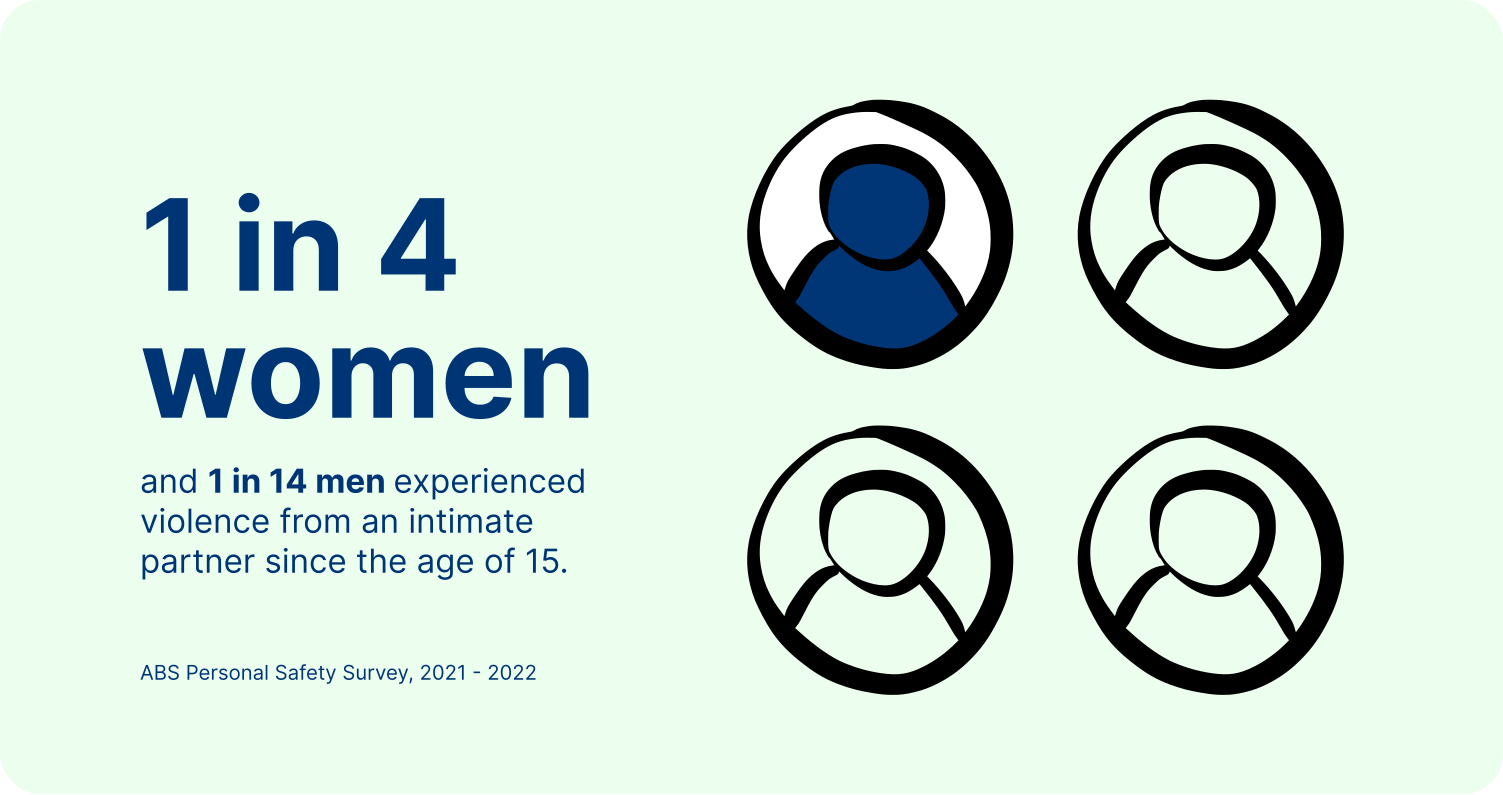
However, it’s women and children who are significantly most affected in Australia.

The image highlights statistics on intimate partner violence. It features the text: "1 in 4 women and 1 in 14 men experienced violence from an intimate partner since the age of 15." Below, it notes the source: "ABS Personal Safety Survey, 2021 - 2022." On the right side, there are four icons representing people, with one icon filled in dark blue, illustrating the "1 in 4" statistic visually. This layout emphasizes the prevalence of intimate partner violence, particularly among women.

In 2022-2023, there was a 30% increase in the number of women killed by a current or former intimate partner.

Because over 80% of Australians don’t report abuse or violence, these statistics can’t tell us the full extent of who and how many people are affected in our communities.

You could be ...

  • Afraid that the abuse or violence will get worse
  • Worried that you won’t be believed or that people won’t care
  • Unsure of where to go or what to say
  • Fearful of your children being removed from your care
  • Scared of being judged, blamed or shamed.

If you are in an abusive or violent relationship, it can take a toll on your mental health and wellbeing.

Often, the trauma you may experience as a result of the abuse can leave you with low self-esteem, anxiety, depression, and, in some cases, post-traumatic stress disorder (PTSD).

It's important to remember that help is available. If you’re worried that someone you care about is experiencing DFV, you can learn tips for offering support on our DFV information for friends and family page.


Why is it so hard to leave an abusive relationship?

Because DFV nearly always involves the other person using a pattern of abusive behaviour to maintain control over you, it's common to get into the cycle of abuse.

If you see glimmers of hope that the abusive behaviour won't happen again, you may understandably still love or feel attached to the person who’s harming you. This is nothing to be ashamed of and is their fault, not yours.

Even if you’re mentally ready to leave, taking that first step can feel impossible. There can also be many hidden challenges that make leaving extremely scary and difficult.

  • Threats to your and/or your children’s safety
  • Feelings of shame
  • Financial dependence
  • Lack of a support network or a place to go
  • Low self-esteem caused by the abuse
  • A physical or intellectual disability
  • Alcohol or drug addiction
  • Immigration status.

Leaving an abusive relationship is always possible but can sometimes result in more danger, which is why your safety should come first.

It’s important to seek support and make a safety plan with organisations like 1800RESPECT or Full Stop.

You can find more guidance on safety planning on our DFV short-term help page.


How do I know if I'm experiencing domestic and family violence?

It’s common to feel confused about whether or not you’re experiencing domestic and family violence.

This confusion happens because the other person may frequently use forms of psychological abuse like coercive control and gaslighting that can leave you questioning your sanity or feeling like you’re the one to blame.

If you’re unsure if you or someone you care about is experiencing DFV, you can:

Signs and effects of domestic and family violence

Everyone deserves to feel safe, respected, and supported in their relationships.

If you’ve experienced or are experiencing abuse, it can sometimes be hard to even know what that means. That’s why it’s important to be able to recognise what domestic and family violence (DFV) behaviour can look and feel like.

Physical abuse like hitting, punching, and choking can be easy to identify, while non-physical abuse can be a lot less obvious because:

  • The other person can manipulate situations and emotions to make you doubt your experiences or blame yourself
  • The other person's behaviour appears to be accepted in your culture, religion or social circle
  • You may have seen the same abusive behaviour modelled in past relationships and think it feels ‘normal’.

Even if you do recognise abuse and violence, it can be hard to accept and admit that it’s actually happening. It’s normal to want your relationship to feel good and work. It’s also normal to feel ashamed or afraid to ask for help.

But remember, there is nothing to be embarrassed about and there are people who can and want to help.

On this page, you’ll find information on:

Scroll down to learn more.


Recognising abusive behaviour

We all have moments when we get angry, lose our temper or say something we regret. It’s when this behaviour escalates and becomes repetitive that it can turn into domestic and family violence.

If you’re trying to recognise if you or someone you care about is experiencing domestic and family violence, it can be helpful to read about the different types of abuse.

DFV can involve physical abuse, however, it often also involves emotional abuse, coercive control, stalking, tech-based abuse, sexual abuse, financial abuse, spiritual abuse or come in the form of neglect. Almost always, it’s done to maintain power and control over you and to make it difficult to understand and explain what you’re experiencing.

It’s important to remember that the other person may not always start off being abusive. Often, they can start off charming, loving, and supportive. They can also be very good at acting this way in front of other people. When their behaviour changes, it tends to happen behind closed doors or away from others, making it difficult for you to explain what you’re experiencing.

Someone who is abusing you may:

  • Act jealous, insecure, and possessive
  • Become mistrusting and accusatory
  • Constantly criticise the things you say and do
  • Insult and humiliate you in front of others
  • Blame you or others for their own actions
  • Threaten to hurt themselves or take their own life if you leave them
  • Get angry, yell, and use profanity
  • Deny past events or withhold information
  • Control where you can go or who you can see
  • Take/hide your (and/or your children’s) ID, passport or birth certificate
  • Check your text messages, emails, and call log
  • Limit your access to money.

A ‘red flag’ is a trait or action of someone that may indicate they might be or become abusive.

  • Putting pressure on you to quickly commit, move in together or combine finances
  • Expecting you to meet all their needs
  • A previous history of being abusive and violent in relationships
  • Difficulty holding a job or sticking with plans
  • Lack of a social network
  • Refusal to wear a condom or practise safe sex
  • The tendency to get into verbal or physical fights when out
  • Anger and irritability
  • Heavy use of alcohol and/or substances
  • Debt and gambling problems.

Keep in mind that 'red flags' can be extremely difficult to see when you're experiencing abuse. It is in no way your fault if you can't or didn't see them.


Why do people use abuse and violence?

There are a number of factors that may increase the risk of someone using abuse or violence in their relationships.

For example, they may:

  • Use aggression and hostility because they lack problem-solving and communication skills
  • Have witnessed abuse as a child or grown up believing that one person should have control over another
  • Use violence to exert control or feel more powerful due to having low self-esteem
  • Have high levels of financial stress from things like unemployment or a gambling addiction.

The most important thing to know is that if you’re experiencing domestic and family violence, you did not cause this yourself.

It is never the fault of the person being hurt or abused. We all deserve to feel safe, supported, and respected in our relationships and to have access to support.

For more information on what domestic and family violence can look like, visit our types of DFV page.


Signs you're experiencing domestic and family violence

One of the best ways to understand if you’re experiencing domestic and family violence is by going off how you mentally and physically feel. Keep in mind that it’s common to have a range of different emotions, thoughts, and feelings when someone is being abusive towards you.

Some days, you might feel overwhelming sadness and helplessness. On other days, you might feel hopeful and believe things will get better.

Below, we’ve outlined some of the ways you might feel and some of the things you might find yourself doing if you’re in an abusive relationship.

How you might be feeling

Being in an abusive relationship can make you feel:

  • On edge, as if something bad is going to happen
  • Like you have to walk on eggshells around the other person
  • Insecure, inadequate, and like you can’t do anything right
  • Lonely, isolated, and like you’re unable to connect with anyone
  • Confused about whether or not your feelings and reactions are valid
  • Guilty and like you’re to blame for how you’re being treated
  • Hopeless that things will or even can ever get better
  • Trapped because of overwhelming feelings, financial dependence or fear of putting you and/or your family in further danger.
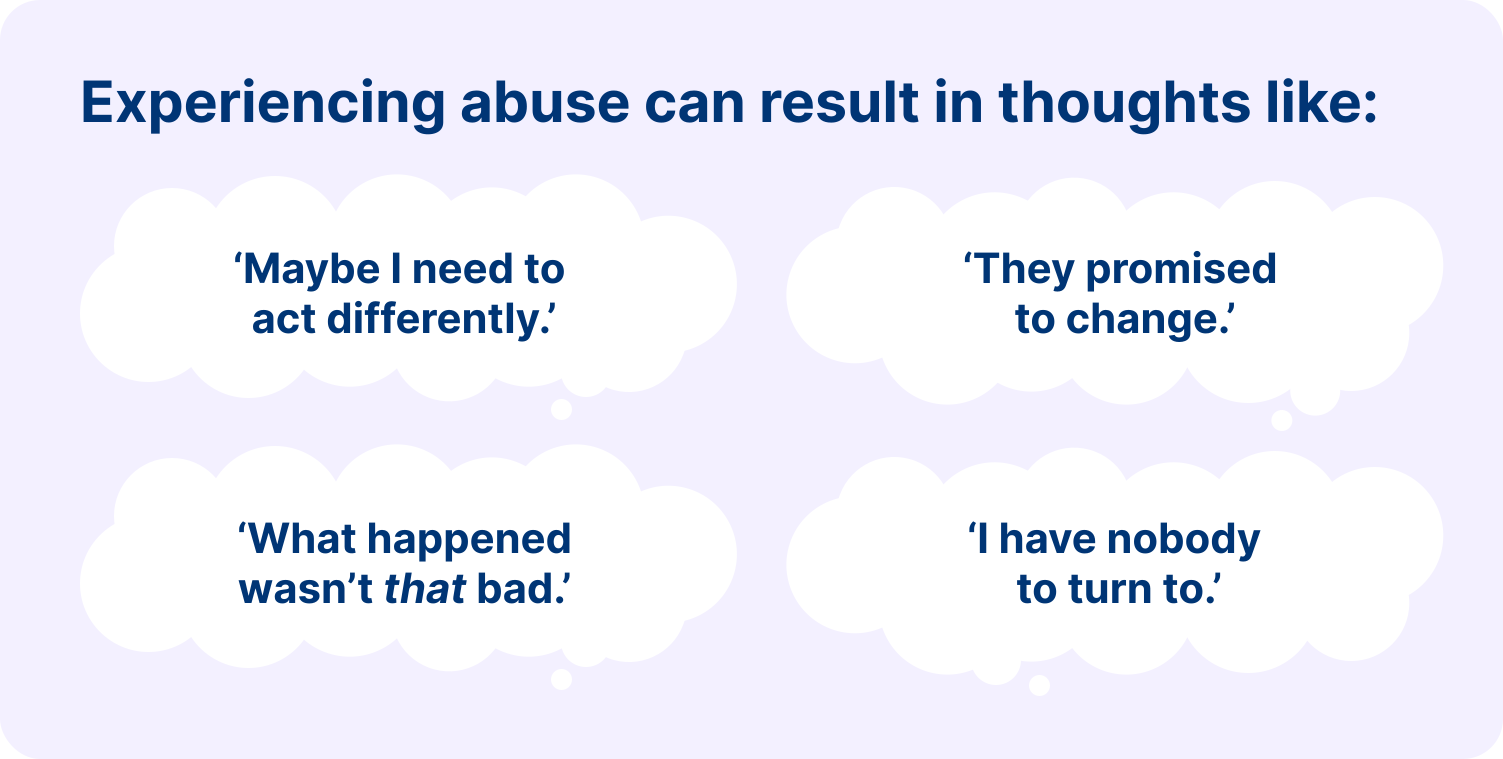
The image is titled "Experiencing abuse can result in thoughts like:" and shows four thought bubbles containing common self-blaming or isolating thoughts that people may experience when facing abuse. The thoughts include: "Maybe I need to act differently." "They promised to change." "What happened wasn’t that bad." "I have nobody to turn to." The image conveys how abuse can lead individuals to doubt themselves, feel responsible, or feel isolated, making it harder to seek help or recognise the abuse.

Changes you might notice in your behaviour

Abuse of any kind can have a big impact on both your emotional wellbeing and physical health.

If you’re experiencing abuse, you might:

  • Withdraw from family and friends
  • Lose interest in activities you once enjoyed
  • Avoid social situations
  • Internally downplay or deny what you’re experiencing
  • Hide what’s happening from others by defending your abuser, making excuses for their behaviour, covering up injuries, avoiding questions from concerned loved ones, and putting on a ‘happy face’ when in public
  • Use harmful coping mechanisms like alcohol and substance misuse and/or self-harm
  • Go to extreme lengths to avoid or please the other person in order to stay safe.

Even though we tend to turn to our minds to figure out how we’re feeling, our bodies can also be great indicators that something isn’t right.

  • Brain fog and fatigue
  • Poor concentration and memory problems
  • Sleep problems like difficulty falling or staying asleep
  • Anxiety symptoms like being easily startled or constant butterflies in the stomach
  • Changes in appetite
  • Headaches, stomach pains, and frequent colds
  • Chronic health problems such as cardiovascular disease, high blood pressure, diabetes, and autoimmune disorders.

Signs to look out for in infants and children

Even though the impact of abuse may be significant, infants and children don’t always respond in the same ways to stress and trauma that adults do.

If you’re concerned about a child and suspect they might be experiencing domestic and family violence, you can look for visible marks and injuries, as well as the common emotional warning signs listed below.

  • Be hyper-alert of their surroundings and other people
  • Seem constantly fearful, anxious or jumpy
  • Experience low self-esteem
  • Use aggressive or bullying behaviour
  • Refuse to go to school
  • Have nightmares or sleep problems
  • Withdraw from family and friends
  • Struggle to make friends
  • Lose interest in activities they once enjoyed
  • Have difficulty concentrating
  • Avoid or act afraid of going home or to a certain person’s house
  • Revert to child-like behaviours like bedwetting or thumb sucking
  • Have unexplained injuries.

For a more in-depth look at domestic and family violence warning signs in infants and children by age, you can visit Relationships Australia.


How does DFV impact children in the long term?

A 2023 study found that 2 in 5 Australian children are exposed to DFV.

Research has also shown that exposure to abuse, violence, and an unstable home environment can impact children greatly, even if they aren’t being directly abused.

As a result, a child witnessing domestic and family violence is now recognised as child abuse in some Australian states and territories.

Abusive behaviour in the home can:

  • Make children feel stressed and anxious
  • Affect how they form and maintain relationships
  • Cause children to blame themselves for what’s happening
  • Lead to feelings of guilt, shame, and low self-esteem.

The longer children are exposed to domestic and family violence, the greater their risk for ongoing mental health challenges and conditions like post-traumatic stress disorder (PTSD), depression, anxiety, alcohol and substance misuse and self-harm.

It’s not your fault if you and your children are living in an abusive environment. You all deserve support. Remember, leaving may be the safest option for you all.

If you’re looking for tips to help someone you care about, visit our DFV information page for friends and family here.

Scroll down to continue learning about the impacts of DFV.


Understanding the cycle of abuse

Abusive relationships tend to follow a confusing and deceptive pattern of behaviour. This can make it extremely difficult to understand what’s happening and explain why it feels so hard to leave.

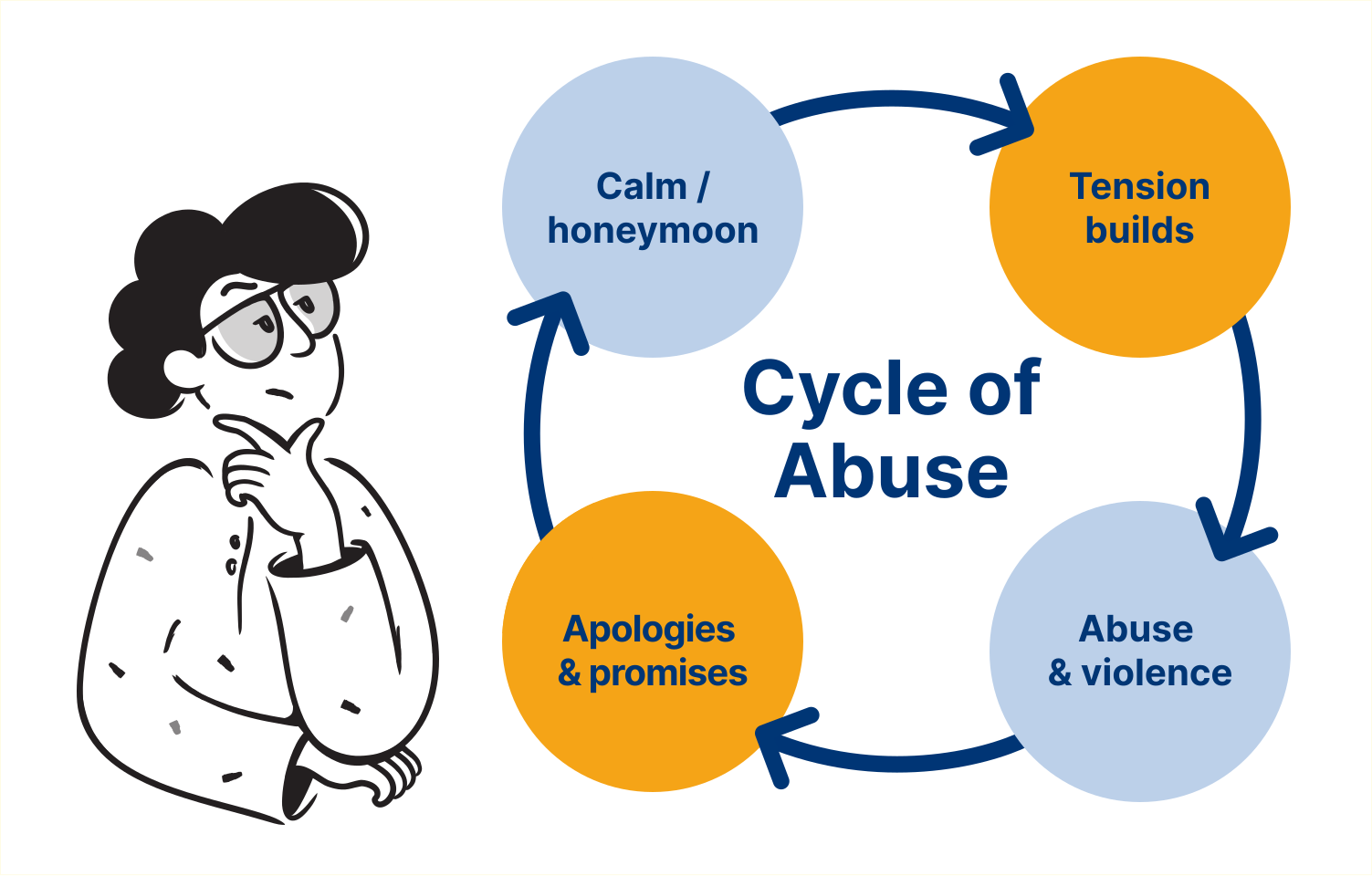
The image illustrates the Cycle of Abuse in four stages, arranged in a circular pattern, representing the repetitive nature of abusive relationships. Each stage is depicted within a circle connected by arrows, with an illustration of a thoughtful person on the left. The stages are: Calm / honeymoon – A period of peace and positive behaviour following abuse. Tension builds – Tension starts to accumulate, often leading to fear and stress. Abuse & violence – An episode of abusive or violent behaviour occurs. A

Often referred to as the cycle of abuse, this pattern consists of four phases and can feel like:

  • You’re in the honeymoon stage: In this calm phase, you might get glimpses of the love and respect you deserve. This can look like displays of affection and remorse that may create a false sense of security and like things might change.
  • You can sense tension building: You might notice that the other person’s mood changes and that you’re arguing more frequently. Here is where you might feel like you’re walking on eggshells. This phase can be hard to spot and make it hard to leave because the gradual increase in stress and minor incidents of abuse can seem normal after a while, leaving you unsure if there's a real problem.
  • There’s an outburst of abuse/violence: When the built-up tension from the previous phase breaks, the abuse and violence escalate and you’re left feeling emotionally or physically in pain or afraid for your safety. This phase can make it hard to leave because the sudden, intense abuse can be shocking and overwhelming, leaving you fearful and feeling trapped.
  • Apologies and promises to change are made: In this phase, the other person might apologise for their behaviour and make promises to change. This may leave you feeling emotionally confused and doubting the seriousness of the abuse before you’re back in the honeymoon stage.

This cycle of abuse can happen over and over again. And the more the pattern occurs, the harder it is to break.

Because the other person may have undermined your ability to see that you can break free from the abuse, you might feel stuck, confused, and trapped.

Remember, none of this is your fault, it is possible to break free from the cycle, and there are people who want to help.

Understanding common patterns of behaviours associated with domestic and family violence - like the cycle of abuse - can help you recognise it better.

Visit our DFV short-term help page for more information on how to stay safe and leave an abusive relationship.


The impacts and effects of DFV

Experiencing domestic and family violence can impact and affect every area of your life.

On top of it taking a toll on your mental health and emotional wellbeing, being in an abusive relationship can make it difficult for you to get or hold down a job, raise children in a safe environment, overcome an illness or have healthy relationships with others.

The impact on your other relationships is particularly harmful because being connected to others is what can keep you safe and get you out of an abusive relationship.

Abusive relationships can affect your connections with other people in your life in the following ways:

  • You might be discouraged from seeing friends and family, leading to isolation, loneliness, and reliance on the other person for emotional support
  • The betrayal of trust in an abusive relationship can make it hard to believe that other people are good or won’t hurt you

It is common to experience low self-esteem as a result of abuse. This can be a barrier when building new and healthy relationships. You can find out how to improve your self-esteem here.

One of the relationships that domestic and family violence can damage the most is the one you have with yourself. When you experience abuse and violence, it makes sense if your self-esteem feels like it’s not at its best. This is not your fault.

Remember, a key way the other person gains control is by making you feel weak, incapable, worthless, and dependent on them for everything.

It can be hard to find the strength to leave and heal after an abusive relationship if you don’t feel good about yourself, confident in your abilities or believe that you deserve healthy relationships.

Low self-esteem can also make it hard to take care of your mental health and wellbeing. While low self-esteem isn’t a mental health condition itself, it can lead to conditions like anxiety, depression, post-traumatic stress disorder (PTSD), and suicidality.

There are ways that you can work on rebuilding your self-esteem and it’s important to do so.

Types of domestic and family violence

Domestic and family violence (DFV) can be a confusing term because abuse isn’t always physical or violent. For example, the other person might limit your access to finances, prevent you from contacting family and friends or leave you feeling like you aren’t able to support yourself.

When abuse is physical or violent, it’s nearly always accompanied by other types of abuse. For example, someone physically abusive might also belittle you in front of others, monitor your private messages or put rules around what you can do and when.

It’s helpful to understand what the different types of abuse can look like so you can spot the signs of domestic and family violence.

On this page, you’ll find information on:

Scroll down to learn more.


Emotional abuse

Emotional abuse (also referred to as psychological abuse), is when someone intentionally says or does non-physical things to make you feel unimportant, humiliated, degraded, ashamed, and incompetent.

For example, someone who is emotionally abusive might:

  • Constantly point out your flaws or mistakes
  • Insult, shame, or embarrass you in front of others
  • Intimidate, threaten or manipulate you
  • Dismiss your achievements
  • Say your goals are insignificant or unachievable
  • Show excessive jealousy and distrust
  • Consciously chip away at your self-esteem.

Verbal abuse is similar to emotional abuse, however, it typically involves yelling, name-calling, belittling, using hurtful, threatening or controlling language or giving you ‘the silent treatment’.

Yes. Narcissistic abuse is when someone constantly uses words and actions to manipulate and control your behaviour and emotional state.

People who engage in this type of emotionally abusive behaviour:

  • Believe they are better than others
  • Seek constant attention and admiration
  • Lack empathy
  • Stay preoccupied with their own needs and wants.

This form of abuse often includes coercive control and gaslighting.


Coercive control

Coercive control is when someone intentionally tries to dominate, control, and manipulate you by using a range of emotional abuse tactics aimed at lowering your self-esteem as well as undermining your independence and freedom.

This can look like:

  • Threats
  • Intimidation
  • Isolation
  • Surveillance
  • Gaslighting
  • Monitoring and controlling your online activity.

Abusers typically gain control through a slow and deliberate process. It’s often really hard to recognise because it happens over time.

At first, the person is kind, respectful, or even over-the-top loving.

‘Love bombing’ is a common manipulation tactic used to build an emotional connection and gain trust. This can look like someone saying they’re interested in the same things you are (even though they’re not), constant attention, generous compliments, and promises of a bright future together. It can also look like someone wanting to move in together or start a family quite quickly.

Next, they begin to display their true self.

Once you’ve become emotionally connected, they may start behaving in ways that are controlling. For example, they might start strategically telling you that you’re too good for your job or that your family and friends are ‘toxic’ and that you ‘deserve better’. As a result, you start pulling away from your source of income and support system.

The more isolated you become, the more control they can have over every aspect of your life.

The goal of coercive control is to make you feel worthless, isolated, and reliant on them for all of your basic needs: food, shelter, money, social connection, etc. They may monitor where you go, who you see, who you speak to on the phone, and who you message online. This behaviour may also escalate into stalking.

Finally, they start using threats and fear to keep you trapped.

In extreme cases, they may resort to acts of physical or sexual violence to maintain control. They may even threaten to take your life or their own if you try to leave.

It is a very common experience to feel ashamed when you start to realise you have been or are being coercively controlled. Often, we hear 'How did I not see it?' or 'What is wrong with me that I let that happen?'.

It’s important to know that it is not your fault. The other person uses this as a manipulative way to control you and you have done absolutely nothing wrong. Nobody deserves to be treated this way.


Gaslighting

Gaslighting is when someone maintains power and control by making you question and doubt your memory, judgement or sanity through psychological manipulation tactics.

These include but are not limited to:

  • Blatant lying
  • Denying or forgetting facts you know to be true
  • Trivialising serious conversations
  • Challenging your version of events
  • Withholding information or strategically selecting what parts to give you
  • Twisting facts
  • Changing the subject
  • Deflecting responsibility
  • Shifting blame onto you or others
  • Accusing you of being too sensitive/emotional
  • Saying they were ‘just joking’ after harmful behaviour
  • Flipping the script, leaving you looking or sounding like the one who’s being confusing, controlling, abusive or violent.

When you’re being gaslit, it can leave you feeling like you’re living all alone in another world. You may feel convinced that those around you think you’re ‘unstable’ or ‘strange’, just like the abuser wants you to believe.

As a result, you might be struggling to know whether or not what you’re experiencing is actually gaslighting.

One of the best indicators that someone is gaslighting you is how you feel.

  • Confused, frustrated, and like you can no longer trust yourself
  • Like your feelings and emotions aren’t valid
  • Insecure and unsure of whether you’re judging the situation correctly
  • Unfairly blamed for or accused of things you didn’t do or say
  • Guilty, ashamed, and responsible for things you didn’t do or say
  • Like you’re constantly being told you’re over-reacting or acting crazy
  • Afraid to speak up or share your feelings in the future
  • Like the person always has an excuse for their hurtful behaviour
  • Unsure of where you stand with the person
  • Isolated and lonely.

Recognising gaslighting behaviour is important in rebuilding and protecting your self-esteem and independence.

By regaining your confidence, it can be easier to reach out for support for getting out of the abusive relationship.


Stalking

Stalking is when someone repeatedly contacts, harasses, follows or monitors you in a way that makes you feel uneasy, afraid or unsafe. These behaviours are usually intended to cause you to feel like you have no power or control.

Stalking often occurs after an intimate or family relationship has ended but can also occur when you’re still in a relationship.

In some instances, you might not know the full extent of how you’re being monitored by the person stalking you. You may not even be aware it’s happening.

No matter the circumstance, being stalked can be distressing and extremely dangerous because a stalker’s behaviour often gets more intense over time and can escalate quickly.

The other person ...

  • Loitering outside your home, workplace or school
  • Following you on foot, by car or via public transport
  • Frequently showing up at your workplace, school, social events, gym or in your neighbourhood
  • Sending or leaving unwanted notes, letters, or gifts even after you’ve told them to stop
  • Publicly heckling you
  • Making threats or intimidating gestures towards you
  • Following, intimidating, threatening, or heckling your friends, family, and colleagues/classmates.

The other person ...

  • Making unwanted and persistent contact through calls, voicemails, texts, and emails
  • Harassing you on social media by commenting on posts, sending direct messages or publicly posting personal information about you
  • Tracking your online activity or hacking your private accounts
  • Tracking where you physically are via apps on your mobile phone, GPS devices in your vehicle or other location-finding products.

Being stalked can be a confusing experience and leave you with thoughts like ‘Maybe it’s just a coincidence that they’re here’ or ‘Will the police even believe me?’

It might not feel like it right now but there are people who can help and who want to help. And no matter what your stalker has made you believe, it’s not your fault.

When in doubt - trust your gut. No matter how subtle the behaviours might feel, you must take action if you think you’re being stalked. In Australia, stalking is considered a form of domestic and family violence and is a criminal offence.

You can take action by:


Tech-based abuse

Tech-based abuse (also referred to as cyber abuse) is when someone uses the Internet or other electronic means to gain power and control over you.

Tech-based abuse can look different for everyone but can involve the other person:

  • Harassing or threatening you online or with a digital device
  • Sharing or threatening to share an intimate image or video of you online without your consent (this is also known as image-based abuse or ‘revenge porn’)
  • Cyberstalking (see our stalking section above)
  • Controlling your online communication
  • Restricting or controlling your access to devices and online accounts
  • Financially abusing you using technology.

Click here to learn more about how technology can be used in DFV.


Physical abuse

Physical abuse is when someone intentionally hurts you by causing harm to any part of your body. This type of abuse can lead to minor or serious injuries, and in extreme cases, death.

Physical abuse frequently involves hitting, kicking, shoving, and choking. However, someone physically abusing you may also:

  • Cause burns to your body using fire or chemicals
  • Pull or cut off your hair
  • Lock you inside a room or vehicle
  • Physically restrain you by tying you up or other means
  • Prevent you from accessing medical advice and care
  • Give you medication/drugs that make you sleepy, sedated, unable to think clearly or struggle to move your body
  • Force you to consume drugs or drink alcohol
  • Deny or limit your access to food and water
  • Destroy, hide, or take mobility and health equipment such as wheelchairs and eyeglasses
  • Force you to be nude or prevent you from wearing weather-appropriate clothing.

It doesn’t matter how someone is physically abusing you or what they’re saying to justify their actions, it’s never okay.

It’s also quite common for someone who's physically abusive to apologise for their behaviour and promise to never do it again. This pattern can lead to a cycle of abuse. Learn more on our DFV signs and effects page.


Sexual abuse

Sexual abuse is when someone makes you engage in sexual acts you’re not comfortable with or without your consent.

For example, someone sexually abusive might:

  • Force you to have sex, even when it’s causing you pain
  • Have sex with you when you’re asleep or unconscious
  • Make you engage in sexual acts with other people
  • Shame or belittle you into performing sexual acts
  • Threaten that they’ll ‘need to cheat’ if you don’t give them what they want
  • Refuse to wear a condom or practise other types of safe sex
  • Knowingly give you an STI
  • Control reproductive choices such as hiding your birth control or forcing you to have an abortion.

Sexual abuse can happen to anyone and isn’t always between intimate partners. For more information on what a healthy sexual relationship should look like, you can visit Beyond Silence.


Financial abuse

Financial abuse (also referred to as economic abuse) is when someone withholds your access to money, controls the way money is spent within and out of the household, and/or refuses to include you in financial decisions.

Financial abuse can occur for many reasons, however, the other person typically uses it as a way to gain or maintain control.

For example, someone who is financially abusive might:

  • Restrict your access to bank accounts
  • Hide or lie about how your personal or household’s money is spent
  • Prevent you from earning an income
  • Physically or psychologically keep you from being able to do your job
  • Stalk or harass your colleagues as a way to threaten your job security
  • Force you to claim government payments for their own use
  • Withhold Child Support payments
  • Force you to take out a credit card, loan in your name, or be the guarantor on a loan they’re taking out
  • Create debt on shared accounts or joint credit cards
  • Force you to work in their business without being paid
  • Refuse to work or contribute to household expenses
  • Fill out fraudulent insurance claims that implicate or impact you
  • Forge your signature on financial documents
  • Sell your possessions without permission.

Financial dependence is one of the most common reasons people struggle to leave an abusive relationship.

It might feel impossible to leave when your financial security is dependent on staying. However, there are people and support services who can help you find financial support.

You can watch the video below to learn more about financial abuse.


Spiritual abuse

Spiritual abuse (also referred to as religious abuse or cultural abuse), is when someone uses spiritual, religious or cultural beliefs to control, intimidate, or hurt you and/or your family members.

For example, someone who's spiritually abusive might:

  • Guilt you into staying in a marriage you no longer want to be in by saying things like, ‘Divorce is a sin’
  • Threaten to cut off your access to loved ones if you try to leave the spiritual, religious or cultural group you’re in
  • Use spiritual and religious teachings or cultural norms to justify the use of physical and sexual abuse
  • Withhold information and twist facts so you can’t make your own decisions
  • Force you to raise your kids under spiritual, religious or cultural beliefs and practices you don’t believe in
  • Prevent you from returning home to Country
  • Prevent you from participating in your spiritual, religious or cultural practices.

These include things like female genital mutilation (FGM) and forced marriage.

For more information on Australia’s laws regarding domestic and family violence, you can visit the Department of Social Services website and download their Family Safety Pack.


Elder and child abuse

Elder and child abuse is any type of abuse (emotional, controlling, stalking, physical, tech-based, sexual, spiritual, and financial) directed at someone aged 65+ or 18 and under.

Elder and child abuse can also look like:

  • Taking control of finances to steal money
  • Preventing access to medical help
  • Denying or limiting access to basic needs like food, water, and shelter
  • Providing inadequate clothing and shoes
  • Restricting freedom
  • Isolation from family and friends
  • Neglect.

These groups are more vulnerable because they are more likely to depend on the other person for food, shelter, hygiene, physical health, money, transportation and social connection. When these needs aren’t met, this is called neglect.

Neglect is the most common form of child abuse. For those 65+, the most common form of abuse is financial.

Staying safe during and after an abusive relationship

Whether you’re still in an abusive environment, are trying to leave or have already left, safety should be your number one priority.

Domestic and family violence (DFV) can be unpredictable and can escalate at any moment. It’s important to know ways you can stay safe right now and in the long term.

On this page, you’ll find information on:

Scroll down to learn more.


Safety planning while still in an abusive relationship

Safety planning means putting together a checklist of actions you can take and people you can reach out to when you feel unsafe or need to leave quickly.

One of the most important parts of safety planning is making an escape plan. While your escape plan may differ depending on your circumstances, it's important to think about things like what to do if you need to leave quickly.

  • Planning and practising the quickest way to leave your home
  • Giving someone you trust keys or access to your home as well as any copies of important documentation
  • Finding a trusted person you can reach 24/7 if you need to leave quickly. This is especially important for anyone with mobility issues or a disability. Some people have a code word they use to prevent the abuser from discovering what you’re doing.
  • If you plan to leave and are worried about your pet, you can consider temporarily leaving them with a trusted neighbour or check if your local area has a program like RSPCA NSW's Community Domestic Violence Program
  • Talking to your employer about taking family and domestic violence leave
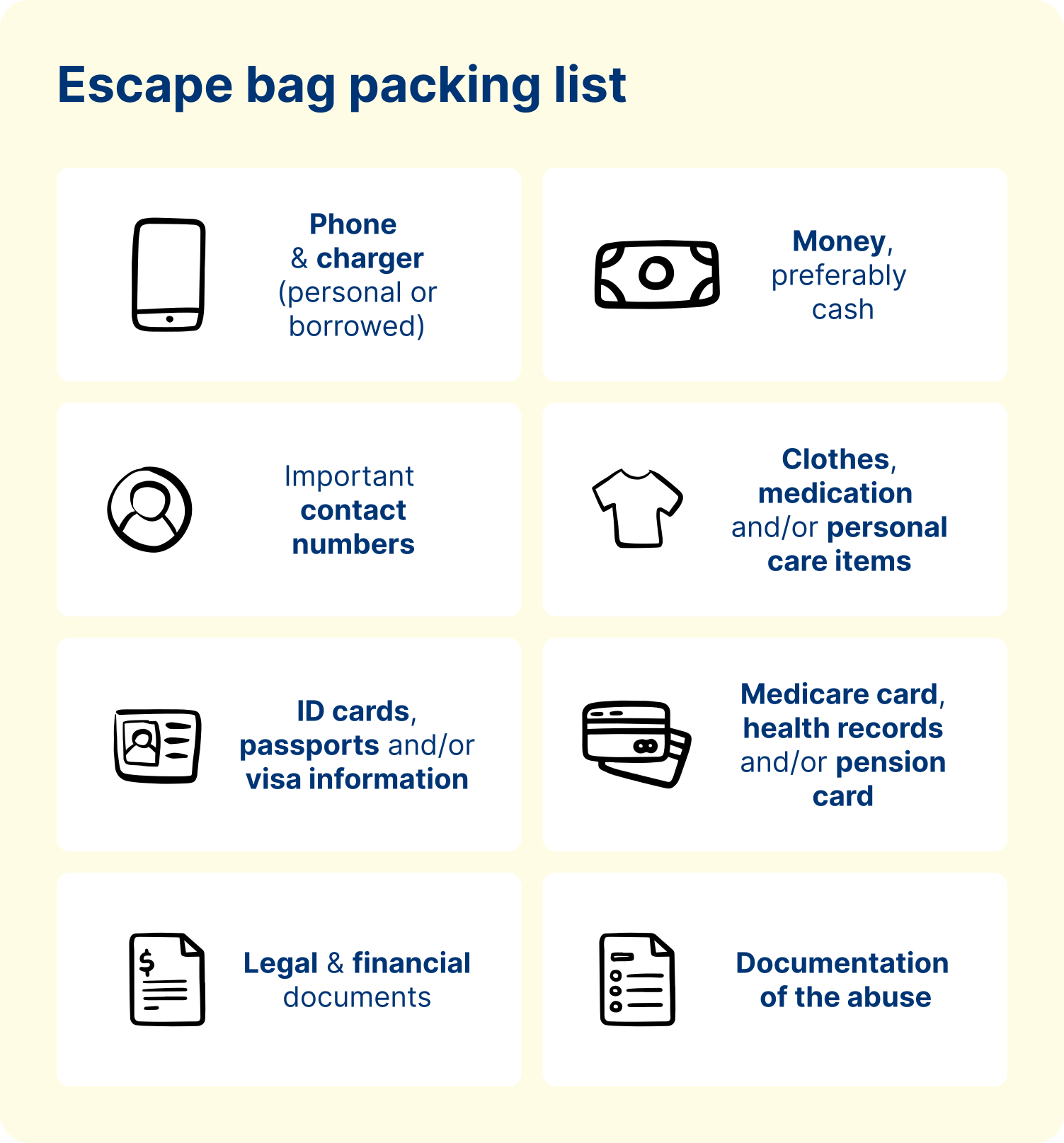
  • Having a pre-packed escape bag with keys, money, IDs, important documents, and medication (if required).
The image is titled "Escape bag packing list" and provides a checklist of essential items for individuals planning to leave an abusive situation. The items are displayed in a grid with icons and descriptions for each: Phone & charger (personal or borrowed) Money, preferably cash Important contact numbers Clothes, medication and/or personal care items ID cards, passports and/or visa information Medicare card, health records and/or pension card Legal & financial documents Documentation of the abuse This list

1800RESPECT recommends creating a safety plan with a support service such as theirs or FULL STOP (1800 385 578).


Tips for leaving an abusive relationship

Deciding to leave an abusive relationship is a brave step towards a better life.

As this can be one of the most dangerous periods of time, it’s important that you do what’s possible to keep yourself safe.

Here are some ways you can stay safe after leaving:

If you need to leave quickly or call for help, it's important that people know your background and can offer the right support.

You could inform a:

  • Family member
  • Neighbour
  • Pastor or priest
  • Colleague or classmate.

If it feels safe, you may want to give them copies of important documents like birth certificates, passports, ID, money, and any evidence of abuse.

Click here to read tips for talking to someone you trust.

If the other person has keys or keypad codes to enter the property you're staying in, it's important to change locks and change codes. If possible, get an alarm system installed.

If you have a phone:

  • Change your number
  • Ensure it's unlisted
  • If possible, see if the account can be put under an alias name
  • Alternatively, use a pay-as-you-go phone.

Be careful who you share your new contact information with and ask them not to share your details with anyone else.

It can also be helpful to make sure your address isn't listed on statements or accounts that the other person might be able to access.

Protecting your online activity is critical for safety, especially if you're experiencing tech-based abuse or being stalked.

  • Either on your own or with the help of an IT person, make sure you're not logged into any accounts from devices not in your possession
  • If you’re currently sharing your location via mobile apps, turn off location sharing in your phone’s privacy settings
  • Change every online password (Choose something the other person can't guess)
  • Check that your privacy settings, especially on social media accounts, are set to 'private' and not 'public'
  • Where possible, block the other person.

Look for and delete any apps or software that track your location on your phone or in your car.

For help, you can visit the eSafety website and do a technology check-up on your phone, tablet, and computer. They also have an online safety checklist that can help if you’re experiencing tech-based DFV.

You might also find this Women’s Technology Safety & Privacy Toolkit helpful.

If you're worried about stalking and your physical safety, alter the route you drive to work or where you socialise so the other person can’t predict where you’ll be.

If you haven’t already gotten a protection order, you can consider applying for one. This ensures the other person can be arrested and charged if they try to contact or approach you. If you ever feel like you're in immediate danger, call 000.

For advice on how to emotionally heal and build healthy relationships after leaving an abusive relationship, visit our long-term help for relationships page.


More resources that can help you stay safe and regain independence

When the other person is trying to exert power and maintain control over you, they can use coercive control and stalking behaviours such as monitoring your physical location, online movements, and bank accounts to take away your independence.

As society continues to get increasingly tech-savvy every day, we are seeing more instances where tech-based abuse plays a role in domestic and family violence.

Below, you’ll find resources from eSafety that can help you regain control of your devices and bank accounts.

No matter where you are in your journey, it’s always a good idea to regularly review your online safety.

You can visit the eSafety website to learn how to:

  • Use safe devices when experiencing DFV
  • Protect access to your device
  • Manage your online account security
  • Review your social media settings
  • Keep your online history private
  • Protect your location information
  • Take control of your home security.

Alternatively, you can download a PDF of eSafety’s Online Safety Checklist.

Evidence of online DFV behaviour can include things like:

  • Threatening emails, texts, or messages
  • Spyware that’s installed without your knowledge
  • Intimate images posted without your consent
  • Cyberbullying.

Even though collecting evidence is important for police and courts to have, it is always important that you put your safety first.

Click here to read eSafety’s tips for safely collecting evidence.

In Australia, each state and territory has laws that cover tech-based domestic and family violence.

Click here to find your local police station as well as tips for how you can prepare before contacting them.

Keep in mind, you can report tech abuse that involves seriously harmful content to eSafety who may be able to have it removed. You can learn more about reporting to eSafety here.


Emergency housing, financial support, and legal help options

One of the biggest hurdles you may face after leaving a domestic and family violence situation is finding a place to stay and accessing legal help. This does not mean you need to return to the abusive relationship. There is help available.

If you’re looking for emergency accommodation, you can call 1800RESPECT (1800 737 732) and ask to be put in touch with crisis accommodation services in your area.

After leaving an abusive relationship, you may also need legal help with things like getting a protective order, filing for divorce, organising child custody and child support agreements, and other important matters.

In Australia, some organisations provide these services for free to those who have experienced domestic and family violence. The government website, Family Violence Law Help, can help you find free legal assistance in your state or territory.

For more ways you can learn how to stay safe during and after an abusive relationship, you can:

Taking care of your mental health and wellbeing in the long term

Whether you’ve just left a domestic and family violence (DFV) situation or you’re still healing from a past abusive relationship, it’s normal to feel mixed emotions. You may feel a sense of safety, relief, and freedom while also feeling overwhelmed, anxious, traumatised, lonely, and uncertain about the future.

The important thing to remember is that whatever you're feeling right now - your emotions are valid and entirely understandable.

You also don’t have to figure everything out on your own. Healing and moving on after experiencing domestic and family violence can take a lot of time and will look different for everyone.

On this page, you’ll find information on:

Scroll down to learn more.


Creating a support system

Deciding to leave an abusive relationship takes a huge amount of strength, courage, and more often than not, help from others. Not only is your physical safety a concern, so is your emotional wellbeing.

Creating a support system of trusted friends, family members, organisations like 1800RESPECT (1800 737 732), and other mental health services that feel right for you can help you find stability, safety, and set you up for a more connected and supportive future.

In a practical sense, you can lean on your support system to help with things like finding housing, getting DFV legal advice, and if applicable, helping with children when you need to attend to matters to work towards your future.

In terms of your mental health, a strong support system can help you take the steps needed to find yourself again, rebuild your self-esteem, and avoid the cycle of abuse.


Connection is vital

Just like food and water are basic physical human needs, connection is a basic emotional need. Without it, we may experience loneliness or mental health conditions like depression and anxiety.

On top of allowing you to lean on others for support, connection can help you build and maintain healthy relationships in the future.

It can be scary opening up about what you’ve been through but talking to someone you trust can help reduce stress and make your struggles feel more manageable.

Outside of your support system, you could also speak with a:

  • Colleague or classmate
  • Manager or teacher
  • Member of a support group
  • Health professional
  • Therapist.
Techniques & Guides

What to expect in your first therapy session

It's common to feel unsure or nervous about your first therapy session, but it's not as scary as you might think! Here's what to expect in your first therapy session.
Read time icon 3 minutes read
Helps with Therapy Treatment

If you’d prefer to speak with someone outside your personal life, you can try calling a support service like FriendLine.

FriendLine is for anyone 18+ in Australia who needs to reconnect or just wants a chat. And remember, Lifeline is always here.


Therapies that may help with processing emotions and trauma

Experiencing any type of domestic and family violence can be distressing and often traumatising. It makes sense if you feel like you’re struggling to cope or you’re feeling overwhelmed by your thoughts and emotions.

You may find it helpful to try:

CBT and ACT are evidence-based therapies that can help you confront and process painful emotions and give you strategies for coping in everyday life.

While there are ACT and CBT-based activities you can do on your own, it can be beneficial and more effective to work with a professional therapist.

Techniques & Guides

A CBT-based thought challenging activity

Our thoughts have a powerful impact on our emotions and behaviour. Try this CBT-based activity to help you to manage your thoughts and emotions more effectively.
Read time icon 6 minutes read
Helps with Anxiety Depression

For a trauma-informed alternative to traditional talk therapies like CBT, you can consider EMDR therapy.

A lot of people prefer EMDR for dealing with trauma because you don’t have to go into detail about the abuse or violence if you don’t want to.

Below, you can watch a video to learn more about how EMDR works.


DFV support groups and counselling

Attending a support group or getting DFV-specific counselling after experiencing domestic and family violence can help you process your experience and find hope to move forward.

Domestic and family violence support groups can offer a safe space for you to share your story with people who understand what you’ve been through.

  • Support groups provide a valuable opportunity for connection and healing
  • Hearing others’ stories can be a source of hope and encouragement
  • You may also learn some new coping strategies.

Most support groups are led by members of the community who have also experienced domestic and family violence and are free to attend.

On top of helping you understand the impacts that DFV can have on your life, trained counsellors can:

  • Help with guidance on how to stay safe
  • Give you strategies to manage feelings of distress, anger, anxiety depression, loneliness, trauma, and more
  • Recommend and connect you with local services (such as DFV support groups near you)
  • Offer advice for speaking with the police and going through the legal system.

If you’d like to speak with domestic and family violence counselling service, 1800RESPECT (1800 737 732) and Full Stop (1800 385 578) both operate 24 hours a day, 7 days a week.

Support Service

Full Stop Australia

Available 24/7 via telephone and online chat, Full Stop is a free and confidential counselling service for anyone impacted by domestic and family violence. Call 1800 385 578.
Helps with Domestic and Family Violence

Tips for rebuilding your self-esteem and having healthy relationships

When you’re constantly criticised, ridiculed or made to feel like everything is your fault, it’s natural to start to believe the things you’re hearing about yourself. As a result, you might think that you deserve the abuse, can’t do anything right, and aren't worthy of love and respect.

If you were prevented from maintaining your other relationships or engaging in hobbies you once enjoyed, you may have lost sense of who you are outside of the abusive relationship.

These types of experiences tend to lower your self-esteem, which can have long-term impacts on the way you view yourself, your abilities, and your worth as a person.

After experiencing domestic and family violence, the most important relationship to work on is the one you have with yourself.

  • Speaking to yourself how you’d speak to a friend in the same situation
  • Allowing yourself to put your self-care needs before you help others
  • Setting and maintaining boundaries with the people you let into your life
  • Taking time to reflect on your experience and reframe how you look at what happened.

For example, if you were in a relationship with someone who used emotional abuse tactics like gaslighting and coercive control, it can be helpful to look back on particular times and acknowledge that what you were experiencing was domestic and family violence. You didn't imagine it and you didn't deserve how you were being treated.

Techniques & Guides

Self-care for mental health and wellbeing

Self-care is a key way we protect our mental health and improve our wellbeing. In this article, we explain what exactly self-care is and why it's so beneficial during challenging times. You'll also find easy self-care ideas you can try right now or down the track.
Read time icon 10 minutes read
Helps with Stress Depression

Your relationships with others

When you’re feeling ready to build new relationships, it’s important to know what a healthy relationship looks like.

Healthy relationships allow you and the other person to have:

  • Open and honest communication
  • Mutual trust and respect
  • Independence
  • Mutually respected boundaries
  • Shared values
  • Space for difficult conversations
  • Safe emotional and physical connection.

When something feels wrong in a relationship, it’s usually because one or more of the above has been damaged or is missing entirely.

As much as we need to feel connected to others, rushing into a new intimate relationship is not as important as your emotional safety and wellbeing.

It’s okay to take the time you need to get clear on what your needs and boundaries are.

For more ways you can take care of your mental health after experiencing domestic and family violence, you can:

DFV tools and apps for finding hope and moving forward

An important part of staying safe and moving forward is actively taking care of your mental health and wellbeing.

Below, you’ll find tools and apps that can teach you practical ways to understand the impact of your experience, manage distressing feelings, and rebuild confidence.

Tools & Apps

This Way Up

Offers free and paid self-paced online programs that teach practical ways to manage symptoms of anxiety, depression, and other mental health challenges.
Helps with Depression Anxiety
Tools & Apps

PTSD Program

Mental Health Online’s PTSD Program teaches you about post-traumatic stress disorder as well as skills and strategies you can use to manage it. It’s designed to help you feel better right now and in the long term.
Helps with Trauma
Real Story

Lizzie's Story

These days, Lizzie describes herself as feeling completely free but she didn’t always feel that way. In this episode, Lizzie opens up about her childhood, her journey to finding hope, and the turning point that completely changed the course of her life.
Read time icon 16 minutes read
Helps with Trauma Depression
Real Story

Cameron's Story

Cameron, a musician, shares his journey of surviving domestic and family violence, exploring his identity, and finding hope through connection, music, and small acts of kindness.
Read time icon 37 minutes read
Helps with Understanding DFV & Trauma
Tools & Apps

Better Man

Better Man is a free self-led online program that helps men reflect on their relationships and make positive changes to their behaviour.
Helps with Domestic and family violence Relationships

Domestic and family violence support services

As isolating as experiencing domestic and family violence can feel, it's important to know that you are not alone.

Below, you'll find DFV support services that can help with things like safety planning, emergency accommodation, legal help, financial support, and counselling.

Remember, if you’re feeling overwhelmed or are in an emotional crisis, you can contact Lifeline 24 hours a day, 7 days a week via 13 11 14, text, and chat.

Support Service

1800RESPECT

1800RESPECT is a free and confidential 24/7 counselling, information, and referral service for anyone in Australia impacted by domestic and family violence. Call 1800 737 732.
Helps with Domestic and family violence
Support Service

Lifeline Crisis Support

Lifeline is a free and confidential one-to-one support service for anyone feeling overwhelmed, distressed or having difficulty staying safe.
Helps with Suicidality Safety Planning
Support Service

Full Stop Australia

Available 24/7 via telephone and online chat, Full Stop is a free and confidential counselling service for anyone impacted by domestic and family violence. Call 1800 385 578.
Helps with Domestic and Family Violence
Support Service

Kids Helpline

Kids Helpline is a free and confidential 24/7 phone and online chat counselling service for kids, teens and young people. Call 1800 551 800.
Helps with Family Bullying
Support Service

MensLine Australia

MensLine Australia provides free 24/7 counselling, information, and referrals for men with relationship, mental health, and wellbeing concerns. Call 1300 789 978.
Helps with Relationships Mental Health
Support Service

Men’s Referral Service

Men’s Referral Service is a free and confidential 24/7 counselling, information, and referral service for men using violence and abuse in their relationships.
Helps with Domestic and Family Violence Relationships
Support Service

Don't Become That Man

Don't Become That Man helps men understand and manage their controlling behaviour patterns and actions before they escalate to violence.
Helps with Domestic and Family Violence Relationships

Search for more services

Use the Lifeline Service Finder to search for more local and national services available to help support you.

Support Service

Lifeline Service Finder

Lifeline's Service Finder is an online directory of free or low-cost health and community services in Australia. Search for GPs, counsellors, material support and much more.
Helps with Finding support

Understanding DFV and how you can help

Domestic and family violence (DFV) can come in many different forms. Some of the most common types include emotional abuse like coercive control and stalking, physical abuse, and financial abuse.

DFV rarely just impacts the person being abused. Friends, family members, colleagues/classmates, and others close to the person can all be affected, which is why it makes sense if you’re feeling a range of emotions right now.

No matter what type(s) of abuse a person is experiencing, it can be distressing to know or hear that someone you care about is experiencing harm. It can also be upsetting if that person stays in or keeps going back to the abusive relationship when you know they aren’t safe and deserve better.

On this page, you’ll find information on:

Scroll down to learn more.


How to tell if someone is experiencing DFV

If you suspect someone you care about is experiencing DFV, you’ve likely noticed interactions that didn’t sit right or behaviour changes that seem out of character. Sometimes, it’s just a gut feeling that something is wrong.

Some common signs that someone is experiencing DFV include:

  • Social isolation: Withdrawing or being kept from seeing family and friends
  • Fear and agitation: Acting jumpy or worried about upsetting the other person
  • Physical injuries: They have black eyes, bruises, scratch marks, broken bones, cuts or other injuries that they can’t or won’t explain
  • Lack of independence: They won’t make decisions without consulting the abusive person
  • Lack of privacy: The other person tracks their location, reads their messages or shows up to places uninvited
  • Excuses for harmful behaviour: They defend, explain, try to cover up or blame themselves for the abuse
  • Avoidance: They never want to talk about their relationship or personal life
  • Harmful coping mechanisms: They’re increasing their use of alcohol and substances or showing signs of self-harm.

Recognising DFV usually involves observing patterns of behaviours over time. It may not be immediately obvious, but by understanding and noting the signs and effects, you can gradually piece together a clearer picture of what's happening.

You can contact 1800RESPECT (1800 737 732) for more information and advice on whether someone you care about is experiencing domestic and family violence.

Signs and effects of domestic and family violence

Understand the signs and effects of domestic and family violence.
Read time icon 10 minutes read
Helps with Understanding DFV

How can I tell if someone is abusive?

People who are abusive and violent in relationships can be very good at hiding their behaviour and actions. They can actually be quite charming.

If the way the abusive person presents to you conflicts with how they may present in the relationship, it’s common to feel confused.

For example, they might:

  • Put on a charming, warm, and loving facade around others
  • Use threats and intimidation to keep the person they’re hurting from speaking up
  • Emotionally manipulate the person they’re harming as well as their friends and family.

In some cases, the person experiencing DFV might not even realise that they’re experiencing abuse due to how extreme the emotional manipulation is.


How to support someone experiencing DFV

Whether the person you care about realises they’re experiencing DFV or not, your presence and support can play a huge role in their safety and wellbeing.

If you haven’t expressed your concerns or haven’t yet acknowledged details the other person may have shared with you, it can be helpful to initiate a one-on-one conversation.

Scroll down for tips from SAFE + EQUAL on how to have that conversation.


Ask them if they're safe

When talking to someone about concerns for their safety, it's important that the person you care about feels comfortable to open up.

If possible:

  • Ask where they would be comfortable having a conversation
  • Avoid asking over text or email, as this may not be safe
  • Have the conversation in person
  • Walking or sitting side by side can make talking easier
  • Be patient and listen without judgement
  • Don’t force them to talk if they’re not ready.

When you're ready to ask how they are, remind them how much you care before asking about their safety. For example, you could ask:

I've been thinking about you a lot lately. Do things feel safe at home?

  • 'I'm really worried about you and need to ask: Do you feel unsafe in your relationship?'
  • 'You don't seem like your normal self. Is there anything or anyone making you feel upset or unsafe at the moment?’
  • 'You know I'm here for you no matter what. Is your relationship feeling unsafe?'

Listen without judgement

Once you've asked about safety, listen without judgement, don't interrupt, and avoid jumping straight to solutions.

It can be scary to talk about experiencing any type of abuse. Don't be discouraged if the person you care about says they're 'fine' or shuts you down. Simply asking and letting them know you care can have a big impact.

Below, we've provided a few ideas on how to respond if they say things like 'I'm fine', 'I don't want to talk about it', 'I'm not safe' and 'I'm scared'.

If it feels right, you can respond with:

  • 'You can always talk to me if anything changes.'
  • 'That's okay, I'm here if you change your mind.'
  • 'Is there anything I can do to support you?'
  • 'You can talk to me anytime.'

And remember, you can ask again later if you’re still worried.

It takes a lot of strength for someone to tell you they don't feel safe or are scared for their safety.

While remaining calm, you can thank them for trusting you and say things like:

  • 'Are you in danger right now?'
  • 'Do you feel comfortable talking about it?'
  • 'I believe you. Thank you for trusting me.'
  • 'That behaviour is not okay.'
  • 'You don't deserve to be treated that way.'
  • 'Let’s find some information and look at your options.'

Believe them

When someone experiences DFV, it can leave them doubting their judgement and memory.

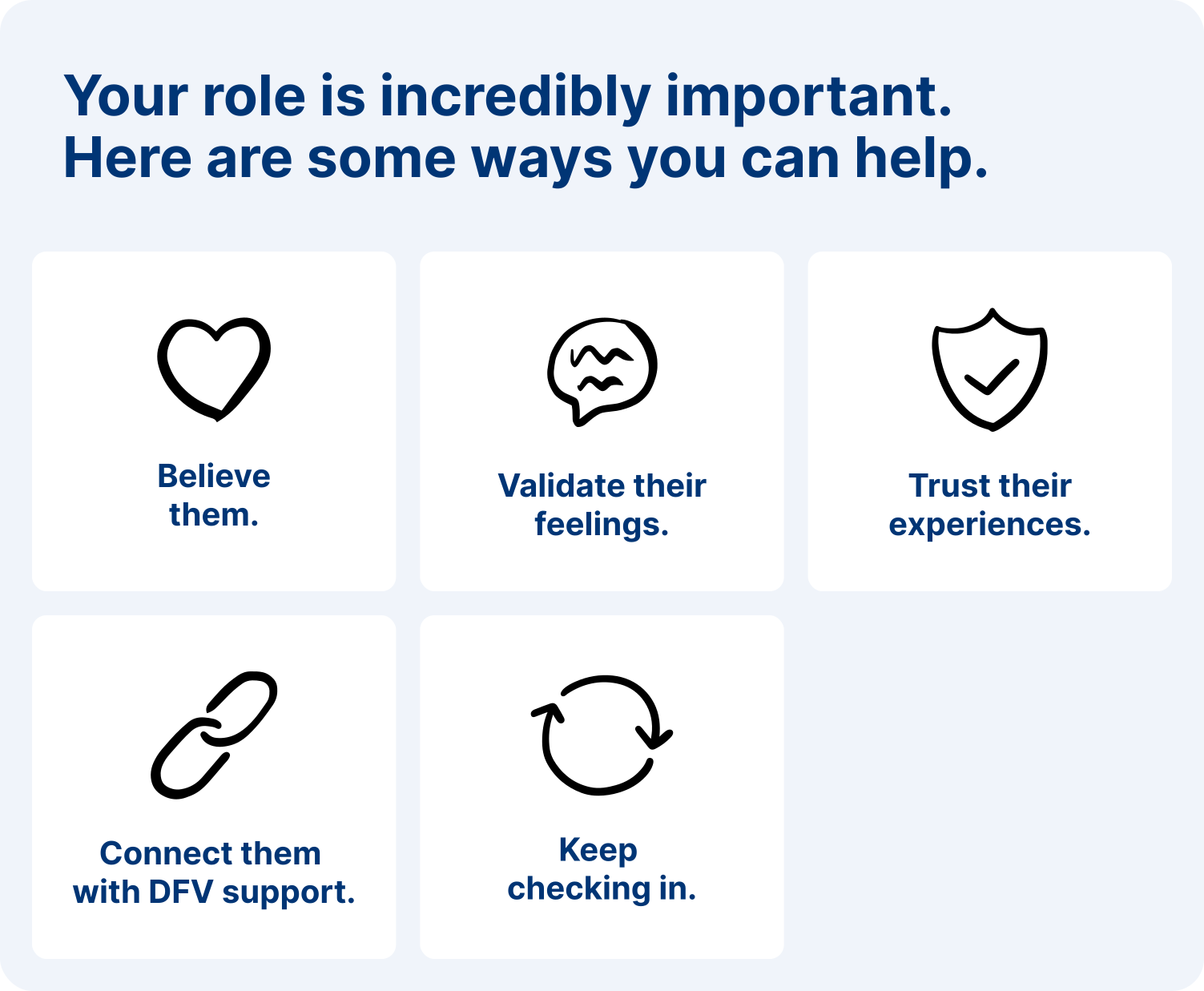
One of the most effective ways you can empower the person you care about is to believe them, validate their feelings, trust their experiences, and connect them with support.

The image is titled "Your role is incredibly important. Here are some ways you can help." It offers guidance for supporting someone experiencing domestic and family violence (DFV). The suggestions are displayed in a grid format, each accompanied by an icon: Believe them – Heart icon, emphasising the importance of trust. Validate their feelings – Speech bubble icon, showing empathy and understanding. Trust their experiences – Shield icon, supporting their perspective. Connect them with DFV support – Link ico

You can also offer a safe space for them to ‘sense-check’ their experiences. If things like coercive control or gaslighting have occurred, they might be feeling confused about their own experiences and reality.

Simply offering them a non-judgemental space to play back the events opens up an opportunity for them to be heard and validated. This can help them gain clarity and empower them to trust their instincts.


Offer empathy, not sympathy

An important way we feel safe and connected is by feeling heard. It can be difficult to hold back from saying things like ‘You’re so much better than this!’ or ‘Why don’t you just leave?’

However, the person you care about needs to have their emotions and experience validated.

For example, you could say:

That’s a lot to go through. I understand why you’re feeling this way.

If they move into blaming themselves for the abusive behaviour, reassure them it's not their fault. To learn more about how to show empathy, you can watch the video below.


Encourage them to seek help

It’s understandable if you want to try and convince the person you care about to reach out for help.

However, sometimes, this can have the opposite effect. Instead, gently suggest options and let them know you respect their decision either way. Ultimately, the choice is theirs.

You can suggest going to the police or contacting free and confidential counselling services like 1800RESPECT (1800 737 732) and Full Stop (1800 385 578). They can also always contact Lifeline.

For a full list of the domestic and family violence support services available, visit our DFV support services page.


Support services for domestic and family violence

Connect with the DFV support services that can help you and the people you care about.
Read time icon 2 minutes read
Helps with Finding support

Respect their decisions

Leaving an abusive situation can be scary, complex, and may not happen immediately. For a number of reasons, the person you care about may not feel ready to leave and that’s okay.

It’s important to respect their right to make their own decisions. Remind them that you’re there to listen and help whenever they’re ready for practical and emotional support.

Regardless of the outcome, keep communication open by checking in regularly and reminding them they have your support. This constant reminder that you’re there for them will be important when they do feel ready to leave.


Practical ways you can offer support

When people experience abuse, they can end up with low self-esteem and/or experience mental health conditions like anxiety, depression, post-traumatic stress disorder (PTSD), and suicidality.

Experiencing these challenges can make it difficult to prioritise and practise basic self-care like eating well, sleeping enough, exercising daily, and connecting with other people.

  • Assisting with daily tasks: You can help lighten their load by offering to watch kids, pick up groceries, or run errands
  • Connecting them with resources: Researching legal aid options, support services, and other information can help empower your loved one to make informed decisions about their future
  • Staying connected: Regularly checking in shows your ongoing support and concern. A simple text message, a call, or a visit can provide much-needed emotional reassurance that they are cared for.

Escaping and healing from domestic and family violence takes time and requires a lot of patience from friends and family.

There may be ups and downs along the way, but your consistent presence and support throughout their journey can help break the cycle of abuse and make a lasting difference in their life.


Helping someone leave a DFV situation

If the person you care about has accepted your help or confided in you about their decision to leave an abusive relationship, there are practical steps you can take to support them.


  • Create a safety plan: Because the risk of violence is greater in the lead-up to separation and just afterwards, having a safety plan in place can offer additional protection
  • Pack an escape bag: An escape bag is especially important if the person you care about needs to leave quickly. Click here to learn what to include.
  • Connect with DFV support services: Whether the person you care about is considering leaving, needs help to leave or is seeking support after leaving, they may need help with legal matters, accessing financial support, and finding employment. These organisations can help.
  • Get emotional support: It takes a lot of strength and courage to leave an abusive relationship. Being consistent in your approach and offering ongoing support is important in helping the person you care about heal and move forward. If it feels right, you can help them book an appointment with a GP to talk about getting a Mental Health Treatment Plan.

Learn more about helping someone leave a domestic and family violence situation at 1800RESPECT.

For information on how to help someone experiencing tech-based abuse, visit the eSafety website or our short-term help for DFV page.


The importance of taking care of your own mental health

Supporting someone through domestic and family violence can be extremely tough mentally and emotionally.

It’s painful to know someone you care about is being abused and harmed, and it’s natural to feel sad, angry, frustrated, and helpless.

  • Confused about what is and isn’t ‘abuse
  • Afraid for their safety (as well as the safety of yourself and other family members)
  • Uncertain about what to do and how to help
  • Guilty that you’re not doing enough
  • Hopeful that things can change
  • Frustrated that the person you care about isn’t leaving the relationship.

While all of these emotions are valid, it's important to acknowledge them and prioritise your own self-care. If you don't, it can be even harder to offer support to the person you care about.

Here are a few ways you can prioritise your self-care:

  • Establish boundaries on how much you can emotionally handle
  • Be clear about what you can and cannot do to help
  • Reach out to friends, family, or a psychologist to talk about your feelings and gain some outside perspective
  • Practise stress-relief activities like meditation, mindfulness, grounding techniques, or journaling
  • Eat well, exercise regularly, and get enough sleep
  • Ensure you schedule breaks and downtime for yourself.
Techniques & Guides

Self-care for mental health and wellbeing

Self-care is a key way we protect our mental health and improve our wellbeing. In this article, we explain what exactly self-care is and why it's so beneficial during challenging times. You'll also find easy self-care ideas you can try right now or down the track.
Read time icon 10 minutes read
Helps with Stress Depression

Remember, taking care of yourself is not selfish. It’s a necessary part of being able to care for others.

By prioritising your own needs, you’ll protect your mental health and be better equipped to support the person you care about through whatever they're going through.


Are you looking for information on DFV training for yourself or your organisation?