Strong foundations: A wellbeing guide for tradies
Why looking after your wellbeing matters
Working in the trades can be fulfilling, but it can also be full-on. Long hours, tough conditions, money pressure and time away from home can take a toll on your body, your mind and the people around you.
When your wellbeing starts to slip, it can affect your sleep, energy, focus and even your safety at work. Stress, exhaustion or feeling low might not always be easy to spot, especially when you're used to pushing through. But over time, these things can build up and start chipping away at your motivation, your relationships and your quality of life - on and off the job. That’s why looking after your wellbeing isn’t a luxury. It’s part of staying strong for the long haul.
On many worksites, there’s still pressure to ‘just get on with it.’ But struggling in silence doesn’t make you tough, it just makes things harder. Speaking up takes courage. So does asking, ‘What might help?’
This guide is here to walk you through practical ways to support your wellbeing so you can keep showing up not just for work, but for yourself and the people who matter most.
I thought I just had to tough it out, but things got easier when I spoke to someone.
Common challenges tradies face
Life on the tools comes with pressures that aren’t always easy to talk about: tight deadlines, physical strain, time away from loved ones or feeling like you have to keep it all together.
These pressures don’t always show up as a crisis. Sometimes, they wear you down over time. What you’re about to read isn’t a checklist of what’s ‘wrong’. It’s a reflection of what many people in the trades are dealing with. If any of it sounds familiar, remember that you’re not alone and there’s support available to help you find steadier ground.

When you're on the go all day racing the clock, working overtime or juggling big jobs, it can take a toll.
Over time, this constant pressure can lead to chronic stress or burnout. You might feel wired, worn out or both. It can be harder to wind down after work, sleep well or feel present with family or mates. If your body and brain feel stuck in 'go mode,' it might be a sign your nervous system needs a break.
When work keeps you away from home (physically or mentally), it can be tough.
You might miss milestones, school drop-offs or downtime with the people you care about. That can bring up feelings of guilt, frustration or distance.
Over time, this strain can affect your mood, focus and sense of connection. It doesn’t mean you’re failing - it just means something might need your attention.
When your body’s not feeling right, whether it’s a nagging injury, a bad back or broken sleep, it can wear you down over time.
It’s harder to think clearly, manage stress or feel on top of things when you're running on empty. Pain and poor sleep can also affect your mood, make you more irritable, or leave you feeling flat or anxious.
Looking after your body is an important part of looking after your mental health, too.
Money worries are one of the most common sources of stress, especially when work is seasonal, inconsistent or slow to pay. You might be lying awake doing the maths, wondering how you’ll cover bills or support your family.
Over time, financial stress can chip away at your sleep, relationships and peace of mind. It can also lead to feelings of anxiety, shame or hopelessness.
You’re not alone - support is available, and things can change.
Sometimes a drink, a smoke or other habits can feel like a way to switch off or cope when things feel too much.
In the moment, it might help you relax or sleep, but over time, substance use can take a toll. They can mess with your sleep, affect your mood and make stress or anxiety harder to manage.
If you’re finding it hard to cut back, it’s okay to reach out. Support is available.
Spending long stretches away, whether it’s on-site, offshore or out in the bush, can wear you down.
It can throw out your routine, mess with your sleep and make it harder to stay connected with the people and things that keep you grounded.
Over time, you might start to feel flat, numb or alone, even when you’re surrounded by others. If you’re feeling the distance, it’s okay to name it and reach out for support.
How you might be feeling
You might not always realise how much you’re carrying, especially if feeling flat, frustrated or disconnected has become your new normal. Maybe you’ve stopped talking about how you really feel or started telling yourself to just push through.
It’s also worth knowing that stress, low mood, and overwhelm don’t look the same for everyone. Sometimes they hit all at once. Other times, they build up quietly over time.
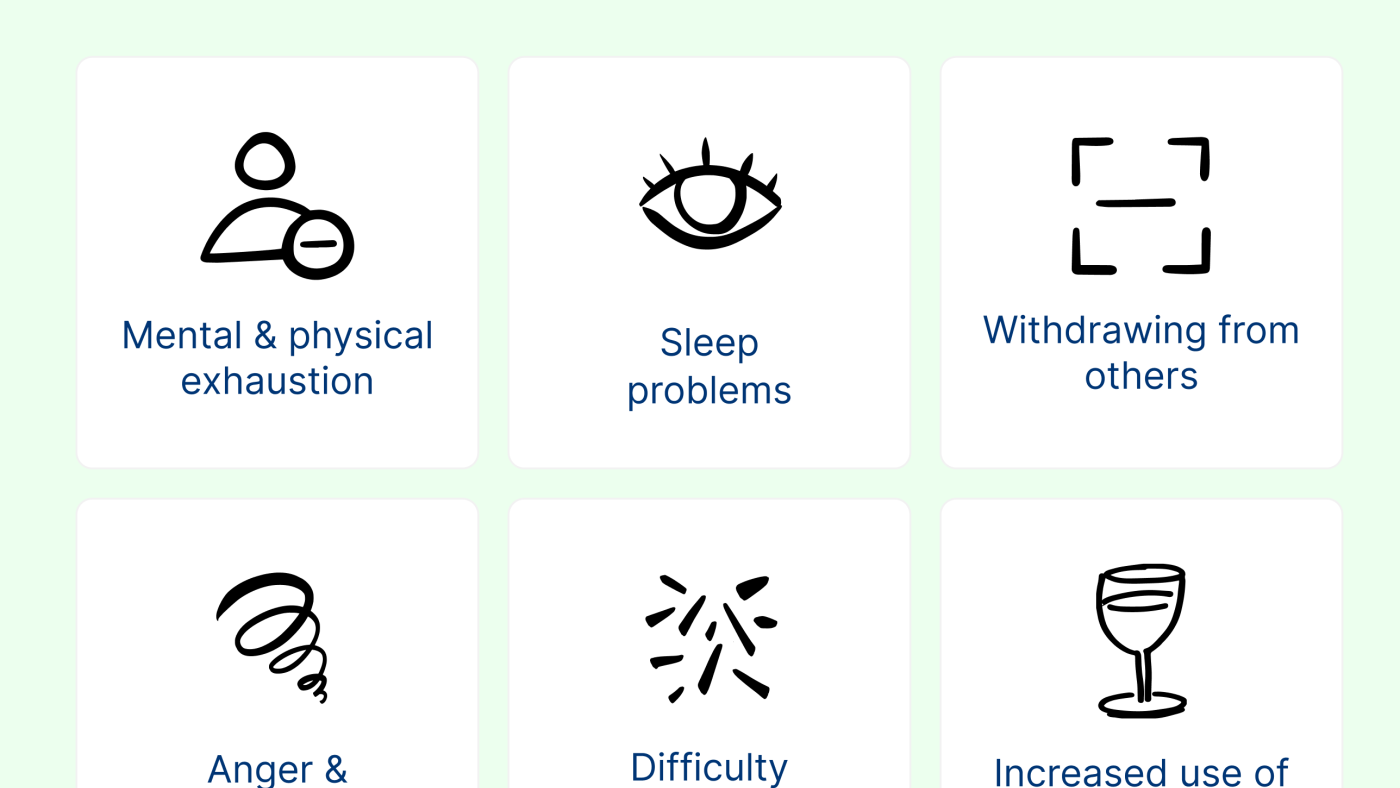
If your mind and body are under pressure, you might notice:
- Getting irritated or losing your temper more easily
- Struggling to fall asleep or waking up feeling wired and worn out
- Feeling flat, restless or constantly on edge
- Drinking or using drugs more than usual just to cope or unwind
- Pulling back from friends, family or the things you usually enjoy
- Finding it hard to concentrate, get going or stay motivated.
None of this means you’re failing. These are common signs of stress and burnout, and often, they’re your body’s way of saying you’ve been carrying more than you should have to.
The good news is, there are simple things you can do to support your wellbeing. You don’t have to fix everything at once - just take the next step that feels right for you.
Practical ways to support your wellbeing
Looking after your mental health doesn’t always mean making huge changes. Often, it starts with small steps like getting back to the basics, learning a few helpful tools, and knowing where to turn when things feel too heavy to manage on your own.
These strategies can help take the pressure off and support you to feel more grounded, day to day.
When you’re physically run down, your mental health can take a hit too. The reverse is also true: feeling mentally drained can disrupt your sleep, appetite and energy. The foundations of wellbeing start with self-care.
This can look like:
- Getting enough quality sleep: Try to wind down before bed and aim for consistent sleep and wake times, even on weekends. Sleep is when your brain and body recharge. Click here to learn about sleep and mental health.
- Fuelling your body: Regular, balanced meals (especially with protein and wholegrains) help stabilise mood and energy. Skipping meals or relying on sugary options can make you feel more sluggish or on edge.
- Staying connected: Spending time with mates, family or someone you trust, even for a quick check-in, can ease stress and remind you you’re not alone. Click here to learn how to build strong social connections.
Click here to learn more about the importance of self-care for mental health and wellbeing.
When your thoughts are racing or your body’s in overdrive, calming your nervous system with a grounding technique can help you feel more in control.
You might try:
- Journaling: Writing things down, especially at the end of the day, can help clear your mind by giving your thoughts a place to land. This can reduce mental clutter, spiralling or the urge to bottle things up. Click here for prompts to get started.
- Progressive muscle relaxation (PMR): This technique involves gently tensing and then releasing each muscle group in your body, starting from your feet and moving upward. It helps you become more aware of where you're holding tension and can ease physical stress you might not even realise you're carrying. Click here to learn more.
- Box breathing: This simple breathing pattern (in for 4, hold for 4, out for 4, hold for 4) helps slow your heart rate, ease anxious feelings, and bring your focus back to the present. Just a few minutes can help reset your system and create a sense of calm. You can follow along now with our video below.
These tools don’t have to take long, and you can use them anytime like on a break, in your car or after work. Click here to learn more about grounding techniques.
It’s normal to feel flat from time to time, especially when you're under stress, run-down or feeling stuck. But if low mood hangs around for days or weeks, it can start to affect how you think, sleep, work and relate to others.
Here are a few things that can help:
- Move your body: Even a short walk or light physical activity can release feel-good chemicals in your brain and improve energy levels.
- Get sunlight and fresh air: Natural light and time outdoors can help regulate your sleep and lift your mood.
- Break things down: If you’re feeling overwhelmed, try doing just one small thing. It could be having a shower, making a healthy meal or messaging a mate. Progress builds slowly, one step at a time.
- Talk to someone: You don’t have to wait until you’re at rock bottom. Support is available and the sooner you reach out, the easier it is to turn things around.
Click here to learn about the feelings and effects of depression.
When you understand what’s going on in your mind and body, it’s easier to recognise when you might need extra support.
The Support Toolkit includes:
- Topics on common mental health challenges like anxiety, depression and substance misuse
- Practical guides on understanding and managing things like anger, addiction and self-esteem
- Simple techniques like grounding, mindfulness, and challenging your thoughts
- Real stories from people who’ve been through tough times and come out the other side
- Tips for talking to someone you’re concerned about
There’s no right or wrong place to start - just explore what feels useful to you. Every step forward, no matter how small, is worth it.
If things have been feeling tough for a while or if you’re not sure how to move forward, talking to someone can help.
Here are some options for you to consider:
- Your GP: A GP is a solid first step. They can check in on your overall health and help you set up a Mental Health Treatment Plan, which, if eligible, can give you access to Medicare-subsidised sessions with a psychologist or counsellor. It’s okay if you don’t know exactly what to say - they’re there to help guide the conversation.
- Talk therapy or peer support: Whether it’s a counsellor, psychologist or someone who’s been through something similar, talking to the right person can help you feel more in control. It can give you space to untangle what’s going on and find practical ways to move forward. Click here to learn tips for talking to someone you trust.
- TIACS (This Is A Conversation Starter): TIACS offers free, confidential counselling for tradies, truckies, rural workers and others in blue-collar industries. You can call or text and speak with a mental health professional who understands the work you do and the pressures that come with it. Click here to learn more about TIACS.
You don’t need to have all the answers - just taking the step to talk is enough.
Whether it’s getting back to basics, trying a breathing technique or talking to someone who understands, every small action adds up. You deserve to feel supported, connected and like yourself again.
And if you ever need someone to talk to, we’re here for you 24 hours a day, 7 days a week. You can connect with a Lifeline crisis supporter via 13 11 14, text or chat.
Hear from other tradies
These real stories from tradies show what’s possible when you reach out, speak up, or take that first small step. Whether it’s calling a support line, talking to a mate or working through tough emotions, these voices are proof that you're never as alone as you might feel.
You might not relate to every detail, but you might recognise parts of yourself. And sometimes, knowing that someone else has been there too can make all the difference.
Tools, apps and support services
When you're going through a tough time, one of the hardest parts can be knowing where to start. That's why we've gathered a range of tools, apps, and support services designed to help you take that first step - on your terms.
TIACS is a standout for tradies, truckies, and rural workers. They offer up to 8 free, confidential counselling sessions - no GP referral or mental health plan needed. You can call or text and speak with someone who understands the pressures of the job and the culture around it.
It’s important to say this clearly: all tradies deserve support, no matter your gender, sexuality, or background. If you're LGBTQIA+ and feeling isolated, invisible, or unsafe at work, you're not alone and how you're feeling matters. Services like QLife offer identity-affirming, peer-led support so you can talk freely and safely.
Below, you can explore tools to manage stress, find support to unpack what’s going on or connect with someone who will listen without judgement.
Online assessments, learning programs, forums and apps
Support services
Whatever you're going through, support is here, and you're not expected to figure it out alone.
If you're dealing with things like financial stress, substance misuse, relationship problems, or the impacts of trauma, you can filter for more tailored support through our Support Services section. It includes information and links to services that specialise in these areas, so you can explore what's right for you.
You can also use the Lifeline Service Finder to search for local and national services available to support you - wherever you are, and whatever you're going through.